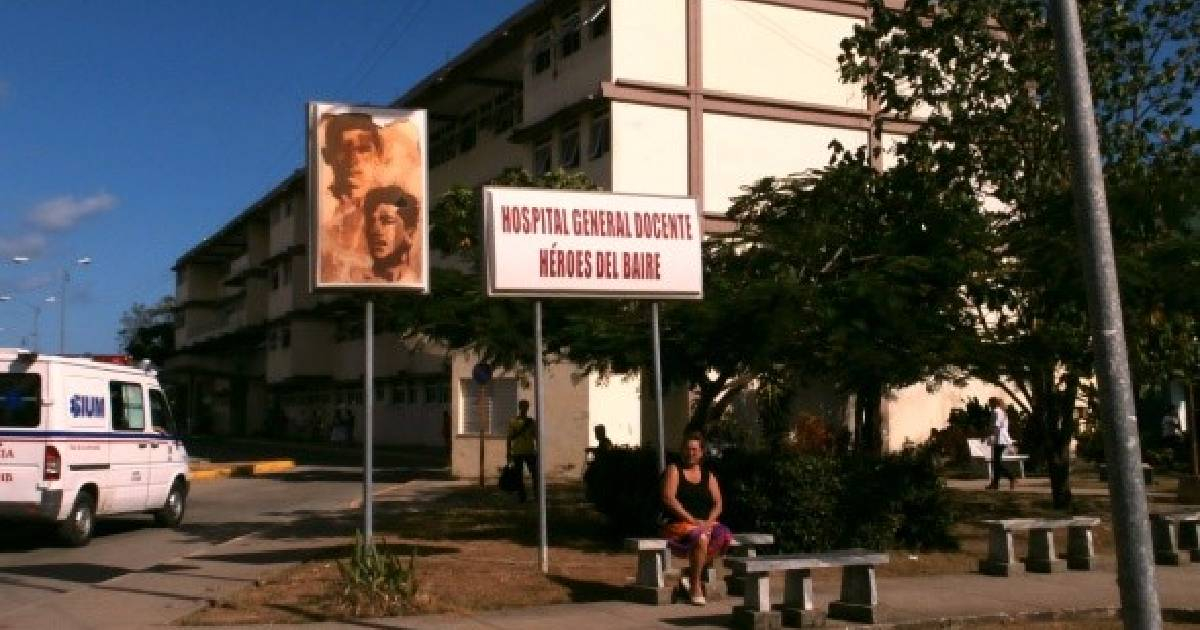
An elderly man passed away at the hospital in Nueva Gerona, located on Cuba's Isla de la Juventud, after enduring an eight-hour wait for a SIUM ambulance at the medical post in the town of La Demajagua. Frustrated by the lengthy delay, his family decided to transport him themselves, as highlighted in a social media complaint.
The Facebook page Carapachibey Pinero, managed by Ramón Leyva Morales, shared a post from Katerin Furones on Thursday. She detailed how crucial medical care was hindered for two patients in this rural area due to power outages and issues accessing emergency medical services.
The Start of a Tragic Night
The incident began when Furones' 87-year-old grandmother suffered a fall, resulting in a serious head injury and a hematoma. The family took her to the La Demajagua medical post by their own means, where the on-duty nurse determined immediate hospital transport was necessary.
Due to a blackout, mobile phone signals were down, forcing the family to seek police assistance to contact SIUM via radio. They were informed that an ambulance would come for the patient, with the call made around 9:00 pm.
Another Patient in Need
As the night progressed, another elderly individual arrived at the medical post, experiencing severe pain and requiring transfer. SIUM was notified about both emergencies, but although they promised an ambulance, it was delayed.
"We called several times, and the response was always the same," recounted Furones.
Desperate Measures
The ambulance never arrived. Both patients remained at the post throughout the night, with the power outage continuing. At 5:00 am, power was restored, allowing direct contact with SIUM. The family was told that "the ambulance lacked enough fuel to reach La Demajagua and return to Gerona."
Furones questioned this explanation, pointing out, "How is it possible that from 9:00 pm until 5:00 am, they claim the ambulance has no fuel when they're parked at the hospital where there's no power outage?"
With no service forthcoming, the family purchased fuel at market prices and hired the same private transport used to reach the post. This allowed them to take the 87-year-old woman to the hospital, where she was admitted to intensive care.
The second patient was taken by his son on an early morning bus departing from La Demajagua, located about 20 kilometers from the island's capital. "Sadly, that person died at the hospital," wrote Furones.
The account does not directly link the SIUM delay to the patient's death but notes that he spent the night waiting for an ambulance and was ultimately transported by a family member before dying at the hospital.
"Regardless of the real issues in the country, unless those in charge of this land take responsibility and stop making excuses, nothing will improve," Furones concluded.
A Broader Pattern of Neglect
In sharing the complaint, Leyva remarked, "Perhaps his life could have been saved." Authorities, including municipal officials like Leonardo Cruz Cabrera, the director of Public Health Bárbara Daudinot, assistant medical director Idalmis Jiménez, and the local Assembly communicator Meilim Batista, were tagged in the post.
In late August, 27-year-old María Luisa Mendoza, sister of Cuban pitcher Héctor Mendoza, died at the municipal hospital Héroes del Baire in Nueva Gerona after being admitted with dengue hemorrhagic fever in a facility lacking the necessary serum.
In April, a resident in Santiago de Cuba died after waiting over four hours for an ambulance; the hospital cited a fuel shortage. In June, a mother claimed her child with cerebral palsy was denied transport for the same reason.
In response, the Minister of Transport, Eduardo Rodríguez Dávila, announced in January the procurement of 50 new ambulances by the Ministry of Public Health (Minsap) to enhance emergency medical services.
Additionally, in February, Minsap introduced 25 Chinese electric ambulances for transfers within Havana.
Questions on Cuba's Emergency Response Challenges
What caused the delay in ambulance response on Isla de la Juventud?
The delay was attributed to a lack of fuel for the ambulance, which was unable to reach the town of La Demajagua.
How did the family manage to transport the elderly woman to the hospital?
The family purchased fuel at market prices and hired private transport to take the elderly woman to the hospital.
What are the broader implications of this incident for Cuba's healthcare system?
This incident highlights systemic issues in Cuba's healthcare infrastructure, including insufficient resources and logistical challenges, which can severely impact patient outcomes.