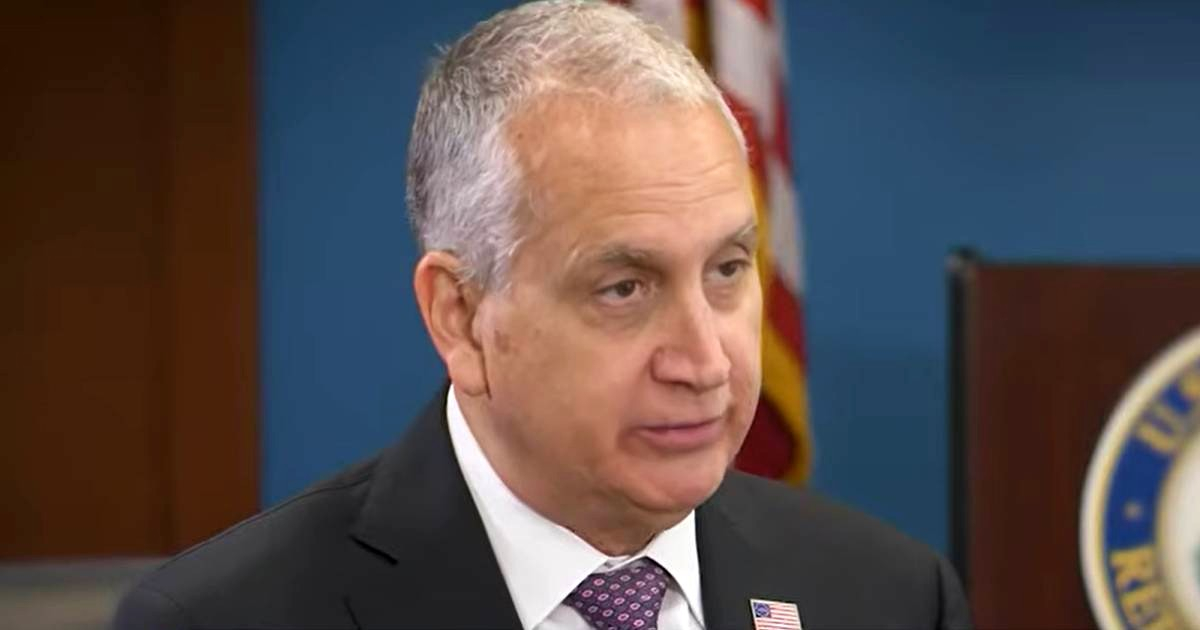
Cuban-American Congressman Mario Díaz-Balart has once again forecasted a political shift in Cuba during Donald Trump's presidency, delivering a stark message to Havana's leadership: start looking for a new place to call home outside the island.
During a recent virtual interview with Telemundo 51, Díaz-Balart expressed his belief that a transition towards democracy in Cuba could be "easier" than in Venezuela, attributing this to the more centralized power structure on the island.
"In Cuba, it's a smaller, more limited group, making it, in my opinion, even easier," the Republican legislator stated.
Díaz-Balart went further when discussing the immediate future of the Cuban regime and the stance of the current U.S. administration.
"I'm convinced that this president won't leave the White House with that regime still in power in Havana," he declared.
When asked about his message to the governing elite in Cuba, he suggested they heed the signals from Washington and prepare for an exit.
"They should find a comfortable place to relocate," Díaz-Balart advised, labeling them as "thugs, murderers, and corrupt" during the interview.
He added that if this transition doesn't occur voluntarily, he believes it might happen "by force."
Potential Use of Force
Journalist Gloria Ordaz directly questioned whether the use of force in Cuba could be ruled out. Díaz-Balart responded with a simple: "No."
He elaborated by stating that, in his view, "every option should be on the table for the President of the United States," though he expressed a preference for a scenario where U.S. military action isn't necessary.
The congressman's comments stand in stark contrast to recent statements made by Trump.
The U.S. President recently remarked that he didn't see military intervention in Cuba as necessary and hoped for a diplomatic resolution with Havana.
"Cuba and the U.S. will reach an agreement. I don't think military action is needed," Trump stated, following reports that Army Reserve units were assessing their readiness to support the Southern Command. The documents cited did not order deployment nor directly mention Cuba.
Backdoor Communications
Díaz-Balart also mentioned that there are communications between the U.S. administration and individuals close to Raúl Castro, though he emphasized these are not formal negotiations. When pressed for specific names, he declined to provide details.
Regarding Venezuela, the congressman said he regularly communicates with María Corina Machado and expressed his hope for her return to the country and eventual presidency. He presented this as his personal prediction, underscoring that any candidacy should be determined by the Venezuelan people.
The Trump administration has paired these diplomatic signals with increased economic pressure.
At the end of September, the Office of Foreign Assets Control (OFAC) unveiled new banking, financial, and travel restrictions related to Cuba, while the State Department confirmed it would continue using "all available sanctions authorities" against the regime.
Díaz-Balart has been vocal about his similar expectations for the Cuban system's future for months.
In April, he expressed his conviction that the regime would not outlast Trump's current term and advised its leaders to find "a comfortable place" for exile.
He had already stated in January that Trump was unwilling to accept a dictatorship 90 miles from the United States, highlighting the presence of U.S. military forces in the Caribbean.
Discussion on the extent of Washington's willingness has grown following a series of political, economic, and military signals that have fueled speculation about the scope of the U.S. strategy toward Cuba.
Understanding U.S. Strategy on Cuba
What did Díaz-Balart predict about Cuba's future?
Díaz-Balart predicted a political change in Cuba during Trump's presidency, suggesting that the current regime would not survive Trump's term.
What is Díaz-Balart's message to the Cuban leadership?
He advised them to start looking for a new place to live outside of Cuba, implying that their time in power is limited.
Does Díaz-Balart support the use of military force in Cuba?
While he believes all options should be considered, he prefers a resolution that doesn't involve U.S. military action.