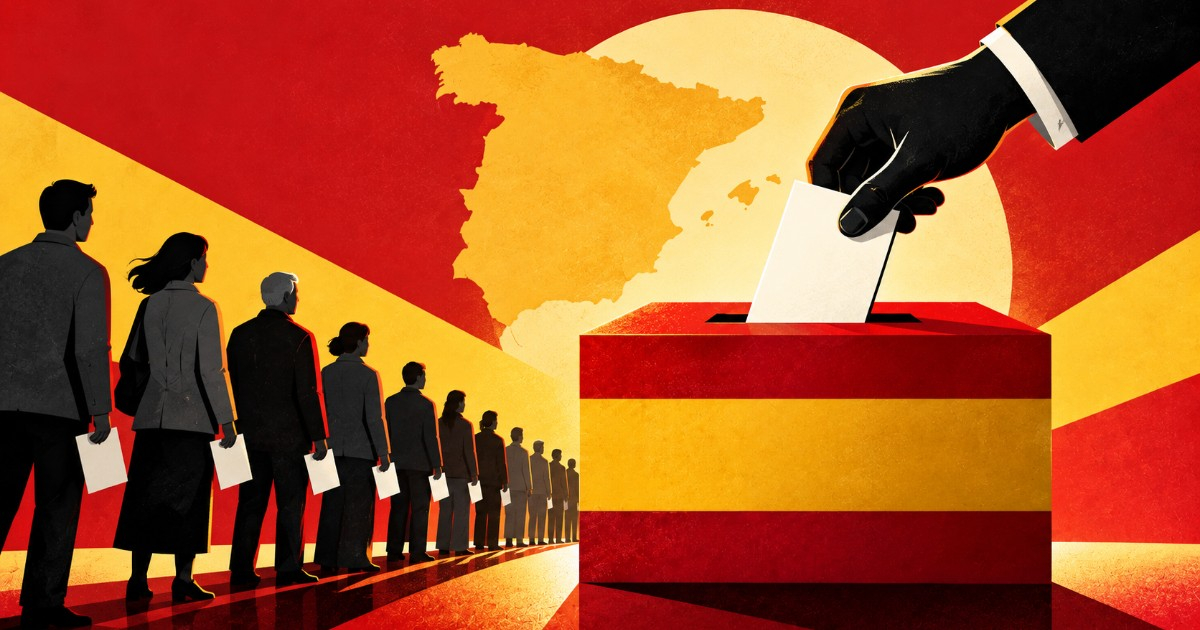
Spain might be on the brink of a snap general election following President Pedro Sánchez's decision to enter a period of contemplation after two housing-related decrees were rejected in Congress.
This Friday, sources within the government informed EFE that Sánchez will be evaluating various courses of action after the full session failed to ratify both legislative measures.
Among the options is the possibility of calling for elections, although officials at Moncloa emphasize that the government is not currently focused on that path. The decision comes after the People's Party (PP), Vox, and Junts voted against the housing decrees proposed by the administration.
The split with Junts, a key player in Sánchez's initial election, highlights the ruling coalition's challenges in garnering sufficient parliamentary support during critical votes.
According to sources consulted by EFE, Sánchez plans to engage in discussions with government members and PSOE leaders before making a final decision. As of now, there is neither an election announcement nor a set deadline for making such a declaration.
If Sánchez chooses to schedule the elections for the closest possible Sunday that aligns with legal requirements, he would have to announce this on Monday, October 5. The dissolution decree of the Cortes would be published the following day in the Official State Gazette, with elections potentially taking place on November 29, 54 days later.
This timeline is dictated by the Organic Law of the General Electoral Regime, which mandates that in the event of an early dissolution, the election call must set the election date for the fifty-fourth day after its publication.
The prospect of early elections marks a significant shift from Sánchez's earlier stance just a few months ago. In June, he expressed his intention to present the 2026 Budget and hold general elections in 2027, though he acknowledged the "dynamic" nature of political reality.
The government insists, however, that the parliamentary defeat does not necessarily spell the end of the legislative term. Moncloa sources believe there is still room to govern and pass initiatives with the current congressional majority, despite needing to negotiate support from various groups for each vote.
Sumar, the coalition's junior partner, also acknowledges that the election possibility is being deliberated. Sources from this group admitted to EFE that there is fatigue within the government and discussions are ongoing about the optimal timing for calling elections, though they caution against making hasty decisions.
The Popular Party, on the other hand, has declared its readiness to participate in snap elections and has repeatedly called for the legislative term to end.
The final decision to call elections, however, rests with the President of the Government, in accordance with the mechanisms outlined by the Constitution and electoral laws.
An election call would emerge amid a recent controversy over the electoral roll for Spanish residents abroad. In September, the Supreme Court temporarily suspended certain registrations in the Electoral Roll of Absent Residents related to the so-called "grandchildren's law," while consulates verify compliance with the required criteria.
This decision directly impacts numerous descendants of Spaniards living outside the country, including Cubans who acquired Spanish nationality through this legislation. The Supreme Court's temporary suspension of these census entries follows appeals against the process.
The debate regarding external voting had already gained momentum months earlier, particularly concerning Spanish nationals who have never resided in Spain and their participation in general elections.
This issue holds particular interest for the Cuban community, as thousands of island residents have obtained Spanish citizenship through the Democratic Memory Law.
The legal dispute over external census registrations remains unresolved, and the Supreme Court's measures are provisional. For Cuba, early elections in Spain could also hold significance due to the differing stances among major parties on policies towards Havana. A potential change in government might alter elements of political relations with the Cuban regime, although no election has been officially announced yet.
Key Questions about Potential Early Elections in Spain
Why is Spain considering early elections?
Spain is considering early elections due to the rejection of two housing-related decrees in Congress, which has prompted President Pedro Sánchez to evaluate possible actions, including a potential election call.
What could trigger the announcement of early elections?
Early elections could be triggered if President Sánchez decides to dissolve the Cortes and call for elections, potentially due to difficulties in securing parliamentary support for key votes.
How does the suspension of electoral registrations affect the potential elections?
The suspension of certain electoral registrations, particularly those involving Spaniards living abroad, could impact the voter base and the participation of newly nationalized citizens in any upcoming elections.
What are the implications for Cuba if early elections are held in Spain?
For Cuba, early elections in Spain may influence diplomatic relations, as changes in government could lead to shifts in policies towards Havana, affecting the Cuban community with Spanish nationality.