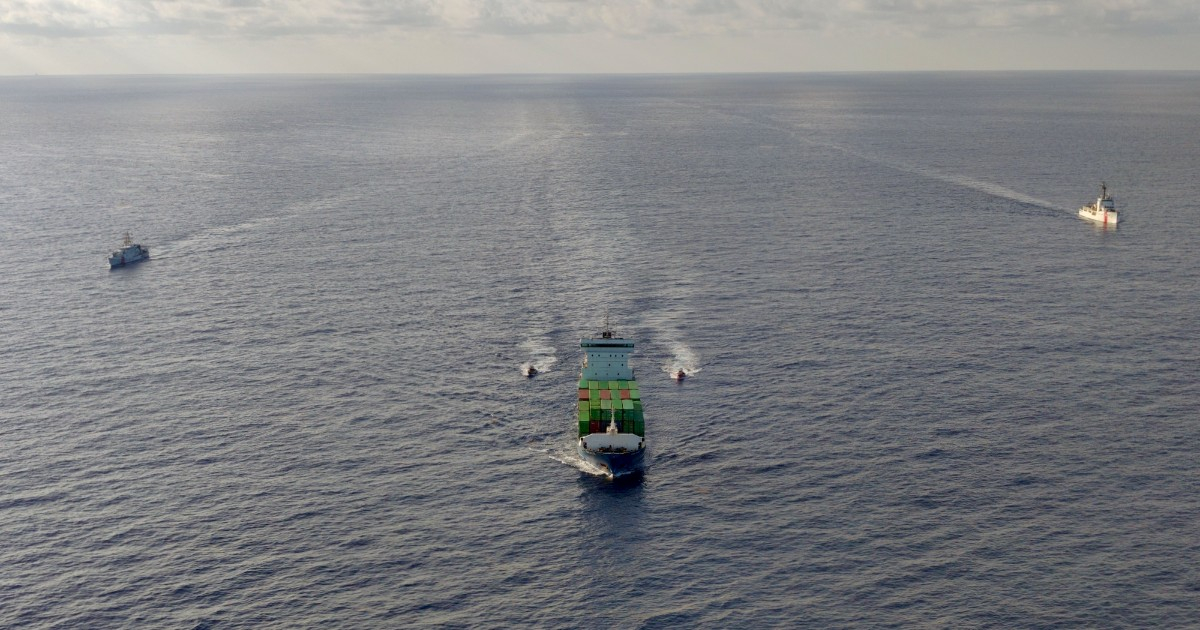
The United States Coast Guard revealed on Friday that it had successfully intercepted the vessel M/V Grace, which was illegally carrying fuel to Cuba across the Caribbean Sea. This operation was conducted in collaboration with Mexican authorities.
According to the Coast Guard's official statement, the interception occurred in early September when a tactical team stopped the vessel as it was on its way to the island.
Following the boarding, the Coast Guard escorted the M/V Grace to the port of Progreso, Mexico. There, the Mexican Navy (MARINA) verified the presence of substantial quantities of fuel stored in the ship's ballast tanks, as well as in several containers suspected to contain illegal fuel.
Environmental and Security Concerns
The authorities identified the vessel as employing tactics typical of the so-called "dark fleet": deceptive navigation practices, unsafe conditions, and concealed cargo to dodge international scrutiny.
Storing fuel in ballast tanks poses a significant environmental threat, as it can lead to oil spills impacting coastal communities, fishing reserves, and Caribbean marine ecosystems.
International Cooperation and Enforcement
The operation involved the Coast Guard cutters Alert (WMEC-630) and Charles Sexton (WPC-1108), an HC-144 fixed-wing aircraft, the Tactical Law Enforcement Team South, and Southeast District watchstanders.
Vice Admiral Nate Moore, Deputy Commander of Operations, emphasized the seriousness of these operations: "Illicit fuel shipments violate international law and present severe environmental threats in the Caribbean Sea. We appreciate the Mexican government's assistance in bringing the M/V Grace to justice."
Admiral Kevin Lunday, Coast Guard Commander, was more direct: "International waters are not a haven for lawlessness. Dark fleet actors using deceptive tactics to engage in illegal activities will not escape justice."
Broader Implications and Historical Context
This interception is not an isolated incident. Earlier in the summer, the Coast Guard had already detained the M/V Jaira Provider, another substandard vessel registered in Saint Kitts and Nevis, also transporting illegal fuel to Cuba. This ship was stopped near Mayagüez, Puerto Rico, carrying approximately 220,000 gallons of diesel, as reported by the National Oceanic and Atmospheric Administration (NOAA).
Both interceptions are part of the Trump administration's maximum pressure campaign against the Cuban regime, which formally began on January 29 with Executive Order 14380, declaring Cuba a "national emergency" and imposing secondary sanctions on countries and shipping companies supplying oil to the island.
This policy escalated in May with a second executive order and culminated in June with direct sanctions against CUPET, the Cuban state oil company. Reports indicate these measures have reduced Cuba's energy imports by 80% to 90%, worsening the fuel crisis and power outages affecting the population.
Cuban Minister of Energy and Mines, Vicente de la O Levy, admitted in April that the only shipment received in over four months barely covered that month's needs, highlighting the extent of the energy chokehold facing the island.
Frequently Asked Questions about U.S. Coast Guard Interceptions
What was the significance of intercepting the M/V Grace?
The interception was significant because it disrupted an illegal fuel transport operation to Cuba, highlighting the U.S. Coast Guard's commitment to enforcing international law and protecting the environment.
Why is storing fuel in ballast tanks dangerous?
Storing fuel in ballast tanks is dangerous because it poses a high risk of oil spills, which can severely damage coastal ecosystems, fishing areas, and marine life in the Caribbean.
How does this interception relate to U.S. policy on Cuba?
This interception is part of the U.S.'s broader strategy to impose economic pressure on the Cuban regime, reducing its ability to import fuel and exacerbating existing energy shortages.