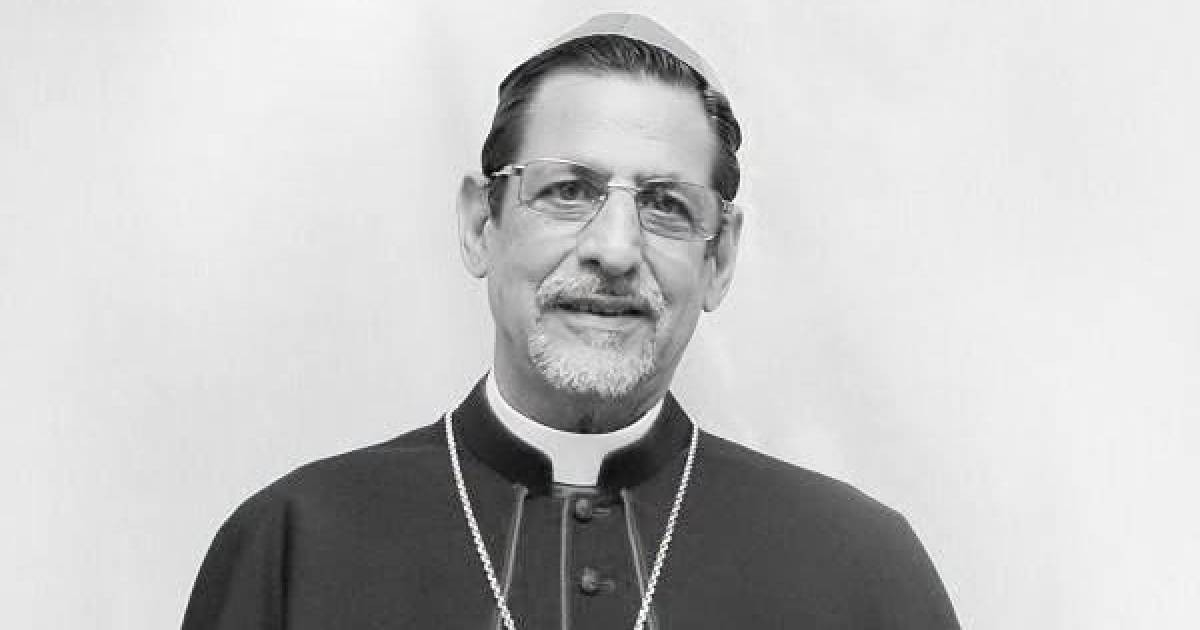
The Cuban Catholic Church mourns the loss of a significant figure in its history. Monsignor Mario Eusebio Mestril Vega, the retired bishop of the Diocese of Ciego de Ávila, passed away at the age of 86 after experiencing a swift decline in health, which had been previously reported by the diocese.
Born on March 5, 1940, in Nuevitas, Cuba, Mestril Vega was ordained as a priest in 1964 and became a bishop on February 9, 1992. His legacy is firmly tied to the Church's narrative in Ciego de Ávila. When Pope John Paul II established the diocese on February 2, 1996, Mestril Vega was appointed as its inaugural bishop, officially assuming the role on April 28 of that year.
He led the diocese for over 20 years until 2017, at which point he was succeeded by Juan Gabriel Díaz Ruiz and became bishop emeritus.
The Decline in Health and Passing
Days before his death, the diocese had issued a warning regarding his health. On September 25, Reverend Randol Pineda Muñoz, the chancellor and spokesperson for the diocese, released a statement via the institution's Facebook page, indicating that "his health has deteriorated rapidly" over the previous 48 hours and urged prayers from the faithful.
Although the statement did not specify any diagnosis or cause, the seriousness of the situation was apparent from the urgent appeal to the Catholic community.
A Legacy of Leadership
Mestril Vega holds the distinction of being the first and longest-serving bishop of the Diocese of Ciego de Ávila, which just celebrated its 30th anniversary this past April. His pastoral contributions were pivotal during this commemorative milestone.
Following his retirement, the diocese underwent a period of uncertainty. Juan Gabriel Díaz Ruiz, his successor, was reassigned in April 2022 as the bishop of Matanzas, leaving the Ciego de Ávila diocese without a leader, a vacancy that continues to this day.
Impact on Cuban Catholicism
With his passing, the Cuban Catholic Church bids farewell to a prelate who was instrumental in the Church's growth during the late 20th century—a challenging era for religious practice under a repressive regime.
Mestril Vega was both a witness and a key player in significant moments for Cuban Catholicism, including the landmark visit of Pope John Paul II to Cuba in 1998, which altered the dynamics between the Church and the State in the country.
Just a week before his passing, the Diocese of Ciego de Ávila had informed the public about his health's decline, with no further statements until his death was confirmed.
Monsignor Mario Mestril Vega: His Life and Legacy
Who was Monsignor Mario Mestril Vega?
Monsignor Mario Mestril Vega was the first bishop of the Diocese of Ciego de Ávila and a significant figure in the Cuban Catholic Church, serving for over two decades until 2017.
What was Mestril Vega's impact on the Catholic Church in Cuba?
Mestril Vega played a pivotal role in expanding the Church's presence in Cuba, notably during the late 20th century, and was involved in key events like Pope John Paul II's visit in 1998.
How did the diocese respond to Mestril Vega's health issues?
The diocese alerted the community about his rapid health decline and requested prayers, highlighting the seriousness of his condition.