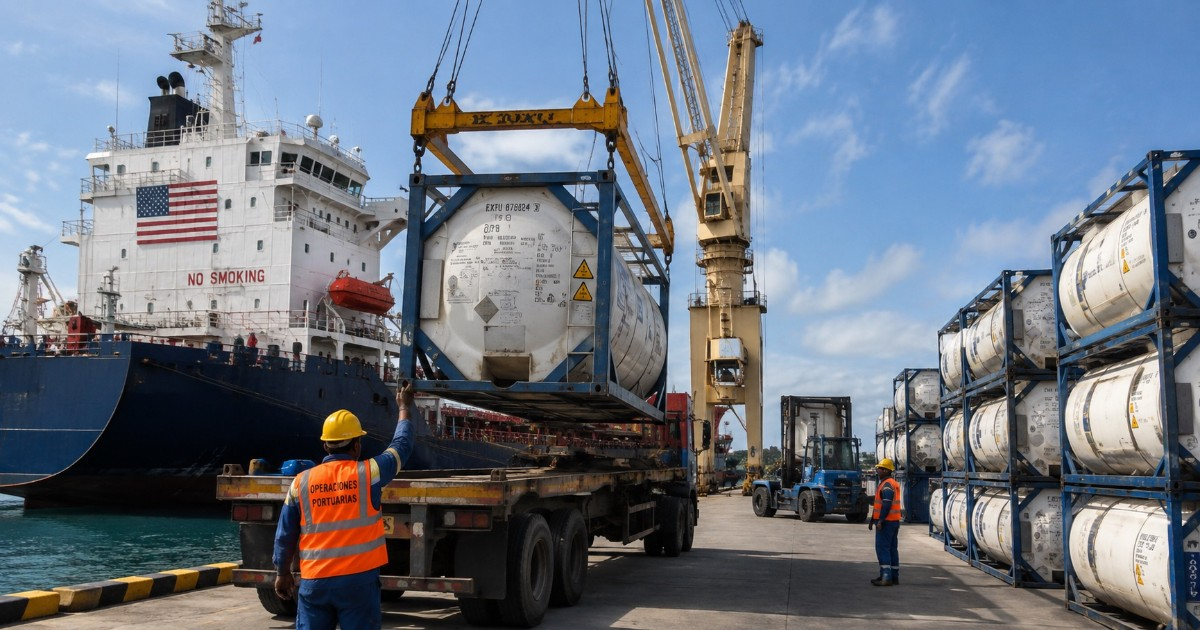
In an unprecedented move, the United States exported a staggering 3,222,000 barrels of petroleum products to Cuba in July 2026, as reported by the U.S. Energy Information Administration (EIA) on September 30. This volume surpasses what Venezuela supplied in over three and a half months during 2025.
This remarkable figure from Washington matches in just thirty days what would take Caracas almost four months to deliver. The comparison is based on solid estimates of Venezuelan oil flow: Reuters, utilizing PDVSA data, reported an average of 27,000 barrels daily in 2025, while Jorge Piñón from the University of Texas placed the figure between 30,000 and 35,000 barrels per day.
This translates to a monthly supply ranging from 821,000 to 913,000 barrels. When dividing July's 3,222,000 barrels by these estimates, it equates to 3.53 to 3.92 months of Venezuelan supply compressed into just one month by the U.S.
The Shift in Oil Supply Dynamics
This shift began after Venezuelan oil shipments were abruptly halted following the capture of Nicolás Maduro by U.S. special forces on January 3, 2026, ending decades of subsidized oil. In January, U.S. exports to Cuba were negligible, with only 1,000 barrels sent, representing effectively zero percent of a typical Venezuelan month.
The growth in exports was swift: February accounted for 2% of that benchmark; March was between 21% and 23%; April saw 23% to 26%; May reached 52% to 58%; and by June, it was nearing 85-95%, just before the extraordinary leap in July.
Regulatory Changes and Economic Impacts
A regulatory catalyst was the "Support for the Cuban People" license exception, issued by the U.S. Department of Commerce on February 25, 2026. This allowed refined products to be exported to private Cuban entities without individual OFAC licenses, specifically excluding the government, military, and sanctioned state entities.
From January to July 2026, the total export volume reached nearly 4,896,000 barrels, with an average daily export of approximately 103,900 barrels in July. In monetary terms, the U.S.-Cuba Trade and Economic Council reported $61.1 million in July alone, raising the total for the period to $156.8 million, with shipments primarily departing from Miami and Houston.
It’s important to note that the U.S. exports refined products like gasoline, diesel, kerosene, lubricants, and propane, whereas Venezuela mainly provided crude oil and fuel oil. Additionally, EIA figures represent exports declared at U.S. ports, not confirmed arrivals in Cuba.
Thus, it’s not accurate to claim the U.S. is Cuba’s primary energy supplier globally, despite Reuters identifying the U.S. as the largest exporter of goods to Cuba from January to July 2026.
The Severity of Cuba’s Energy Crisis
The magnitude of this change is highlighted by the severe crisis that preceded it. In May, Cuba's Energy and Mines Minister, Vicente de la O Levy, publicly stated that the country had "absolutely no fuel, no diesel, only accompanying gas," describing the situation as "acute, critical, and extremely tense."
An additional revelation adds to this picture: according to a senior U.S. official cited by the Miami Herald, Venezuela might have supplied Cuba with about 70,000 barrels daily from late 2024 to late 2025—more than double the estimates by Reuters and Piñón with public data—and the Cuban regime reportedly resold around 60% of this volume to Asia while citizens endured blackouts lasting up to 32 hours.
This estimation stems from a previously undisclosed governmental analysis and should be interpreted cautiously, as it cannot be independently verified.
Economist Pavel Vidal, a former official of the Cuban Central Bank, warned in January that "if the oil supply were to stop entirely, the Cuban economy would come to a standstill," labeling it a "devastating blow to an economy already in recession for six years."
Understanding U.S. Fuel Exports to Cuba
How much fuel did the U.S. export to Cuba in July 2026?
The United States exported 3,222,000 barrels of petroleum products to Cuba in July 2026.
Why did the U.S. begin exporting more fuel to Cuba?
The increase followed the capture of Nicolás Maduro and subsequent halt of Venezuelan oil shipments, as well as a regulatory change allowing U.S. refined product exports to private Cuban entities.
What types of products are included in U.S. exports to Cuba?
The U.S. exports refined products such as gasoline, diesel, kerosene, lubricants, and propane to Cuba.
How does the U.S. fuel export volume compare to Venezuela's past shipments?
In one month, the U.S. exported a volume equivalent to what Venezuela supplied over three and a half months.