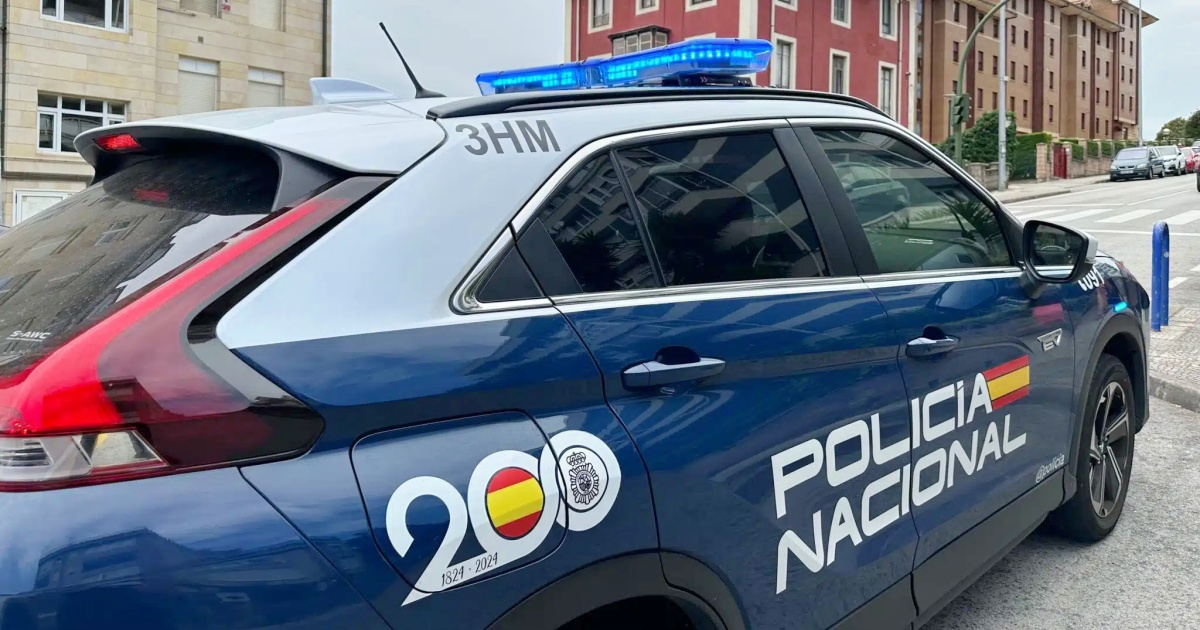
A 60-year-old man, originally from Cuba but now a Spanish national, was apprehended at the La Jonquera border checkpoint in Girona, Catalonia. He was attempting to enter France with nearly a thousand luxury cigars hidden in his luggage, as reported by various Spanish media outlets.
The man was traveling by bus on the Murcia-Paris route when the National Police's Border Group at La Jonquera conducted a routine immigration check.
Upon inspecting his baggage, officers discovered 997 cigars labeled as "Habanos" from reputable brands like Cohiba, Montecristo, and Partagás.
What caught the officers' attention was not just the quantity but the manner in which the cigars were packed.
According to La Vanguardia, "inside, they found 40 bundles containing the cigars, loosely packed within transparent plastic sleeves," lacking their original boxes and the official seals of origin required by regulations.
Estimated Value: Over 226,000 Euros
The estimated market value of the goods, based on official licit market prices, is calculated at 226,714 euros.
However, as noted by the Diari de Tarragona, "the value of 226,714 euros is an estimation based on official licit market prices, while the authenticity of the cigars remains to be determined."
Due to the unusual packaging and missing origin seals, the National Police requested expert evaluations from the brands themselves to verify if the cigars are genuine or counterfeit.
The results of these assessments were pending at the time of this report.
The bus on which the detainee was traveling was on the AP-7 highway through Tarragona province before reaching the French border, making La Jonquera the interception point.
The arrested individual was brought before a judge, facing charges of alleged smuggling, and was released after giving a statement.
Potential Penalties
The Organic Law 12/1995 on the repression of smuggling states that illicit tobacco trafficking becomes a criminal offense when the goods' value exceeds 15,000 euros.
In such cases, penalties range from one to five years of imprisonment, along with fines ranging from the equivalent to six times the value of the seized goods.
With an estimated value exceeding 226,000 euros, the La Jonquera case far surpasses that legal threshold, although the final figure will depend on the results of the cigar authenticity tests.
Recent Smuggling Cases
In July 2026, the Civil Guard dismantled a clandestine workshop in Mislata, Valencia, that manufactured and distributed counterfeit cigars of brands like Cohiba and Punch, resulting in three arrests, four investigations, and the seizure of 33,840 cigars and 637,646 fake labels intended for several European countries.
Earlier, in March, a 41-year-old Cuban was detained at A Coruña airport with 198 cigars and 4,400 cigarettes, in another case pointing to similar trafficking activities.
Cuban customs have also stepped up their controls. In July 2026, they intercepted over 4,000 cigars at Havana airport bound for Panama, and in February, they thwarted an attempt to export 3,800 units.
Smuggling networks pay travelers to remove tobacco from Cuba since Cuban customs regulations only allow the export of up to 50 cigars in their original packaging.
Understanding Tobacco Smuggling in Europe
How was the Cuban man discovered with the cigars?
He was discovered during a routine immigration check by the National Police at the La Jonquera border checkpoint in Spain.
What are the consequences of smuggling tobacco in Spain?
The penalties can include one to five years of imprisonment and substantial fines, particularly when the goods' value exceeds 15,000 euros, as outlined by the Organic Law 12/1995.
Why was the packaging of the cigars suspicious?
The cigars were loosely packed in transparent plastic sleeves without original boxes or official seals of origin, which raised suspicion among the officers.