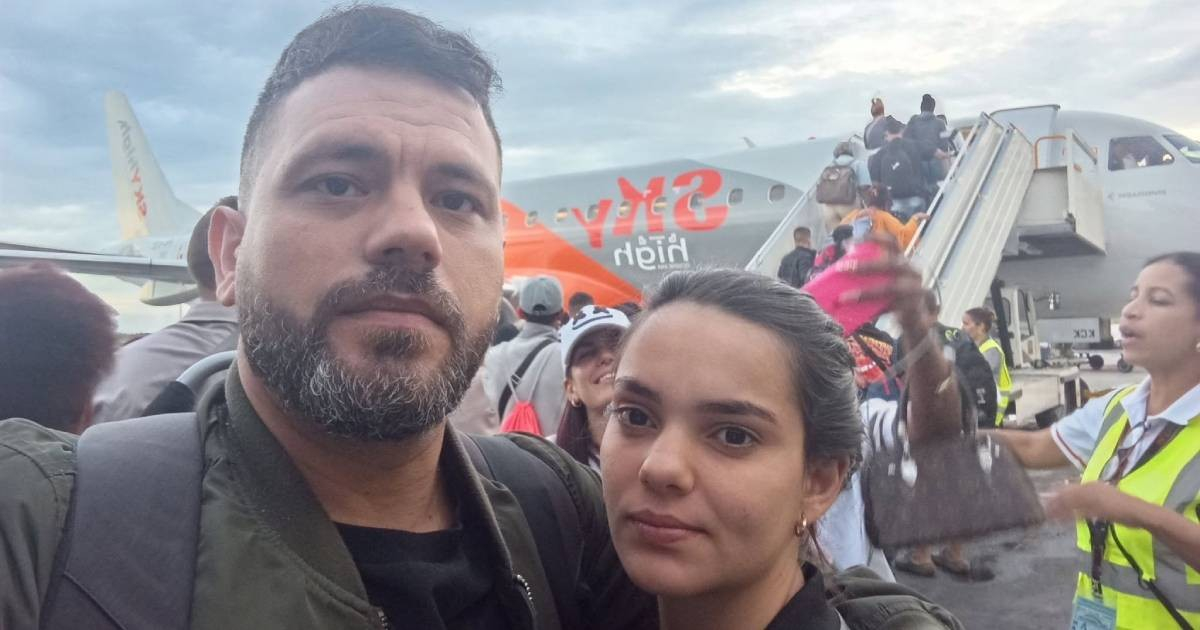
Austin Llerandi, head of the community newsletter Amanecer Habanero, left Cuba this Tuesday bound for Brazil with his pregnant wife. This decision came weeks after State Security agents threatened him with imprisonment due to his journalistic work if he did not leave the country.
The Cuban Institute for Freedom of Expression and Press (ICLEP) denounced Llerandi's departure as "forced exile," holding Cuban authorities accountable for the pressure that led to his exit.
This departure concludes over two months of escalating harassment, as documented by the Committee to Protect Journalists (CPJ).
Harassment Intensifies
On July 14, Llerandi was interrogated for more than an hour at a Marianao police station. According to his account, an officer named "Rodrigo" showed him the latest edition of Amanecer Habanero on his phone and warned that continued distribution could result in his imprisonment.
The officer allegedly told Llerandi, "If you distribute the newsletter, the next time I call, kiss your wife’s belly goodbye because you’re going to jail," as per ICLEP's documented account. Additionally, the agent had visited Llerandi's father's home the day before to locate him and was aware of the couple's hospital visits related to the pregnancy.
Ultimatum and Decision
The pressure escalated on August 21 when Llerandi was summoned to the Marianao station again, where he spent five hours and was informed of a potential violation of Decree-Law 370, according to CPJ.
During this session, a captain named "Miguel" issued the ultimatum: "You have two months to leave the country. If you’re still here after that, you’re going to jail. Think about your child," Llerandi recounted.
"No journalist should have to choose between prison and exile simply for doing their job," stated José Zamora, CPJ's regional director for the Americas.
International Attention
Prior to leaving, Llerandi's situation gained international attention. ICLEP submitted a request for protective measures to the Inter-American Commission on Human Rights (IACHR) for Llerandi and his family. They cited the threat of imprisonment, the ultimatum to leave Cuba, and the use of his wife's pregnancy and unborn child as pressure tactics. ICLEP also reached out to the United Nations for public intervention.
CPJ issued two alerts concerning Llerandi's case. In July, they called on Cuban authorities to cease threats against him, and following the August interrogation, they reiterated the call to end harassment and affirmed his right to remain in Cuba and practice journalism without fear of imprisonment.
Broader Issue in Cuban Journalism
This incident occurs amid a broader pattern of pressure on independent journalists in Cuba. In September, several journalists and activists faced surveillance, summonses, and interrogations. One such case is Yunia Figueredo, who reported threats from State Security to charge her with espionage and revoke custody of her children if she maintained certain associations and continued her activities.
Additionally, Henry Constantín, editor of La Hora de Cuba, was detained on September 16 in Camagüey and subsequently held in Kilo 7 prison. CiberCuba reported his preventative detention.
According to ICLEP, July marked the highest number of recorded violations of press freedom in 2026, including Llerandi's case and threats related to distributing Amanecer Habanero.
"Austin Llerandi committed no crime. He distributed a newsletter about his community, and for that, they threatened to imprison him and used his pregnant wife and unborn daughter as leverage. Today, he leaves his country with the burden of being forced out for practicing journalism," stated Normando Hernández, ICLEP's general director.
FAQs About Cuban Journalists and Press Freedom
Why did Austin Llerandi leave Cuba?
Austin Llerandi left Cuba because State Security agents threatened him with imprisonment if he did not cease his journalistic work and leave the country.
What actions did international organizations take in response to Llerandi's case?
Organizations like ICLEP and CPJ raised Llerandi's case to international forums, seeking protective measures from the IACHR and urging the UN to intervene.
How does Llerandi's case reflect the situation of press freedom in Cuba?
Llerandi's case highlights the ongoing suppression of independent journalism in Cuba, where journalists face threats and harassment for reporting on local issues.