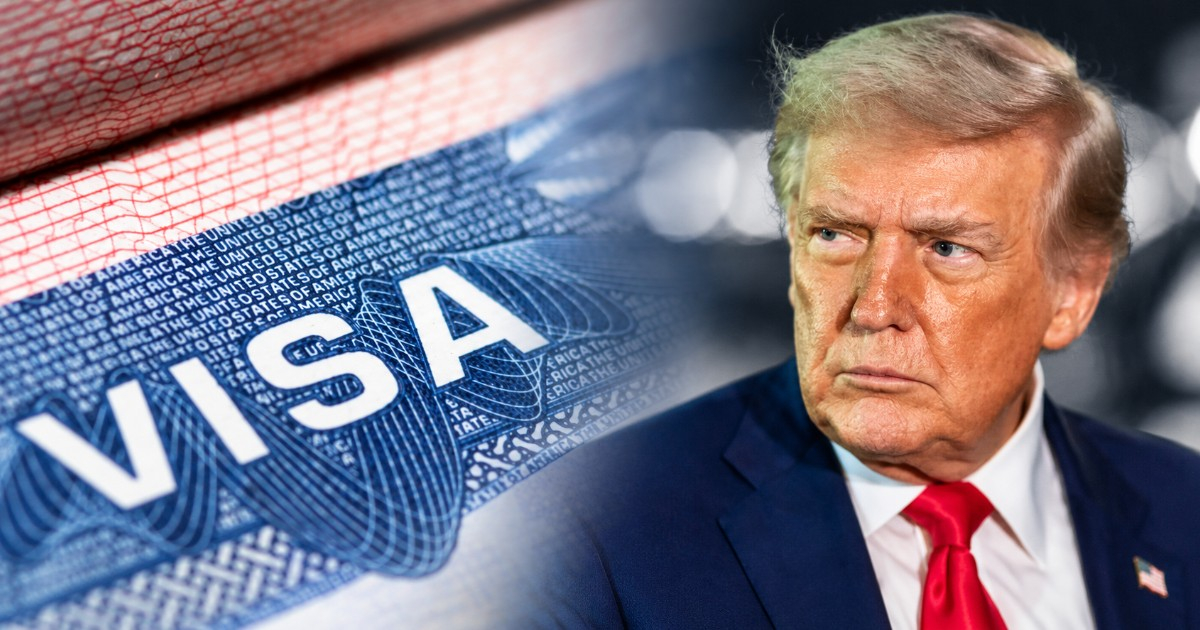
In a significant overhaul of its immigration policies, the U.S. State Department has revoked more than 250,000 visas following Donald Trump's return to the presidency. This action is part of a broader effort to tighten immigration and security protocols.
A State Department official confirmed the figure to Fox News Digital on Wednesday, explaining that the revocations were due to various reasons, including visa condition violations, criminal activities, fraud, abuse of the immigration system, and potential national security threats.
The canceled documents include 2,300 visas linked to the practice known as birth tourism. In this scenario, foreign women travel to the United States specifically to give birth so their children can obtain U.S. citizenship by birthright, according to the source.
"Under President Trump and Secretary Rubio, the State Department has already revoked over 250,000 visas," stated the department's spokesperson, Tommy Pigott. He presented this statistic as a result of increased scrutiny of visa holders.
Pigott emphasized that each visa decision is regarded as a matter of national security by the government. He assured that authorities maintain an ongoing evaluation process to identify individuals involved in crimes, fraud, terrorism, or violations of immigration conditions.
This aligns with the State Department's official policy, which recently expanded the review of the online presence of specific categories of non-immigrant visa applicants.
This week, the State Department also revoked visas for 27 Latin American officials and former officials, along with some family members, due to corruption allegations.
The individuals affected hail from Bolivia, Colombia, Ecuador, and Peru, as reported by the news outlet.
The new figure marks a significant increase from August when the State Department reported more than 175,000 visa revocations during the current administration.
At that time, authorities noted that many cancellations were related to encounters with law enforcement for incidents such as assaults, driving under the influence, theft, and drug-related offenses.
Other cited cases included reckless driving, sexual assault, child abuse, fraud, and embezzlement.
During the summer, the Trump administration also prepared for the potential revocation of business and tourist visas for up to 200,000 foreigners who later sought asylum in the United States.
The review targeted B1 and B2 visas issued between 2016 and 2026 to individuals who subsequently filed asylum applications.
Subsecretary of State, Christopher Landau, argued that asylum should not be used as a means to circumvent immigration laws and questioned applications he deemed unfounded.
Stricter controls have extended to the evaluation process for new visas as well.
Beginning October 1, the United States will expand social media reviews for applicants of visa categories I, TN, and TD, which include representatives of foreign media, professionals from Mexico and Canada under the USMCA, and their dependent family members.
Mass visa revocations are just one aspect of the ever-evolving immigration landscape. Stay informed on policies, deportations, and procedures in our U.S. Immigration section.
Understanding the State Department's Visa Revocation
Why has the U.S. State Department revoked so many visas?
The U.S. State Department has canceled over 250,000 visas as part of a comprehensive effort to enhance immigration and security measures. The revocations are due to visa condition violations, criminal activities, potential security threats, and other concerns.
What is birth tourism, and why are visas associated with it being canceled?
Birth tourism refers to the practice where foreign women travel to the U.S. to give birth, ensuring their children obtain U.S. citizenship by birthright. The State Department has canceled 2,300 visas linked to this practice as part of its crackdown on immigration abuses.
What are the implications of the expanded visa review process?
The expanded review process, which includes social media checks for certain visa categories, aims to identify any potential security threats or violations, ensuring that the issuance of visas aligns with U.S. national security interests.