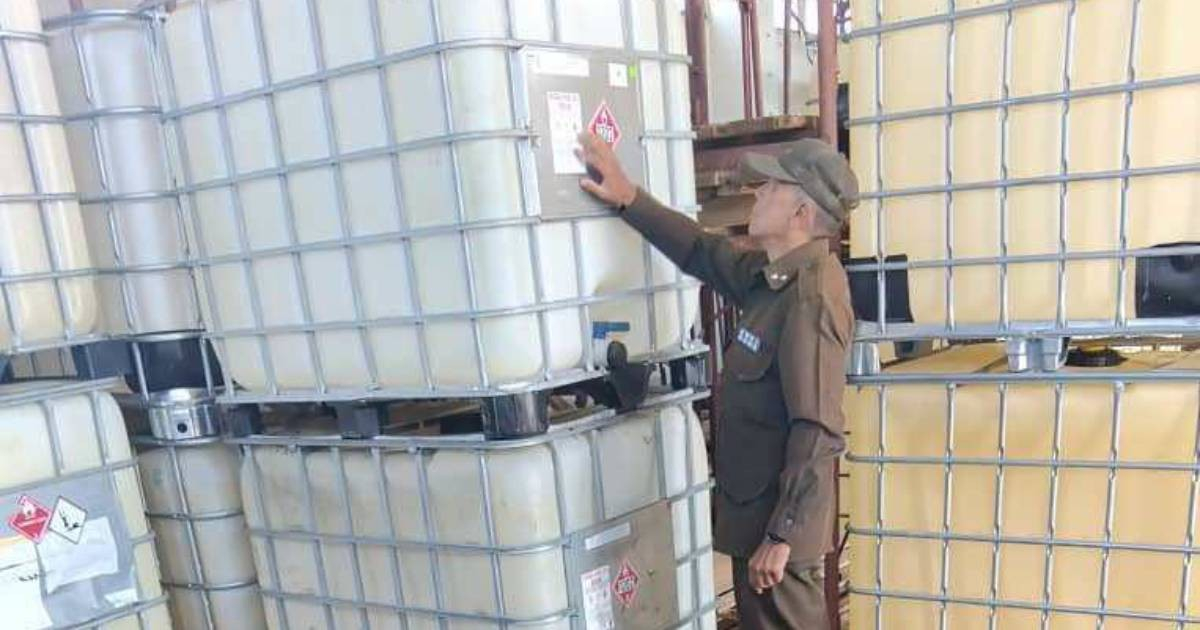
The Cuban Fire Department issued a warning on Tuesday about the fire risks associated with storing and selling fuel in IBC plastic tanks. These containers, which hold around 1,000 liters, have become increasingly common among private businesses as the nation navigates a severe energy crisis.
Using their official Facebook page, "Minint Hoy," the firefighters urged adherence to several safety protocols. These include obtaining the necessary authorization to store, transport, and sell fuel, and avoiding these activities in homes or places not equipped for such purposes.
The organization strongly advises the use of approved metal containers with proper sealing, ensuring adequate ventilation and a safe distance from heat sources, banning smoking or any spark-producing activities near the fuel, and having fire extinguishers readily available.
Additionally, the firefighters called on the public to report any violations they observe. "By preventing tragic incidents, we prevent the loss of human lives and property. Let's be responsible!" the statement concluded.
The announcement sparked numerous criticisms from users, who argued that the authorities should enforce strict measures rather than merely "recommend" them for such a high-risk activity.
"You shouldn't just recommend; you should enforce. Sadly, a disaster is just around the corner," commented one individual.
Many noted that the announcement came after months of increased private fuel sales. "This time, the rush to import fuel took precedence over addressing the associated risks without implementing necessary measures," expressed another user.
The rise of private fuel sales began after the government, in February 2026, permitted small and medium-sized enterprises (SMEs) and other non-state entities to import and sell fuel. This was an effort to expand availability amid the ongoing energy crisis.
Since then, people have reported makeshift sales points in residential areas and establishments that, according to witnesses, lack the proper conditions to handle flammable substances.
"Fuel is being sold without any protective measures... it's siphoned from tanks into any container, with people smoking and vehicles running nearby," a user described in the firefighters' post.
Another specifically highlighted the situation in La Güinera, Havana: "Come to the La Güinera market to see how gasoline is sold in these plastic tanks where thousands of people pass by daily."
This concern is not new. Back in August, Cuban fire safety experts had already warned about storing fuel in plastic tanks and noted deficiencies in containment, grounding, and ventilation systems used by SMEs.
That same month, in Holguín, official media acknowledged irregularities in fuel sales, with only four fines of a mere 60 pesos being reported.
Given the risks, some users suggested using facilities originally designed for fuel dispensing instead of allowing storage in residential areas.
"Why not enable the spots where there used to be gas stations and rent them to those in this business? It would be more professional and safer," proposed one user.
Concerns over a potential major accident were also voiced, with references to the August 2022 fire at the Matanzas Supertanker Base that resulted in 17 deaths.
"Do we have to wait for a similar accident to the supertankers for it to become mandatory? Cuba is filled with fuel tanks stored without minimum safety measures, in residential zones," questioned another user.
Fire Safety Concerns in Cuba
What are the main safety concerns regarding fuel storage in Cuba?
The primary safety concerns include the use of plastic tanks for storing fuel, insufficient ventilation, lack of distance from heat sources, and the absence of proper containment and grounding systems.
Why is there an increase in private fuel sales in Cuba?
The increase in private fuel sales began after the government allowed SMEs and other non-state entities to import and sell fuel. This was an attempt to address the prolonged energy crisis in the country.
How are citizens responding to the fire safety warnings?
Many citizens are criticizing the authorities for merely recommending safety measures rather than enforcing them, expressing concern over the potential for accidents.