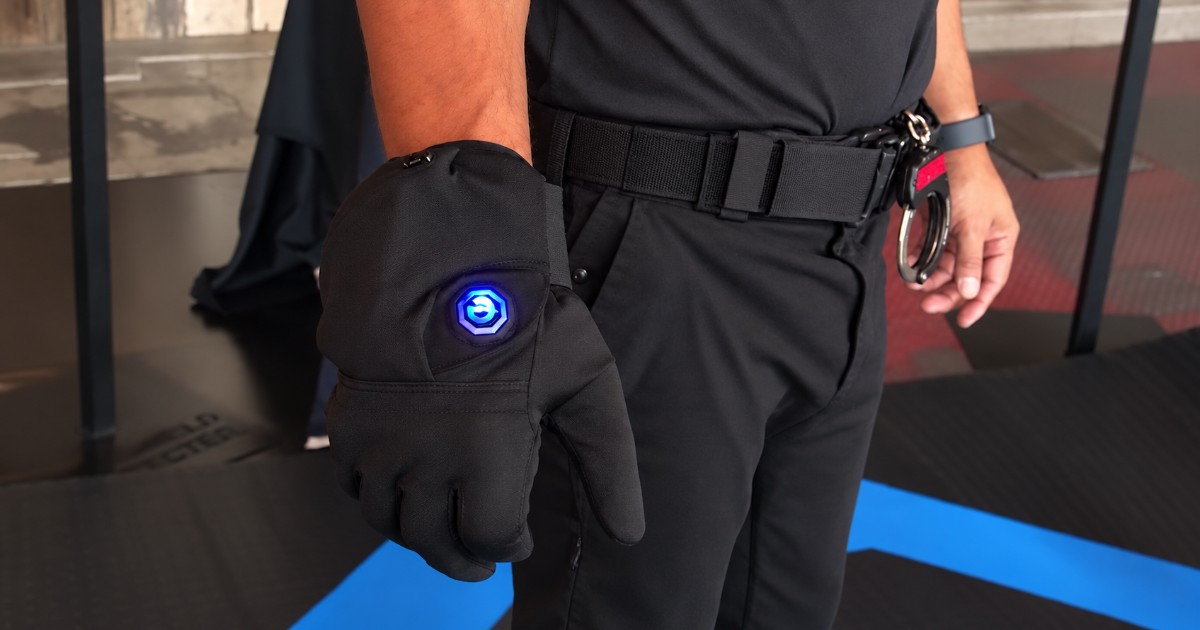
Beginning next year, California will enforce a ban on the use of gloves capable of delivering electric shocks by local, state, and federal officers, a decision that also affects Immigration and Customs Enforcement (ICE) agents operating within the state.
Governor Gavin Newsom signed legislation AB 2760 on Tuesday, part of a broader package addressing immigration law enforcement and federal agent oversight. This prohibition, as reported by the Associated Press, will remain in effect until 2030.
This development follows shortly after ICE proceeded with purchasing such devices. In August, the agency awarded a contract worth nearly $17 million to procure 6,000 pairs of electric gloves, designed to deliver painful shocks to ensure compliance from resisting individuals.
Democratic legislator LaShae Sharp-Collins, who authored the bill, articulated her intent to pause the use of these devices while their potential risks are evaluated. The new law mandates that California's Department of Justice study the safety of these gloves and submit a report to lawmakers by 2029.
"There is a lot of anxiety and uncertainty. Many people are scared," Sharp-Collins told the AP.
California's Stance on Federal Enforcement Tactics
California touted this legislation as the first of its kind in the United States. According to an official statement from Newsom's office regarding the legislative package, AB 2760 sets boundaries on the use of portable electroshock devices by law enforcement.
Newsom linked this legislation to his political and legal disputes with the Trump administration over immigration operations. "Trump has prioritized his political agenda over the health, safety, and well-being of American families," remarked the governor, adding that California aims to bolster "transparency, accountability, and oversight" in immigration law enforcement.
Legal Challenges and Opposition
The prohibition forms part of a package including restrictions on the use of stun grenades and explosive charges during immigration operations, new rules for law enforcement vehicles, and increased oversight of private detention centers. However, California's authority to impose these restrictions on federal agents might ultimately face legal challenges.
Kevin Johnson, emeritus professor at the University of California, Davis School of Law, explained to AP that courts might determine the state lacks authority to dictate federal agents' equipment due to the U.S. Constitution's supremacy clause. "The state has very limited power, if any, to tell the federal government how its agents should be equipped," Johnson elaborated.
Bill Essayli, a former first assistant U.S. attorney appointed by Trump, also opposed the measure, asserting that California lacks jurisdiction to regulate weapons or tools used by federal agents. "If you want to regulate federal agents, you need to win a federal election. Until then, you have no jurisdiction," Essayli commented on X, as reported by AP.
Opposition also comes from California law enforcement organizations. Sacramento County Sheriff Jim Cooper, a Democrat and former state legislator, criticized the ban, arguing that the gloves are a non-lethal tool that officers could use in certain situations.
Sharp-Collins indicated that ICE's plan to adopt these devices prompted her initiative. She referenced an incident in Kentucky where a family claims a man died after being subjected to multiple shocks from these gloves and a Taser while in custody in 2024.
The debate over ICE's equipment arises amidst other controversies concerning the use of force and the oversight of its agents. In July, ICE announced it would require its agents to wear body cameras during traffic stops, following two fatal shootings involving officers who did not have active cameras.
However, this move also sparked debate. It was reported in August that footage from significant incidents would only be released when ICE deemed it in the "best interest of the agency," a condition criticized by advocates for greater transparency.
Key Questions About California's Ban on Electric Shock Gloves
What is the purpose of California's ban on electric shock gloves?
The ban aims to halt the use of electric shock gloves while assessing their potential risks. The legislation seeks to enhance transparency, accountability, and oversight in immigration law enforcement.
Who opposes the ban on electric shock gloves in California?
Opposition comes from various quarters, including Bill Essayli, a former federal attorney, and Jim Cooper, Sacramento County Sheriff. They argue the state lacks jurisdiction and that the gloves serve as a non-lethal tool for officers.