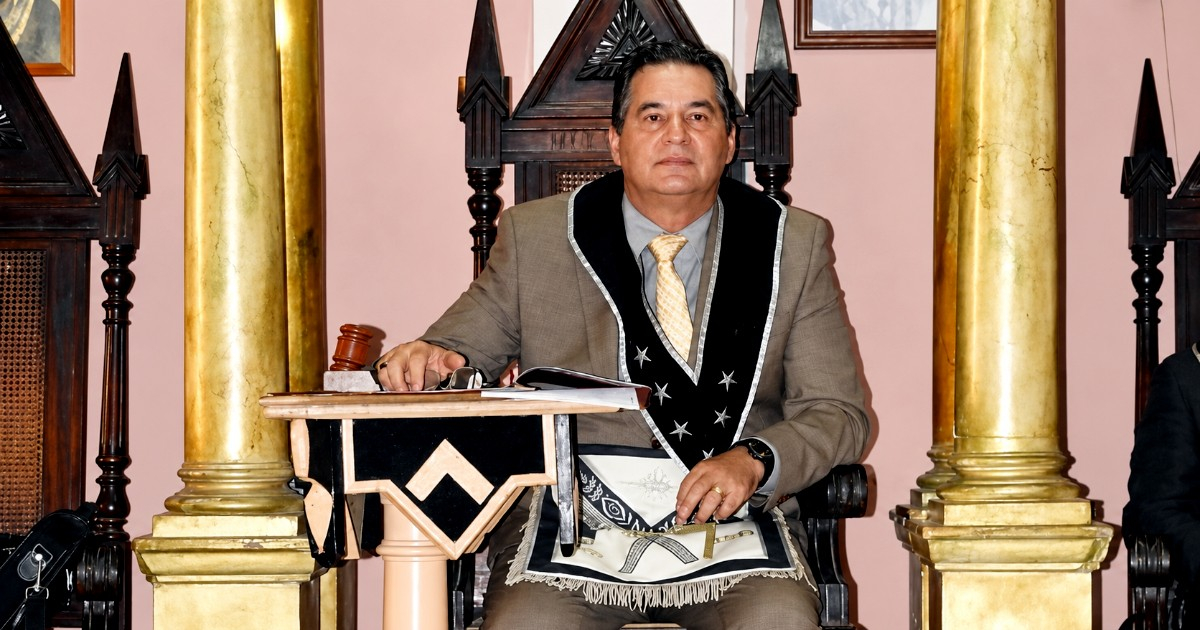
Renowned writer and former political prisoner, Ángel Santiesteban-Prats, has ascended to the prestigious position of Sovereign Grand Commander of the Supreme Council of the 33rd Degree for the Republic of Cuba. This appointment marks a significant role within the Freemasonry hierarchy on the island, according to a report from CubaNet.
The election took place last Saturday during a special session at the institution's headquarters in Havana. Santiesteban-Prats, who holds the esteemed 33rd degree—the pinnacle of the Order—secured 19 votes in favor with only one dissenting, among the highest-ranking Masons in the country.
With this election, he succeeds José Ramón Viñas Alonso, who had led the Supreme Council since 2015. Viñas has now transitioned to the role of Lieutenant Grand Commander—akin to the vice presidency of the Order—and was honored as "Sovereign Grand Commander ad vitam of honor and dignity."
Political Intrusion and Legal Battles
This election was far from a routine procedure; it culminated months of governmental pressure on the Masonic institution. This interference intensified following July 11, 2021, when Cuban Masons condemned the violence incited by Díaz-Canel against 11J protesters.
In 2025, the Ministry of Justice (MINJUS) issued Resolution 342, refusing to recognize Viñas as Sovereign Grand Commander, citing an exceeded nine-year term limit. However, Scottish Rite Masons disputed this interpretation, asserting Viñas' official term wouldn't expire until 2028, as his initial years, from 2015 to 2017, were interim.
The Supreme Council appealed to the People's Supreme Court in March 2026, but the judicial body upheld the MINJUS decision. Concurrently, State Security subjected Viñas to systematic harassment, threatening imprisonment, prosecuting him for "disobedience," and placing him under house arrest.
Pressure on the Masonic Order
On August 7, the Director of Associations for MINJUS arrived at the Supreme Council's headquarters to demand the position and install Lázaro Faustino Cuesta Valdés as interim leader, a man previously ousted by the High Chamber of the Rite. A mobilization of Masons in Havana thwarted this attempt.
Faced with exhausted legal avenues and the threat of Viñas' imprisonment, the High Chamber resolved to call for extraordinary elections. "So much pressure forced the High Chamber to convene this weekend and hold elections; it was also a way to prevent Viñas from being sentenced to prison," a Mason present at the session, who requested anonymity, explained to CubaNet.
Both Viñas and Santiesteban-Prats are also facing charges of alleged illegal currency trafficking, which Masonic sources describe as a coercive tactic by State Security. In June, Santiesteban was charged and placed under house arrest, accused of exchanging $200 in the informal market, funds donated to the National Masonic Asylum Llansó.
A New Chapter and Future Challenges
The newly appointed Sovereign Grand Commander boasts nearly four decades within the Order and, until this election, served as Grand Chancellor of the Supreme Council. In 2025, he was expelled from the Grand Lodge of Cuba, partly for his stance that it was better to close the Masonic institution than allow the regime to manipulate it further.
Mason Sergio Vidal characterized the new leader: "Ángel is an intellectual of high caliber, a defender of human rights and civil liberties, and a Mason without blemish. He has been placed in this position by those entitled to vote and by a majority."
The unresolved question remains whether the MINJUS will acknowledge the newly elected Sovereign Grand Commander or challenge the election again, highlighting the extent of the Cuban state's influence over the island's fraternal organizations.
Key Questions About Cuban Freemasonry's Leadership Shift
What position did Ángel Santiesteban-Prats recently assume?
Ángel Santiesteban-Prats was elected as the Sovereign Grand Commander of the Supreme Council of the 33rd Degree for the Republic of Cuba.
Why was the election of Ángel Santiesteban-Prats significant?
The election was significant due to the Cuban regime's pressure on the Masonic institution and the subsequent legal battles over leadership roles, reflecting broader state interference.
What challenges did José Ramón Viñas Alonso face?
José Ramón Viñas Alonso faced governmental pressure, including harassment by State Security, legal challenges, and house arrest, amidst disputes over his leadership tenure.