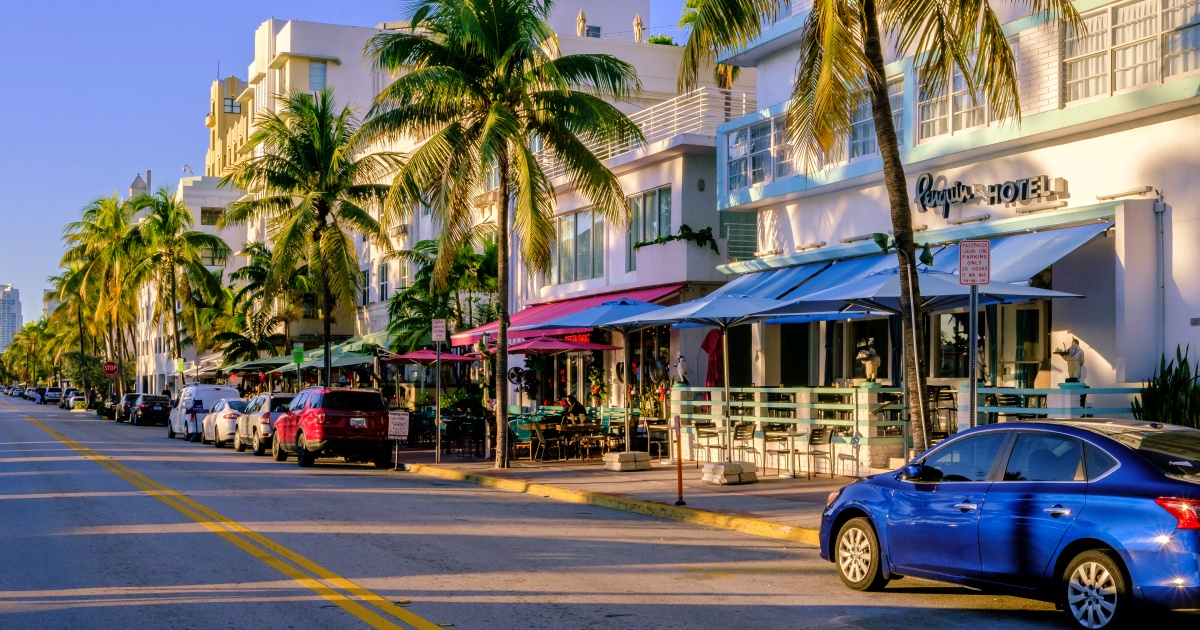
In a significant migration wave between 2021 and 2024, nearly one-third of Cubans seeking a new life in the United States chose the Miami metropolitan area as their destination. This decision was largely influenced by the extensive network of family and fellow Cubans who have long established themselves in South Florida.
This insight comes from a study presented at the Brookings Papers on Economic Activity conference, conducted by Jennifer Hunt from Rutgers University, Pia Orrenius of the Federal Reserve Bank of Dallas, and Madeline Zavodny from the University of North Florida.
The research indicates that about 50% of these migrants settled in Florida, with nearly a third opting for Miami. This trend is attributed to the historical Cuban diaspora in the region.
Community Networks Over Economic Conditions
According to the researchers, the choice of destination for many Cubans was heavily influenced by these community connections rather than the economic conditions of various metropolitan areas.
The data used in the study also highlights Cuba's significant role in this migration phenomenon. Between July 2021 and June 2024, Customs and Border Protection (CBP) records show that 542,083 Cubans were released or permitted to enter the United States, marking them as a key part of the migration wave.
Cuba accounted for 12.4% of the over 4.3 million entries in these records, making it the second-largest country of origin after Venezuela, which had 678,228 individuals or 15.5%.
Miami: A Migration Epicenter
Although New York received the highest number of migrants in absolute terms, with nearly 575,000 cases recorded by the Executive Office for Immigration Review (EOIR), Miami ranked second, followed by Los Angeles, Dallas-Fort Worth, Chicago, and Houston.
Miami's position is particularly notable given the influx of migrants from nearby countries or those with significant pre-established communities, especially from Cuba and Haiti.
When considering population size, Miami stands out with the highest concentration of EOIR cases, over 48 per 1,000 residents, among the 164 major metropolitan areas analyzed. Orlando, Salt Lake City, and New York follow.
This figure does not imply that 48 out of every 1,000 Miami residents are Cuban. It includes all studied migrants and uses immigration court cases as an approximation to determine settlement areas.
The authors caution that an EOIR case may not correspond to a single migrant, as a case can encompass multiple individuals, such as families, and the same person or family might appear in more than one case.
Unprecedented Cuban Exodus
The period under study aligns with one of Cuba's largest emigrations in recent history. Economist and demographer Juan Carlos Albizu-Campos estimates that 1.79 million people left Cuba between 2022 and 2023, a demographic exodus far exceeding past migration crises.
This estimate considers various data, including 738,680 Cuban arrivals in the U.S. from October 2021 to April 2024 via different migration routes, and estimates of those who went elsewhere.
The exodus has notably affected the working-age population. CiberCuba has also reported estimates indicating around 800,000 Cuban emigrants were aged 15 to 59, exacerbating demographic aging and workforce reduction on the island.
Official Cuban statistics acknowledge the exodus's scale, albeit with lower figures than some independent estimates. The National Office of Statistics and Information (ONEI) reported that 251,221 people emigrated from Cuba in 2024, reducing the country's effective population by 307,961.
Albizu-Campos suggests an even greater impact, with a later study estimating 545,011 departures from Cuba in 2024 and a resident population drop to just over eight million.
A Broader Migration Transformation
The Cuban migration wave was part of a much larger migration shift in the United States. The study estimates that at least 6.5 million migrants entered the country outside typical legal channels between 2021 and 2024, equivalent to at least 2% of the U.S. population in 2021.
This does not imply these 6.5 million entered illegally. Many were admitted through humanitarian programs or after receiving immigration court notices. Some later obtained work permits via asylum claims or programs granting employment authorization.
Economic Impact of Migration
The study also examines the economic impact in cities receiving these migrants, concluding that the U.S. economy largely absorbed this exceptional influx.
For the average metropolitan area, the migration wave increased the Gross Domestic Product (GDP) by around 1.5% from 2021 to 2024. Each migrant was associated with approximately 0.4 additional jobs, with notable growth in leisure, hospitality, and professional services sectors.
Findings on wages are more complex. The study suggests that the overall average wage may have decreased, though this estimate lacks strong statistical significance and is partly influenced by labor force composition changes.
However, wages for U.S.-born workers reportedly increased by around 0.9% due to the migration wave, with no discernible change in their employment rate.
The real estate market also felt the impact, with rents rising by 1.4% to 1.6%, although researchers estimate that, on average, increased labor income for U.S.-born workers offset this cost increase.
These estimates apply to the studied metropolitan areas as a whole and do not suggest that Cubans specifically caused these effects in Miami.
Changing Cuban Migration Patterns
While the vast Cuban concentration in Miami during 2021-2024 underscores South Florida's enduring appeal, the landscape of Cuban migration is beginning to shift. A growing number of Cubans are now choosing Houston over Miami, drawn by factors such as a lower cost of living and the growth of Cuban and Latino communities outside Florida.
This study offers a baseline for this potential redistribution: during the major migration wave from 2021 to 2024, about half of the Cuban migrants headed to Florida, with nearly one-third choosing Miami, maintaining its status as the major hub for the Cuban diaspora in the United States.
Cuban Migration Patterns and Their Impact
Why did many Cubans choose Miami as their destination?
Many Cubans chose Miami due to the extensive network of family and fellow Cubans already established there, which influenced their decision to settle in an area with familiar community ties.
How did the Cuban migration wave affect the U.S. economy?
The migration wave increased the GDP of metropolitan areas by about 1.5% and was associated with approximately 0.4 additional jobs per migrant, especially in sectors like leisure and hospitality and professional services.
What changes have been observed in Cuban migration patterns?
While Miami remains a significant hub, more Cubans are now opting for destinations like Houston, driven by a lower cost of living and growing Cuban communities outside of Florida.