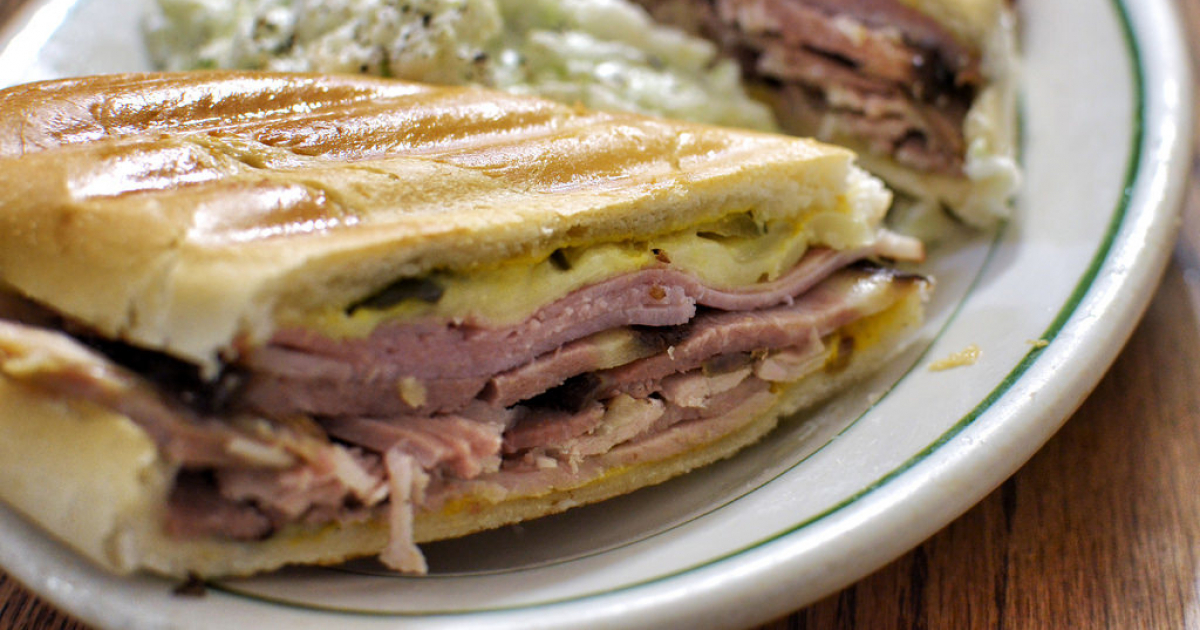
For decades, Miami and Tampa have laid claim to the Cuban sandwich, a dish synonymous with Cuban-American cuisine. However, recent research suggests a more intricate history: while the sandwich's roots trace back to Cuba, its evolution into the form we recognize today occurred in Florida.
A CNN Travel feature delved into the journey of this iconic sandwich, drawing from the book The Cuban Sandwich: A History in Layers by Andrew T. Huse, Bárbara C. Cruz, and Jeff Houck, as well as insights from historians, restaurateurs, and chefs from both cities.
"The Cuban sandwich undeniably originated in Cuba," stated Cruz, a University of South Florida professor and one of the book's authors.
The Sandwich’s Journey from Cuba to Florida
Initial versions in Cuba resembled a Spanish bocadillo: bread with cheese and available protein. By the late 19th century, it evolved into the "mixto," named for its multiple types of meat.
Researchers found advertisements from old Havana bakeries promoting these "mixto" sandwiches, evidence that the concept was circulating in Cuba before gaining popularity in the U.S.
Cuban immigrants later brought this culinary creation to various American cities. Key West saw a significant Cuban influx around 1868, while Tampa's transformation was driven by the tobacco industry's expansion.
Tampa vs. Miami: Distinctive Traditions
In 1885, Spanish entrepreneur Vicente Martínez Ybor relocated part of his cigar manufacturing operations to Tampa. The arrival of Cuban and other immigrant workers created the environment in which the sandwich evolved.
Houck argues that it was in Tampa, during the late 1880s and 1890s, that the sandwich began to take the form that would later become iconic. It was a practical meal for factory workers, easy to consume quickly or save for later.
Tampa's traditional version reflects Ybor City's diversity: alongside roast pork, ham, Swiss cheese, pickles, and mustard, it includes Genoa salami, linked to the city's Italian community.
Miami developed a distinct tradition. The significant influx of Cubans to South Florida occurred mainly after 1959, allowing the city to craft its version and establish a strong identity around the sandwich.
A notable difference is the inclusion of salami: common in Tampa's recipe but absent in Miami's classic version. There are also variations in the bread. According to Houck, Tampa's bread is crispy on the outside and soft inside, while Miami's has a thinner, more fragile crust and is typically pressed for texture.
A Symbol of Culinary Identity
The rivalry is longstanding. In 2012, Tampa was declared the historic Cuban sandwich capital, fueling controversy with Miami.
Years later, the debate persisted at the Tampa International Cuban Sandwich Festival, where the inclusion of salami among the official ingredients drew criticism from South Florida.
Miami has also integrated the sandwich into its culinary identity: August 23rd is celebrated as Cuban Sandwich Day.
Tampa's connection to the recipe remains particularly visible in Ybor City. The historic La Segunda Bakery, founded in 1915 and operated by four generations of the Moré family, produces over 20,000 loaves daily, many destined for Cuban sandwiches.
The recipe, however, has long transcended Florida. It has reached restaurants in numerous countries, and Tampa's festival even attracted international competitors.
In 2026, a young man raised in Key West opened a business in Texas dedicated to the traditional Cuban sandwich, demonstrating how the dish continues to travel with the diaspora.
Thus, the question of its origin doesn't point to a single city: the research places its direct antecedents in Cuba and its transformation into the modern version within Florida's Cuban communities, with Tampa playing a crucial role since the late 19th century.
Meanwhile, Miami, a later addition to this history, has since turned the sandwich into one of the culinary symbols of its Cuban community.
Frequently Asked Questions about the Cuban Sandwich
Where did the Cuban sandwich originate?
The Cuban sandwich originated in Cuba, where its early versions were akin to Spanish bocadillos. It later evolved into its modern form in Florida, particularly in Tampa.
What are the key differences between Tampa and Miami's Cuban sandwich versions?
Tampa's version includes Genoa salami and features bread that is crispy on the outside. Miami's version lacks salami and uses a thinner crust bread that is often pressed.
Why is Tampa considered the historic Cuban sandwich capital?
In 2012, Tampa was declared the historic Cuban sandwich capital due to its significant role in the sandwich's development and its diverse culinary influences.