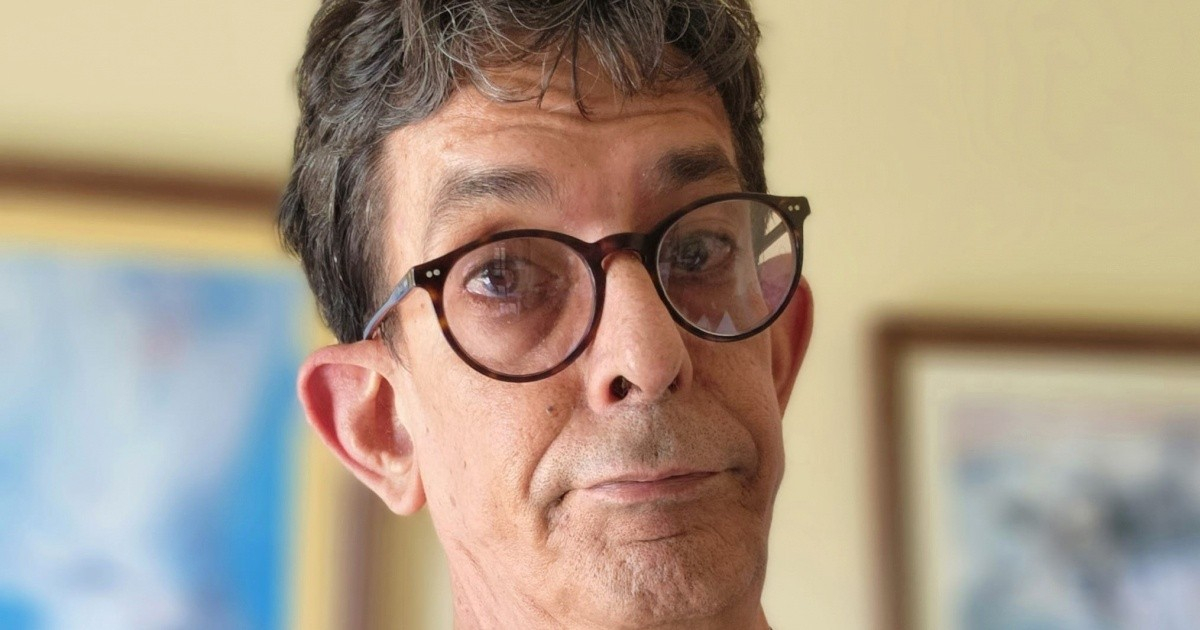
Cuban comedian and actor Ulises Toirac has firmly rejected being labeled a "traitor" for his outspoken criticism of Cuba's current state. He insists that his critiques of the government do not equate to abandoning the principles he grew up with.
In a recent Facebook post, Toirac began by clarifying his understanding of betrayal, saying, "The term 'traitor' is used for someone who, having undertaken a cause, later abandons it for another or simply renounces it." From this perspective, he argued that no one explicitly demanded his political loyalty, nor did he offer it. He reflected on the importance of dissent, the teachings of José Martí, and the internal responsibilities contributing to the nation's crisis.
The Misinterpretation of Unity
Toirac drew from Marxist theory to question the conflation of unity with uniformity. He highlighted the concept of "unity and struggle of opposites," pointing out that in Cuba, only the first part of this concept has been emphasized. "They equated unity with uniformity — which, as far as I know, are not the same — and declared, 'If you don't step through this narrow door, you're the enemy!'" he wrote.
Holding onto Martian Ideals
The comedian expressed his admiration for Martí, whom he considers "the greatest and most universal of all Cubans," and affirmed his continued support for Martí's ideas about "freedom, democracy, respect, and sovereignty." He addressed accusations of betraying the principles instilled during his upbringing by asserting, "If someone has betrayed, it’s not me."
Addressing the Real Issues
Toirac urged people to focus on the everyday challenges faced by the population and called for a review of the "giant errors committed" over the decades. He also criticized the use of U.S. sanctions as a convenient explanation for the crisis, stating, "Stop accepting the 'blockade' as an excuse; it is an obstacle to overcome," offering his personal perspective on an issue where the Cuban government largely blames Washington's sanctions.
He concluded his reflection by highlighting the social consequences he observes firsthand: "I am witnessing people dying of hunger and hardship."
This message follows a series of recent statements by Toirac regarding the country's situation. In early September, he held the Cuban government accountable for decades of poor decisions in the energy sector, arguing that the deterioration of the National Electric System cannot be solely blamed on U.S. policies. The following day, he asserted that even new thermoelectric plants wouldn't solve power outages as long as the current economic model persists. "In 15 years, the blackouts will still be happening," he cautioned.
On September 13, he revisited Cuba's living conditions, declaring his refusal to adapt to scarcity, prolonged blackouts, and economic difficulties. "I refuse to get used to living, surviving, or barely existing," he declared.
Understanding Ulises Toirac's Perspective
What does Ulises Toirac mean by betrayal?
Toirac defines betrayal as abandoning an initial cause for another or renouncing it entirely. He feels that he has not betrayed his principles since he never pledged political loyalty.
Why does Ulises Toirac criticize the Cuban government?
Toirac criticizes the government for its handling of the country's crisis and believes that internal factors, not just U.S. sanctions, are responsible for the ongoing hardships.
How does Toirac view the concept of unity in Cuba?
He argues that in Cuba, unity has been mistakenly equated with uniformity, neglecting the value of opposing viewpoints and critical discourse.