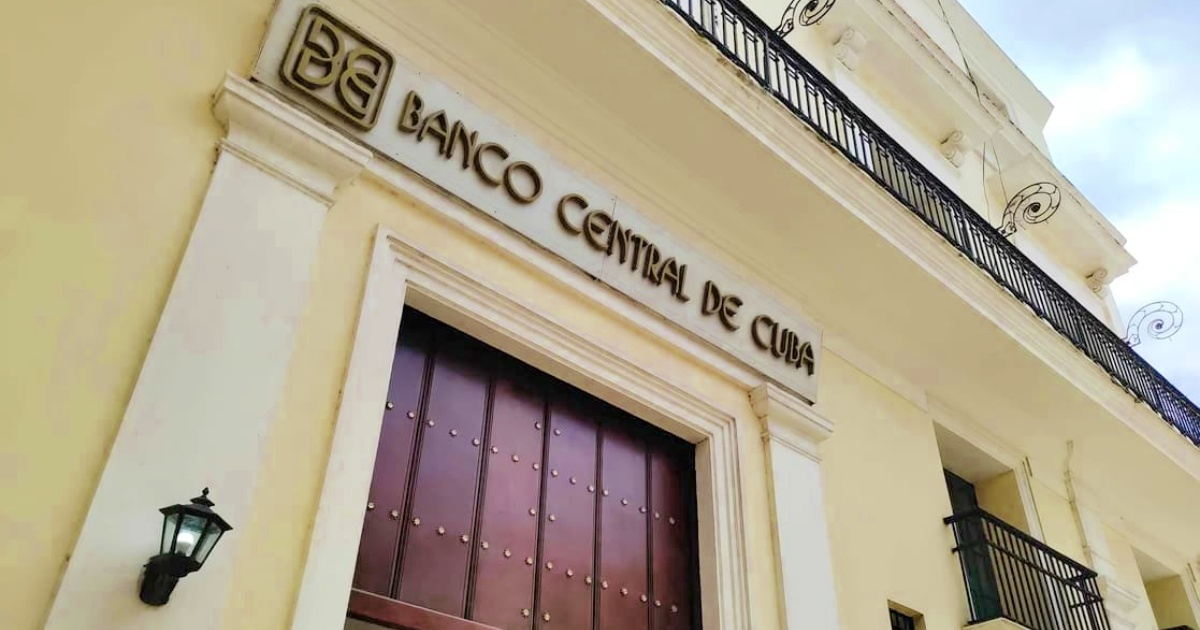
The Central Bank of Cuba (BCC) released a statement on its official website this Monday, vehemently condemning any opportunistic, unscrupulous, or illegal behaviors that seek to profit at the expense of others' needs and tarnish the image and ethics of banking services.
Signed by Juana Lilia Delgado Portal, the president of the institution, the document serves as a mandatory compliance memorandum for all structures within the Cuban banking system.
What stands out most in this statement is its omissions: it does not refer to any specific case, individual, institution, or event that prompted it.
However, the announcement comes just four days after employees from the Banco Popular de Ahorro (BPA) and Banco de Crédito y Comercio (BANDEC) branches in Santiago de Cuba were arrested for their involvement in an illegal cash-for-electronic-transfers scheme, where they charged commissions ranging from 30% to 50%.
These employees collaborated with self-employed workers, using customers' cards and identification documents to facilitate the transactions.
Authorities seized cash, bill counting machines, magnetic cards, and transaction record books during the operation.
Despite this, the BCC's declaration does not mention this operation or any other specific instances.
It also does not link the statement to the 20 banking system modifications announced on Monday, which include changes related to private and foreign capital participation, new consumer credits, and service digitalization.
Zero Tolerance Policy Without Specific References
The statement instructs all banking structures to investigate complaints thoroughly and promptly, assign administrative, labor, and criminal responsibilities, strengthen audits, protect whistleblowers, and reinforce banking ethics and a culture of reporting within all branches.
"We demand zero tolerance for such attitudes. There will be no room for complicity, concealment, or impunity," declares the document.
The statement also defends the sector's image: "These behaviors do not characterize Cuban bankers. Our sector is marked by honesty, discipline, public service, transparency, and adherence to legality."
"Those who betray these principles do not represent the banking community and must face the full rigor of the law," it adds.
The statement concludes with a call to the public, attributing the sector's difficulties to "the economic crisis and the tightening of the blockade," without acknowledging internal corruption as a structural cause.
The final instruction is clear: "This memorandum must be disseminated and enforced as mandatory."
A System in Structural Crisis
The statement arises amidst documented irregularities throughout 2026.
In April, the Provincial Popular Court of Santiago de Cuba sentenced three individuals to 10 to 15 years in prison for embezzling state funds and falsifying bank documents, involving fraudulent transfers exceeding five million pesos.
The parallel market for converting transfers into cash has spread across various regions of the country.
Citizen reports from July indicated that to withdraw 2,000 pesos, one had to transfer 2,800, a 40% commission.
This is compounded by the rise in digital fraud: the practice known as "tarjeteo" and identity theft scams have surged amid the vulnerabilities and challenges of the digital payment system.
Understanding Cuba's Banking Irregularities
What prompted the Central Bank of Cuba's statement?
The statement was issued amid irregularities in the banking sector, including the recent arrest of bank employees involved in an illegal cash-for-transfer scheme.
What actions did the Central Bank of Cuba demand from banking structures?
The bank instructed all structures to conduct thorough investigations, assign responsibilities, strengthen audits, protect whistleblowers, and promote banking ethics.
How does the statement relate to recent banking changes in Cuba?
The statement does not directly link to the recent changes, which include private and foreign capital participation, new consumer credits, and service digitalization.