On Monday, the Chinese government reiterated its commitment to supporting Cuba, pledging to stand by Havana in safeguarding its sovereignty against what Beijing terms "external interference." This declaration comes as the Cuban regime grapples with a severe economic crisis and mounting pressure from the United States.
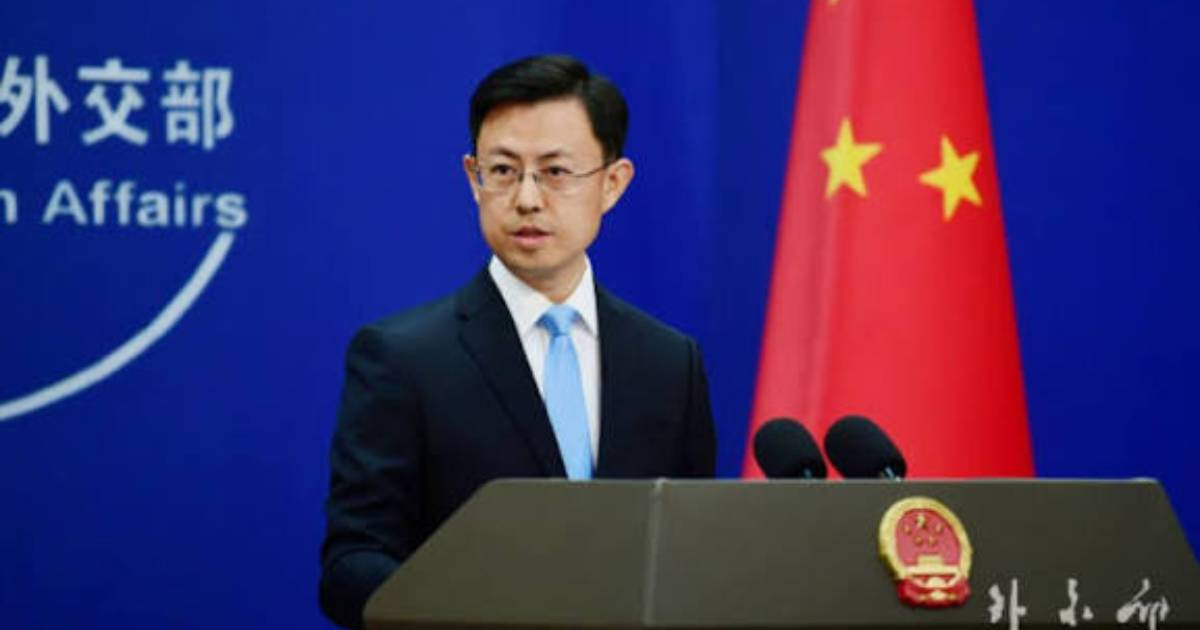
"Regardless of how the international landscape changes, China will steadfastly support Cuba in exploring a socialist development path tailored to its national circumstances," stated Guo Jiakun, spokesperson for China's Ministry of Foreign Affairs, during a press briefing in Beijing.
The spokesperson emphasized that China would assist Cuba "in protecting national sovereignty and opposing external interference."
Historical Ties and Shared Visions
Guo highlighted that this year marks the 66th anniversary of diplomatic relations between China and Cuba, emphasizing the "community of shared future" that the two governments have promoted under the leadership of Xi Jinping and Miguel Díaz-Canel.
This statement reinforces a stance that Beijing has consistently expressed in recent months. In August, following new sanctions from Washington related to Cuba's military cooperation with China and Russia, Guo himself demanded that the United States lift its measures against Havana, defending the legitimacy of the cooperation between the two nations.
Beyond Diplomatic Support
Chinese backing has not been confined to diplomacy alone. In January, Xi Jinping sanctioned an emergency aid package for the island, comprising $80 million and 60,000 tons of rice, amid Cuba's energy and food crises.
The collaboration has also extended to the electric sector. In August, China delivered a second batch of 5,000 photovoltaic systems to Cuba, aimed at rural homes and service centers, as part of joint projects to tackle the deterioration of Cuba's electric grid.
Dependency Concerns and Future Outlook
This growing reliance on Chinese assistance starkly contrasts with statements made by Díaz-Canel in July, where he acknowledged Cuba's decades-long dependence on allies like the Soviet Union, China, and Venezuela. He asserted that it was time for Cuba to progress "through our own efforts" and "not rely on anyone."
Nevertheless, China has made it clear that it intends to maintain its political and economic support for Havana. In February, Foreign Minister Wang Yi had already promised to continue providing aid to Cuba "within its capacity," while also denouncing any foreign "interference" on the island.
Understanding China's Support for Cuba
What is the nature of China's support for Cuba?
China's support for Cuba includes political backing, economic aid, and assistance in various sectors like energy and food supply. This support is part of a broader strategic partnership between the two countries.
How has China responded to U.S. sanctions on Cuba?
China has criticized U.S. sanctions on Cuba, calling for their removal. Chinese officials have defended the cooperation between China and Cuba as legitimate and have pledged continued support despite these sanctions.
Has Cuba expressed any desire to reduce its dependence on international allies?
Yes, Cuban President Miguel Díaz-Canel has indicated a desire for Cuba to advance through its own efforts and reduce reliance on international allies, despite ongoing support from countries like China.