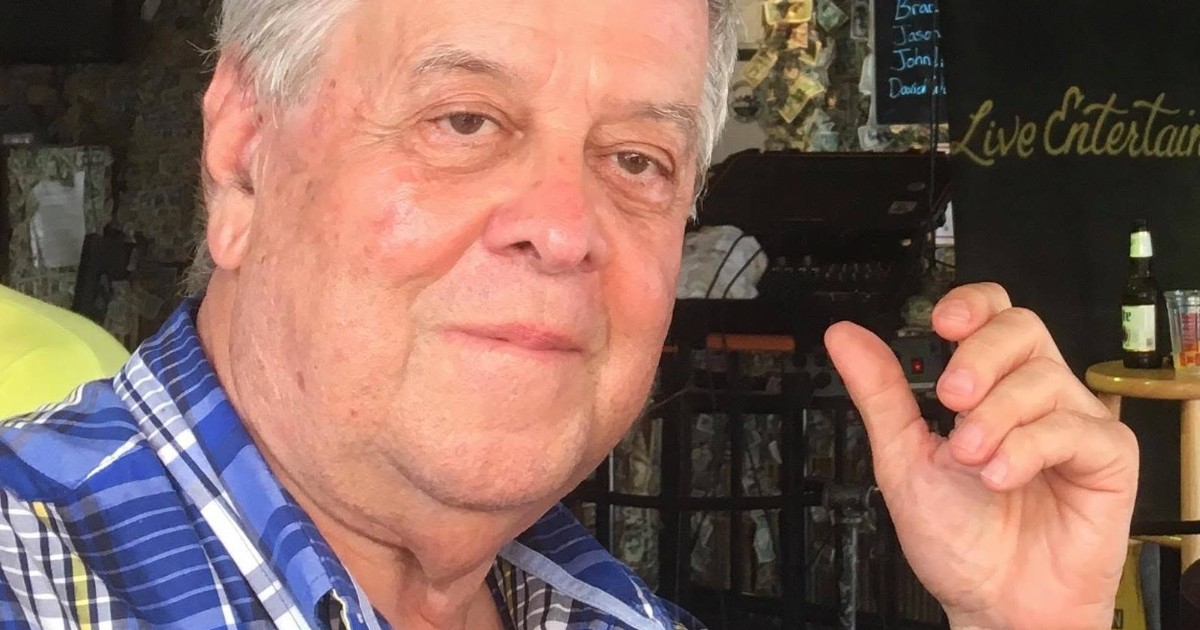
Carlos Alzugaray, a former Cuban ambassador, expresses skepticism about the existence of a formal negotiation between the Cuban and U.S. governments. He believes that any contact between the two might be limited to preliminary or exploratory discussions, given the typical opacity with which Cuban authorities handle major political decisions.
In an interview with El Orden Mundial, Alzugaray, who served as Cuba's ambassador to the European Union and as an adviser to the Ministry of Foreign Affairs (MINREX), noted that the information available does not confirm that Havana and Washington have entered into formal negotiations.
"I don't assume there is a negotiation. Deputy Minister Josefina Vidal, who was the chief negotiator for the memorandums of understanding signed between 2015 and 2016, has stated that there are no negotiations, only dialogue. I would argue it's probably not even that; most likely, there have been preliminary or exploratory conversations," he asserted.
This distinction is significant amid rumors of contacts between Washington and Cuban power representatives, a topic clouded by unclear and sometimes contradictory signals from various regime figures.
Cuba's Lack of Transparency
Alzugaray acknowledged the lack of transparency within the Cuban leadership when discussing potential internal differences. "In Cuba, everything operates with a lot of opacity," he remarked during the interview.
Conversations Do Not Equate to Negotiations
Alzugaray emphasized the importance of distinguishing between maintaining contacts and entering into official negotiations. He explained that a conversation between representatives or intermediaries of two nations does not automatically constitute a negotiation table.
"A negotiator presents specific demands, the other party responds with what they can or cannot accept and what requires consultation with their government: that's a negotiation; everything else is merely conversation," he explained.
"Negotiations require an agenda and should be preceded by goodwill and a willingness to find mutually beneficial solutions. In the case of the United States, neither exists," he maintained.
Alzugaray pointed out that MINREX has specialized officials for U.S. relations, raising questions about why Cuba might resort to external figures outside traditional diplomatic channels if a negotiation process truly exists.
"Within the Ministry of Foreign Affairs, there are entire departments dedicated to relations with the United States: legal affairs, political analysis, bilateral relations... There's a highly professional team. There's no need to seek negotiators outside these structures," he assured.
The former ambassador also highlighted that both countries maintain diplomatic channels that could directly address their differences, with existing historical areas of cooperation, such as migration and anti-narcotic efforts.
Regarding the U.S. strategy, Alzugaray interpreted that Washington currently shows little interest in opening a conventional political negotiation with Havana's authorities.
"As Marco Rubio has repeatedly stated, the idea is not to open a political negotiation with the Cuban government. From the U.S. perspective, if the Cuban government is going to disappear, why negotiate with it?" he stated.
He also argued that Cuban authorities erred in attempting to use parallel or informal channels.
"The Cuban government made a mistake there. I can understand the desperation to open a communication channel, but once the other side's intentions became clear, that path should have been abandoned," he noted.
Doubts About Raúl Guillermo Rodríguez Castro as a Negotiator
One of the most striking points in the interview was the discussion about who might participate in these contacts or negotiations with the United States.
Alzugaray mentioned Raúl Guillermo Rodríguez Castro, known as "El Cangrejo," the grandson of Raúl Castro and son of the late General Luis Alberto Rodríguez López-Calleja, who led GAESA, the military-controlled business conglomerate.
The former diplomat questioned the institutional capacity of Raúl Castro's grandson to assume such a role. "What can Raúl Guillermo promise Americans? What institutional capacity does he have to ensure agreement compliance?" he questioned.
The former diplomat also did not rule out that "El Cangrejo" might have been prepared for responsibilities within GAESA, though he clarified that this is a possibility, not a confirmed fact.
"Given the leaks, I wouldn't rule out that Raúl Guillermo has been prepared to play an important role in GAESA," he noted.
Alzugaray believes that being part of the Castro family does not automatically guarantee a position within a structure where other leaders and high-ranking officials have their own interests. He also questioned Raúl Guillermo's relevant administrative experience and whether he has a political network comparable to what is needed for a decisive role in a potential succession.
"Is there a similar network around Raúl Guillermo today? I don't see it. He's not even part of the Political Bureau. He doesn't participate in meetings where strategic country decisions are made, and one must also wonder how the military high command views him," he stated.
Political Prisoners, Democracy, and U.S. Relations
In the interview, Alzugaray also touched on several topics related to Cuba's political situation, international relations, and the country's future. Key issues include:
The prisoners of the July 11 protests: Alzugaray advocates for an amnesty for those imprisoned for the protests on July 11, 2021. "I would start with the July 11 prisoners. I would decree an amnesty for all those prisoners," he affirms. He also considers it a mistake that they remain incarcerated and states: "I believe they should be released."
The authoritarian nature of the Cuban system: When asked directly if Cuba is a dictatorship, the former ambassador replies that it is "an authoritarian regime with dictatorial traits," although he considers it retains some democratic elements. He ultimately defines it as "a hybrid regime, clearly authoritarian," acknowledging "significant limitations on political pluralism and certain freedoms."
Cuba's political future: Alzugaray expresses his desire for "a much more democratic Cuba" and supports the existence of competitive elections. However, he clarifies that he does not foresee an immediate transformation into a multiparty system: "I don't necessarily imagine a multiparty Cuba in the short term. I don't rule it out for the future, but I think we're not there yet."
The power of GAESA and succession: The former diplomat analyzes the immense economic power accumulated by the Armed Forces' business conglomerate during Luis Alberto Rodríguez López-Calleja's tenure and the uncertainties following his death. In this context, he addresses the doubts about Raúl Guillermo Rodríguez Castro's potential role within GAESA and the power structure.
The influence of the Cuban exile community in Washington: Alzugaray questions the idea that the so-called Cuban-American lobby solely determines U.S. policy toward the island. He reviews the influence of the Cuban American National Foundation and figures like Jorge Mas Canosa and Bob Menendez, as well as the changes experienced by the Cuban-American community over the past decades.
Relations between Cuba and the European Union: The former ambassador, who represented Havana to the EU, recounts the negotiations he attempted to promote in the 1990s and supports the continuation of the Political Dialogue and Cooperation Agreement, considering that its elimination would harm projects developed within Cuba.
Alzugaray's statements provide the perspective of a former Cuban diplomatic official on some of the main uncertainties currently surrounding power on the island.
His doubts about the existence of formal negotiations with Washington, his questioning of Raúl Guillermo Rodríguez Castro's ability to act as a negotiator, and his acknowledgment of the existing political restrictions in Cuba reveal the lack of public information about decisions that could be crucial for the country's future.
Key Insights on Cuba's Political Dynamics
What is Carlos Alzugaray's view on the current U.S.-Cuba negotiations?
Alzugaray is skeptical about the existence of a formal negotiation, suggesting that any interactions are likely preliminary or exploratory conversations.
Who is Raúl Guillermo Rodríguez Castro?
Raúl Guillermo Rodríguez Castro, known as "El Cangrejo," is the grandson of Raúl Castro and was mentioned as a potential figure in talks with the U.S., though his capacity as a negotiator is questioned.
What are Alzugaray's thoughts on Cuba's political system?
Alzugaray describes Cuba's system as an authoritarian regime with dictatorial traits, though he acknowledges some democratic elements.