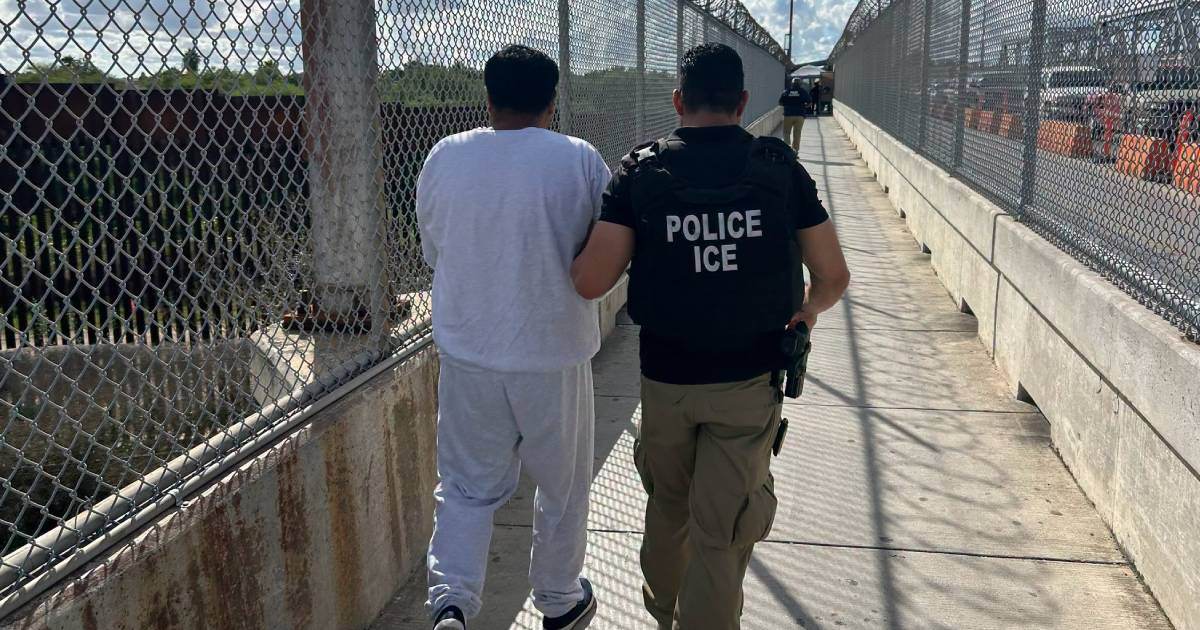
Cuban national Antonio Frómeta Ascón, aged 63, has been held by U.S. Immigration and Customs Enforcement (ICE) for more than a year while American authorities struggle to find a country willing to accept him for deportation.
During this period, Frómeta's first granddaughter was born, yet he remains unable to meet her.
"I haven't been able to meet or hug her. I should be with my family, not locked up here," Frómeta expressed from the ICE Processing Center in El Paso, Texas, as reported by El Paso Matters on Sunday.
Frómeta arrived in the United States in 1994 during the Cuban raft crisis. After some time at the Guantanamo Naval Base, he was granted parole to enter the country, where he settled in Florida, worked trimming trees, and built a family over the next three decades.
On August 14, 2025, he was arrested in West Palm Beach as part of Operation Tidal Wave, a joint state and federal effort to apprehend immigrants with deportation orders.
Longstanding Immigration Challenges
Frómeta's immigration issues have a long history. In 2002, he was sentenced to five years of probation for an assault charge in Palm Beach, which he served. In 2008, he failed to attend a scheduled immigration hearing, resulting in a deportation order issued in his absence.
According to El Paso Matters, ICE attempted to deport him to Cuba in November 2025, but the Cuban government refused to accept him.
Frómeta also rejected the idea of being sent to Mexico, citing fears for his safety and asserting, "I am Cuban, not Mexican."
Legal Battle and Health Concerns
His prolonged detention has reached the courts. In March, he filed a habeas corpus petition in the U.S. District Court for the Western District of Texas, challenging his continued incarceration without concrete deportation plans.
This situation recalls the Supreme Court case Zadvydas v. Davis (2001), which addressed the detention of immigrants with removal orders when deportation is unlikely. The ruling set a presumptive reasonable period of six months, after which the government must provide evidence if deportation is not significantly probable in the foreseeable future.
In July, the government indicated to the court that the timeframe for executing Frómeta's deportation "is currently unknown."
A Witness to Tragedy
Frómeta's story has another layer: he claims to have witnessed events leading to the death of fellow Cuban Geraldo Lunas Campos, 55, who died on January 3 while in ICE custody.
The El Paso County Medical Examiner determined that Lunas Campos died from asphyxia due to neck and torso compression and ruled the death a homicide.
"They handcuffed him, and I saw them beating him as they took him away," Frómeta recounted. "They murdered him, there's no other way to put it."
Frómeta also alleged that during his detention, a guard struck him in the ear, causing hearing loss, and he was subsequently pressured to accept deportation to Mexico.
While awaiting a resolution, he reports deteriorating health and weight loss. His partner told the media he is "desperate and very depressed."
In a handwritten letter dated August 14 and submitted to the court weeks later, Frómeta wrote: "I have been detained for a year and fifteen days. Thank you for your time, and God bless you. Please, set me free."
Frequently Asked Questions About Frómeta's ICE Detention
Why has Antonio Frómeta Ascón been detained by ICE for over a year?
Antonio Frómeta Ascón has been detained as authorities search for a country willing to accept him for deportation, following a deportation order issued in his absence in 2008.
What legal precedents relate to prolonged immigration detention like Frómeta's?
The Supreme Court case Zadvydas v. Davis (2001) addressed similar situations, establishing a six-month reasonable detention period and requiring the government to provide evidence if deportation is unlikely in the foreseeable future.
What are the health and legal implications for Frómeta during his detention?
Frómeta has reported deteriorating health and weight loss and has filed a habeas corpus petition challenging his prolonged detention without a clear deportation plan.