The Cuban poet and improviser Juan Carlos García Guridi took to Facebook on Saturday to share his sonnet titled "STRUGGLE," a piece that succinctly captures the daily anguish felt by millions of Cubans trapped in an unending crisis.
This lyrical work, composed in the traditional form of two quatrains and two tercets, begins with an image of relentless perseverance: "The ordinary Cuban fights daily, / never stopping in the quest for sustenance; / every step they take, I feel in my soul / as if it's an unnecessary cry."
Delving deeper into existential precariousness, the second quatrain states, "Sometimes destiny seems so precarious / as though it's driven by the wind / and life, soulless and breathless, / clings to the fasting of Calvary." Here, the reference to Calvary suggests a suffering akin to unending martyrdom for the common Cuban.
The first tercet delivers a powerful indictment: "God does not hear the ordinary Cuban: / What is sent cannot be the struggle, / much less the government's Judas." Labeling the regime as "the government's Judas" is the poem’s most direct accusation, portraying political power as complicit in the people's abandonment.
The closing image is one of unyielding resistance without reward: "I admire them for never bending / and under the sun, rain, or winter / struggling for a future that never comes." This final line serves as a stark commentary on the harsh reality faced by the island's inhabitants.
Born in Batabanó, Mayabeque in 1968, García Guridi is a noted researcher and active proponent of Cuban popular poetry, with over a dozen published works. "STRUGGLE" is the latest in a series of protest poems released this year: "Catharsis," which included the line "That silent endurance / is not worthy of a medal"; "I ASK," addressing the loss of dignity and freedom; and a décima condemning Cuba’s transformation into "a country of garbage."
The poem arrives amidst the island's most documented decline in decades. The Cuban Observatory for Human Rights estimated in August, based on 1,318 interviews across 79 municipalities, that 94% of the population lives in extreme poverty, with eight out of ten Cubans having skipped meals in the past six months due to lacking money or food.
This dire situation is compounded by power outages lasting 20 to over 30 hours in various areas, an informal exchange rate where the dollar exceeds 700 Cuban pesos, and countless essential medications missing from state pharmacies.
The response to "I ASK," published in July, foretold the impact of pieces like "STRUGGLE" among those living this reality. One online commenter remarked, "The most brutal torture being applied to a human is being implemented in our country, we have nothing left." Another noted, "God, how much suffering in those verses! […] But no one has an answer, only uncertainty prevails in our lives."
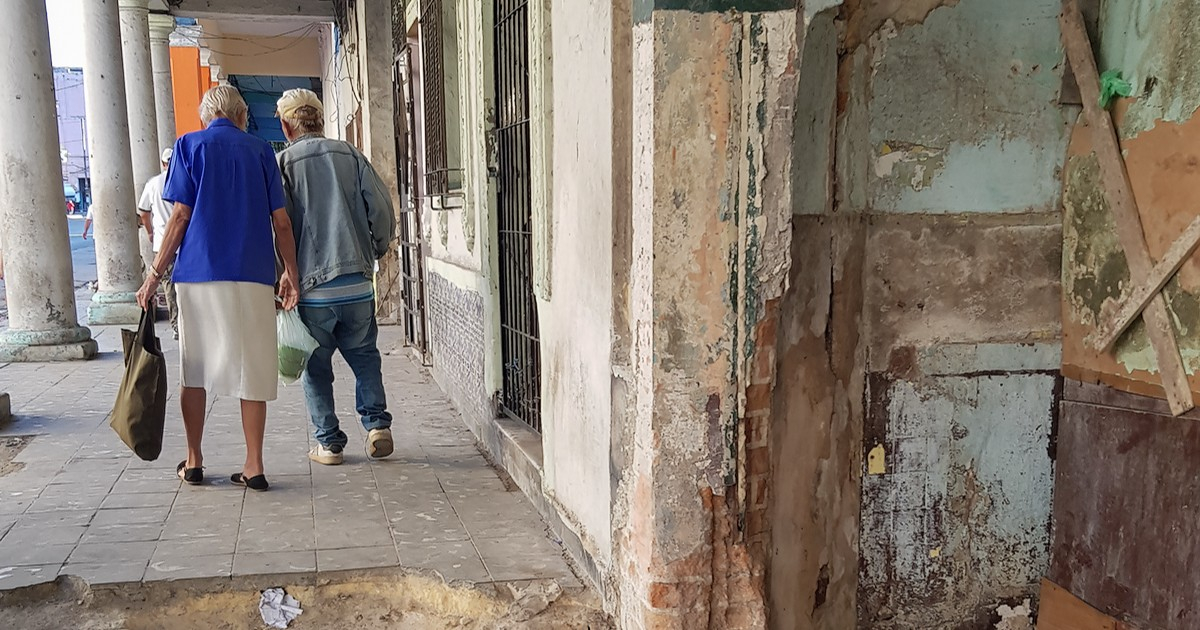
In this context, the sonnet's conclusion transcends literature: the Cuban who "under the sun, rain, or winter / struggles for a future that never comes" is also the one pushing a rickety cart down crumbling streets, skipping meals, and watching their children emigrate.
Understanding the Cuban Struggle Through Poetry
What does Juan Carlos García Guridi's poem "STRUGGLE" depict?
The poem "STRUGGLE" by Juan Carlos García Guridi presents the unending hardships faced by ordinary Cubans, highlighting their relentless fight for survival amidst economic and political turmoil.
How does the poem critique the Cuban government?
The poem criticizes the Cuban government by referring to it as "the government's Judas," suggesting a betrayal of the people and complicity in the ongoing crisis.
What is the significance of the poem's conclusion?
The poem’s conclusion emphasizes the persistence of Cubans who continue to struggle for a better future despite harsh conditions, symbolizing their resilience and the ongoing challenges they face.