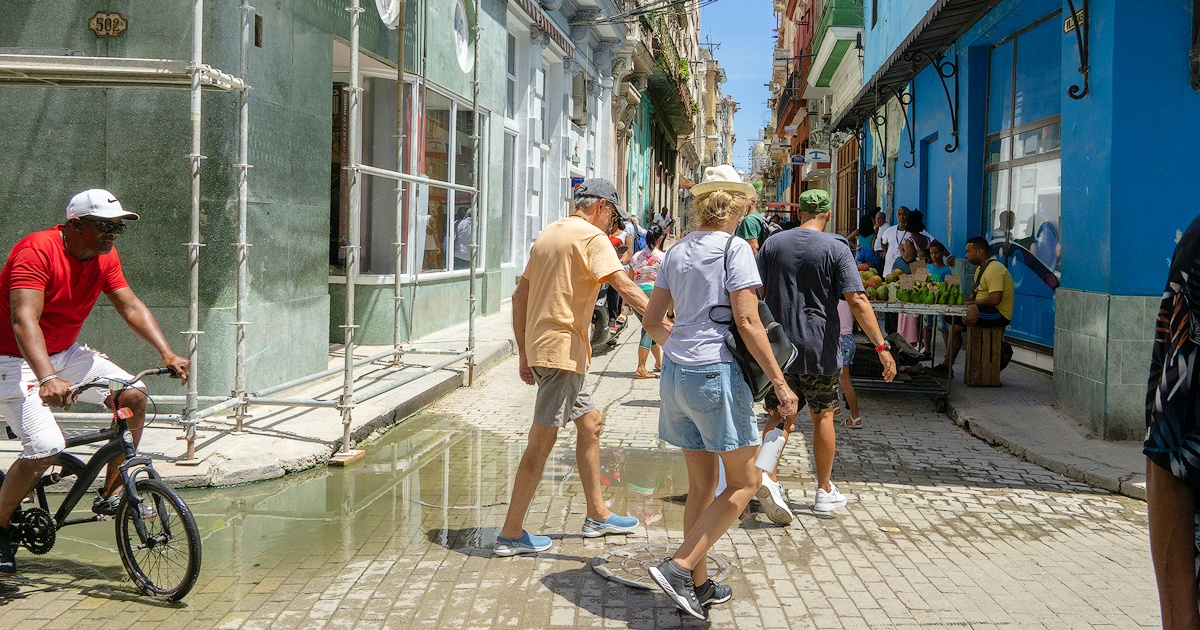
The United Kingdom's Foreign, Commonwealth & Development Office (FCDO) has recently revised its travel advisory for Cuba, continuing to advise against all travel to the island unless it is essential.
The updated guidance includes new sections addressing street protests, power grid failures, shortages of fuel and water, disruptions in air travel connectivity, and the inability to use international bank cards on the island.
Cuba's Worsening Economic Crisis
The FCDO is candid in its description of the situation in Cuba, noting that the country is grappling with a deepening economic crisis. The statement highlights shortages in fuel, electricity, water, and other basic necessities, which are impacting tourism services and internal travel.
The document underscores that this deterioration has led to frequent protests. "So far, most have remained peaceful, but there is potential for escalation," the advisory warns, urging citizens to avoid large gatherings.
Additionally, the FCDO points to a rise in opportunistic crime tied to the economic and social decline.
Frequent Blackouts and Energy Collapse Risk
The energy crisis is a focal point of the update. The FCDO warns that "Cuba's national power grid has failed multiple times in recent months" and suggests that further collapses are likely under current conditions.
Cuban authorities have implemented fuel rationing, reduced public services, and made adjustments in health, education, transportation, and tourism sectors to manage "very limited" energy supplies.
The British government advises travelers to "conserve fuel, water, food, and mobile phone charge," and cautions, "be prepared for significant disruptions."
Aviation Fuel Shortages and Airline Withdrawals
The advisory also highlights critical issues in air travel connectivity. The FCDO notes that "Cuban authorities have announced that all international airports are out of aviation fuel," with only Terminal 3 at José Martí International Airport operational.
Airlines that have suspended operations include all Canadian carriers—Air Canada, WestJet, Air Transat, and Sunwing—alongside Air France, Iberia, World2Fly, and LATAM. The agency warns that options to leave the country could become even more limited if the situation worsens.
For those already on the island, the FCDO issues a direct message: "The situation can deteriorate rapidly and without warning. Be ready to change your plans quickly if necessary."
International Cards Blocked: Cash Only
The advisory also covers payment issues, reminding travelers that the Central Bank of Cuba announced that Visa and Mastercard have not been operational since June, leaving visitors unable to withdraw cash from ATMs using foreign cards.
"If you need to visit Cuba, you should carry enough cash to cover your expenses throughout your stay and in case of emergencies, such as medical treatment or delayed departure. U.S. dollars and euros are widely accepted," the statement advises.
Plummeting Tourism
The British advisory joins similar warnings issued by Canada, the Netherlands, Germany, and Ireland, among others, throughout 2026.
The impact on the tourism sector is severe: between January and August, only 450,353 international visitors arrived in Cuba, a 64.4% decrease from the same period in 2025, according to data from Diario de Cuba.
Hotel occupancy remains below 10%, and state-owned chain Gaviota has closed 20 hotels in Cayo Santa María, leaving over 7,000 workers unemployed, illustrating the extent of the crisis facing the Cuban regime.
FAQs about the UK Travel Warning to Cuba
Why has the UK updated its travel warning for Cuba?
The UK updated its travel warning due to worsening economic conditions in Cuba, including shortages of basic necessities, frequent protests, and increased crime.
What should travelers to Cuba be prepared for according to the FCDO?
Travelers should be ready for significant disruptions in fuel, water, and electricity supplies, as well as potential changes in travel plans due to limited connectivity and resources.