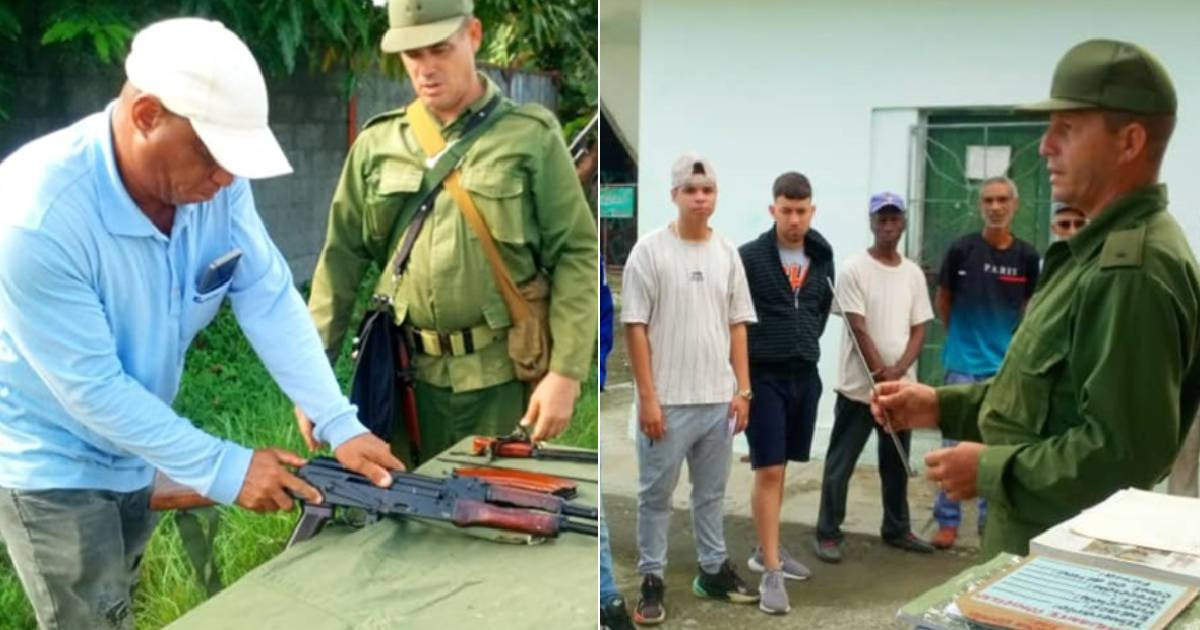
This past Friday, the town of Jatibonico in Sancti Spíritus played host to the National Defense Day, featuring a comprehensive territorial tactical exercise. This operation in the southern region included the strategic placement of antipersonnel mines, grenade launches, and the mobilization of reservists in response to a simulated enemy landing.
The scenario envisioned an adversary who had previously landed in Cuba, making their way toward the eastern part of the island, as highlighted by the official Escambray newspaper.
Small troop units and Production and Defense Brigades engaged in simulated combat against this hypothetical enemy, receiving training in deploying mines aimed at "destroying enemy personnel and armored vehicles," according to the press outlet. Additionally, participants practiced the assembly and disassembly of the AKM rifle.
Meanwhile, personnel from the Municipal Military Committee were trained to activate the alert system that summons reservists to reinforce units of the Revolutionary Armed Forces (FAR) and Territorial Troops Militias.
Both permanent and auxiliary forces responsible for maintaining internal order took part in the exercises. Primary school students, known as pioneers, were guided to protective structures upon hearing the siren mounted atop a municipal building, the source added.
Observing the day's events were members of the Provincial Defense Council and Colonel Enrique Tamayo Méndez from the Central Army Command, who praised "the achieved cohesion and mission proficiency of the commanders."
Fidel Alejandro Triana González, president of the Municipal Defense Council, explicitly linked the exercise to statements made by U.S. President Donald Trump at the United Nations General Assembly, where he expressed his administration's desire for fundamental change in Cuba.
Triana emphasized the "commitment to continue strengthening the territorial defense apparatus," as reported.
The day before, Díaz-Canel participated in another session of the National Defense Day from the Rampa Zone Defense Council in Vedado, Havana, and posted on X: "Our preparedness is a national priority. Dignity and unity are the foundations for protecting the homeland."
The Jatibonico exercise is part of the Year of Defense Preparation 2026 initiative, announced in January by the Western, Central, and Eastern armies, implementing weekly sessions under the doctrine of the War of the Entire People.
Throughout the year, various provinces have hosted these drills; in Cienfuegos, exercises took place both by sea and air, while in Villa Clara, military leaders showcased mules and carts as part of their training, images that sparked ridicule on social media due to the stark contrast with the severe economic crisis affecting the population.
On September 22, Trump labeled Cuba as a "completely failed state" at the UN, and Secretary of State Marco Rubio did not dismiss the possibility of military action days later.
However, on Saturday, Trump ruled out immediate military intervention, favoring a diplomatic approach, stating, "I don't think we need to resort to military means."
Key Aspects of Cuba's National Defense Drills
What was the purpose of the defense exercise in Jatibonico?
The exercise aimed to simulate a response to a hypothetical enemy landing, testing the readiness and coordination of local forces and reservists.
How did the exercise relate to statements by President Trump?
Fidel Alejandro Triana González linked the exercise to Trump's UN comments about seeking change in Cuba, highlighting the need for strong territorial defense.
What was included in the training for the defense exercise?
Training included the placement of antipersonnel mines, grenade launches, AKM rifle assembly and disassembly, and the mobilization of reservists.