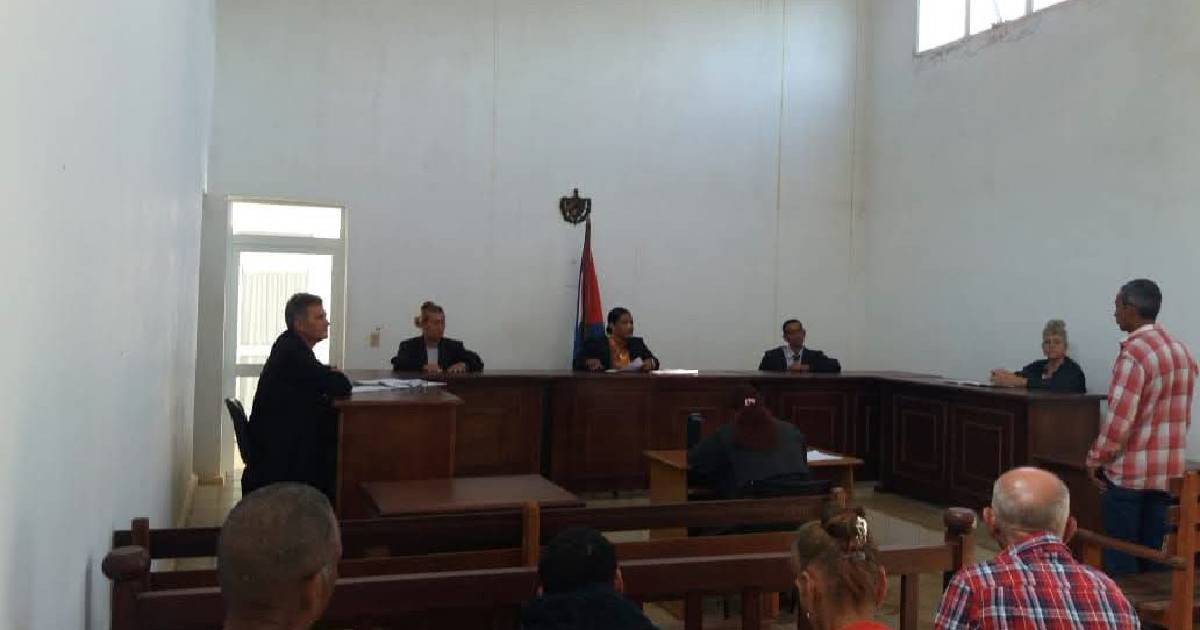
On September 24, the People's Municipal Court in Baraguá, Ciego de Ávila, conducted a trial deemed "exemplary" concerning the theft of dielectric oil from a transformer bank belonging to an agricultural cooperative. This incident left 12 homes without power.
The case involved the theft of 236 liters of dielectric oil from the transformer bank of the Mártires del 9 de Abril Agricultural Production Cooperative (CPA), as reported by the provincial broadcaster Radio Surco on Friday.
During the trial, it was revealed that the entity's guard had abandoned his duties, allowing outsiders to take the oil.
The Impact of Negligence
The official source described the negligence as having "direct and severe consequences for the community and local production."
Beyond cutting off electricity to the affected families, the theft severely disrupted the cooperative's operations, which rely on dielectric oil to power its electrical system.
Legal Implications
The crime was classified as "failure to protect property in economic entities," penalizing the worker's negligence for leaving their duties, thus enabling the theft or damage of resources from an entity.
This classification differs from sabotage to the National Electric Power System, which carries sentences ranging from seven to 30 years under the Supreme People's Court Ruling 475/2025.
The verdict from the People's Municipal Court in Baraguá regarding the custodian responsible for the dielectric oil was not disclosed, leaving the penalty or measure imposed unknown.
Precedents and Ongoing Challenges
Baraguá has a tragic history related to this issue. In August, a man died from electrocution while allegedly attempting to steal dielectric oil from a transformer bank in the Gutiérrez settlement.
Ciego de Ávila is one of the provinces most affected by this type of crime. The stolen product is resold on the black market as a fuel substitute for tractors and agricultural machinery, fetching between 500 and over 1,000 Cuban pesos per liter, which fuels ongoing demand amid fuel shortages.
The wave of exemplary trials has intensified in September. Recently, the Provincial Court of Pinar del Río sentenced Yoelvys Álvarez Gavilán to 12 years in prison for stealing screws from a photovoltaic park.
Earlier, in Holguín, a nephew and uncle were sentenced to eight and ten years, respectively, for stealing dielectric oil from a substation, leaving over 4,000 customers without power for more than 24 hours.
Despite the punitive measures, Energy and Mines Minister Vicente de la O Levy admitted to the National Assembly in July that thefts occur "daily" and "the amount of oil stolen nearly matches what we're producing during the same period."
Understanding the Theft of Dielectric Oil in Cuba
Why is dielectric oil being stolen in Cuba?
Dielectric oil is stolen in Cuba due to its resale value on the black market as a substitute for fuel, which is in high demand amid the country's fuel shortages.
What are the consequences of dielectric oil theft?
The theft of dielectric oil results in power outages for homes and disrupts the operations of cooperatives and other entities dependent on electric systems, causing significant community and economic impact.
How are authorities in Cuba responding to these thefts?
Cuban authorities have intensified exemplary trials and punitive measures in response to the thefts, aiming to deter future occurrences despite the ongoing challenges.