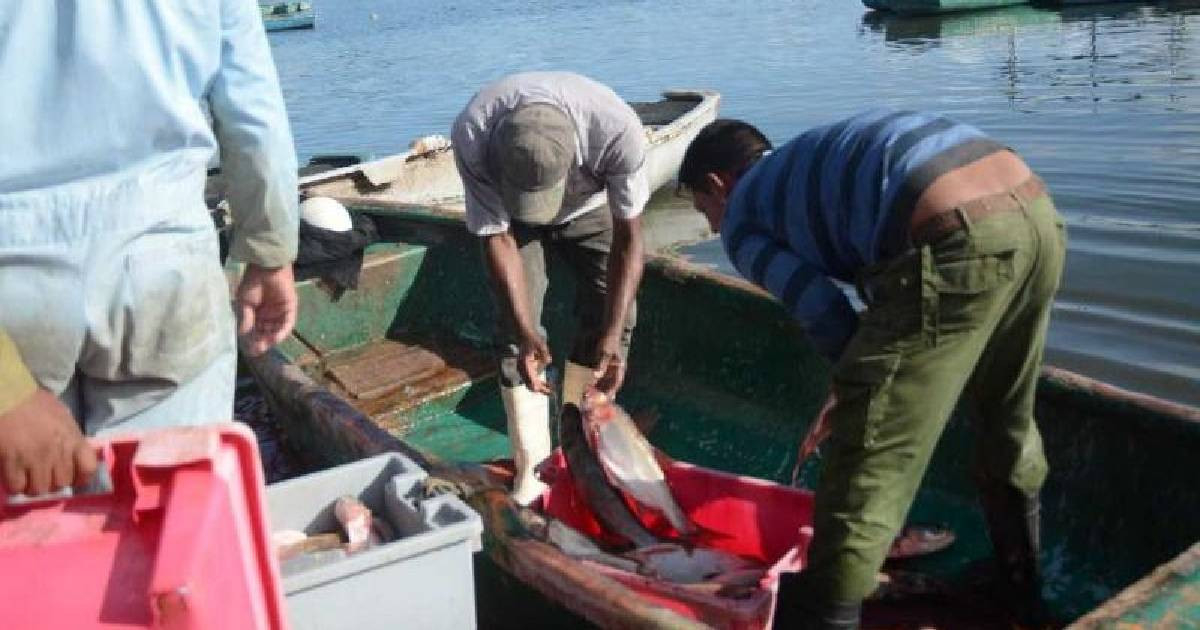
Once a staple of the Cuban diet, fish has become increasingly scarce and expensive for the population. A recent analysis by the Food Monitor Program, released this Thursday, reveals that domestic fish catches have plummeted by more than half between 2020 and 2024.
The 2024 Statistical Yearbook of Cuba, published by the National Office of Statistics and Information, reported a total gross catch of fish and seafood at 22,330.6 tons in 2024, a stark contrast to the 46,386.5 tons in 2020. Specifically, fish production fell from 35,148.8 tons to 18,064.7 during the same timeframe.
Several species traditionally part of the Cuban diet have seen significant declines. In 2024, only 220.2 tons of snapper, 317.2 tons of tuna, 24 tons of bonito, 49.5 tons of yellowtail snapper, and 480.2 tons of skate were recorded.
This downturn has also impacted high-value products. Lobster production decreased from 4,224.8 tons in 2022 to 2,016.3 in 2024. Meanwhile, sea shrimp has nearly vanished from official statistics, dropping from 426 tons in 2023 to a mere 4.6 tons the following year.
The Struggle of Aquaculture
Aquaculture has also failed to offset the decline. Tilapia production decreased from 2,153.7 tons in 2020 to 790.3 in 2024, and clarias dropped from 4,428.3 to 329.1 tons.
Only tench maintained a high volume, with 10,442.4 tons in 2024; however, this does not necessarily translate to a stable and affordable supply for consumers.
Market Shortages and High Prices
The shortage is evident in the markets. State-run fish shops rarely offer a sufficient variety, and when products do appear, they are often unaffordable for most salaries and pensions.
Fish such as bonito, tuna, cubera snapper, red snapper, and mackerel are primarily available through private or informal channels, with prices ranging from 650 to 900 pesos per pound, depending on the region, season, and availability.
For many families, purchasing fresh fish has shifted from a routine purchase to an occasional luxury. Informal channels also pose issues with preservation and safety, in a landscape plagued by power outages, ice shortages, and challenges in maintaining the cold chain.
The Impact of Fuel Shortages
The lack of fuel directly affects fishing activities. According to data gathered by IPS, during the first half of 2024, only 15,620 tons of fish and seafood were caught, a mere 53% of the plan for marine and aquaculture fishing. Of this volume, 15% was allocated to tourism, 14% to exports, and 71% to domestic consumption.
Despite official allocations, the central question of supply remains unanswered. If most catches are declared for internal consumption, fish remains elusive, scarce, and unaffordable in local markets.
Wider Economic and Political Challenges
The crisis is not solely due to fuel shortages. The deterioration of infrastructure, outdated technology, lack of investment, workforce loss, corruption, and weak production incentives have diminished the sector's capacity.
Furthermore, state controls still heavily influence who can fish, how they can sell their catches, and under what authorizations. Although Cuban law recognizes non-state commercial fishing, the activity remains subject to licenses and regulations.
In 2024, the requirement for having a contract with a state entity to obtain non-state commercial fishing licenses was removed, but commercialization still depends on local government decisions.
The Food Monitor Program highlights a glaring contradiction: the state fails to ensure supply, yet retains significant power to regulate and limit the private sector, which could potentially fill part of the gap.
Nutritional and Health Implications
This scarcity also has nutritional consequences. Fish provides high-quality proteins, omega-3 fatty acids, iodine, vitamin D, calcium, selenium, iron, zinc, vitamin A, and vitamin B12.
The United Nations Food and Agriculture Organization (FAO) has underscored the importance of fish in combating hunger and malnutrition due to its combination of proteins, healthy fats, and micronutrients.
The disappearance of fish from the Cuban diet represents more than just a culinary loss. It affects access to proteins and micronutrients in households where other food sources have also dwindled, leading to a reliance on cheaper, less nutritious products.
The Food Monitor Program places this crisis within the broader deterioration of Cuban food security. The World Food Program noted that in 2025, food insecurity remained a significant challenge on the island, tied to economic contraction, inflation, reduced public resources, and persistent fuel shortages.
An estimate by the Economic Research Service of the United States Department of Agriculture indicated that 1.4 million Cubans did not meet the daily threshold of 2,100 calories in 2023 under a baseline scenario. In an alternative GDP adjustment scenario, this figure rose to 4.2 million people, equivalent to 37.8% of the population.
The fishing crisis is also affecting Cubans' relationship with their marine resources. In August, the Santiago de Cuba Divers Association raised concerns about mass shark catches, including a specimen over 500 kilograms butchered in Baracoa, set against a backdrop of hunger and economic crisis.
The paradox is particularly striking given the country's geography. With 5,746 kilometers of coastline and an insular shelf of over 50,000 square kilometers, a food traditionally tied to its culinary culture has become for many a pricey, occasional, and hard-to-find commodity.
The question posed by the Food Monitor Program captures this contradiction: "Where is the fish for the Cuban population?" The answer lies not in the absence of the sea, but in the collapse of production and the economic, energy, logistical, and regulatory hurdles that prevent this resource from consistently reaching the table.
Cuban Fish Supply Crisis: Key Questions Answered
What factors have contributed to the decline in fish catches in Cuba?
The decline in fish catches in Cuba is attributed to a combination of factors including fuel shortages, deteriorating infrastructure, outdated technology, lack of investment, loss of workforce, corruption, and weak production incentives.
How has the fish shortage impacted Cuban households?
The fish shortage has made fresh fish a rare and expensive commodity, forcing many Cuban households to rely on less nutritious, cheaper food options, which affects their access to essential nutrients and proteins.
What role does the state play in regulating the fishing industry in Cuba?
The Cuban state plays a significant role in regulating the fishing industry by determining who can fish, how catches can be sold, and under what conditions. Although some regulations have been eased, local government decisions still heavily influence commercialization.