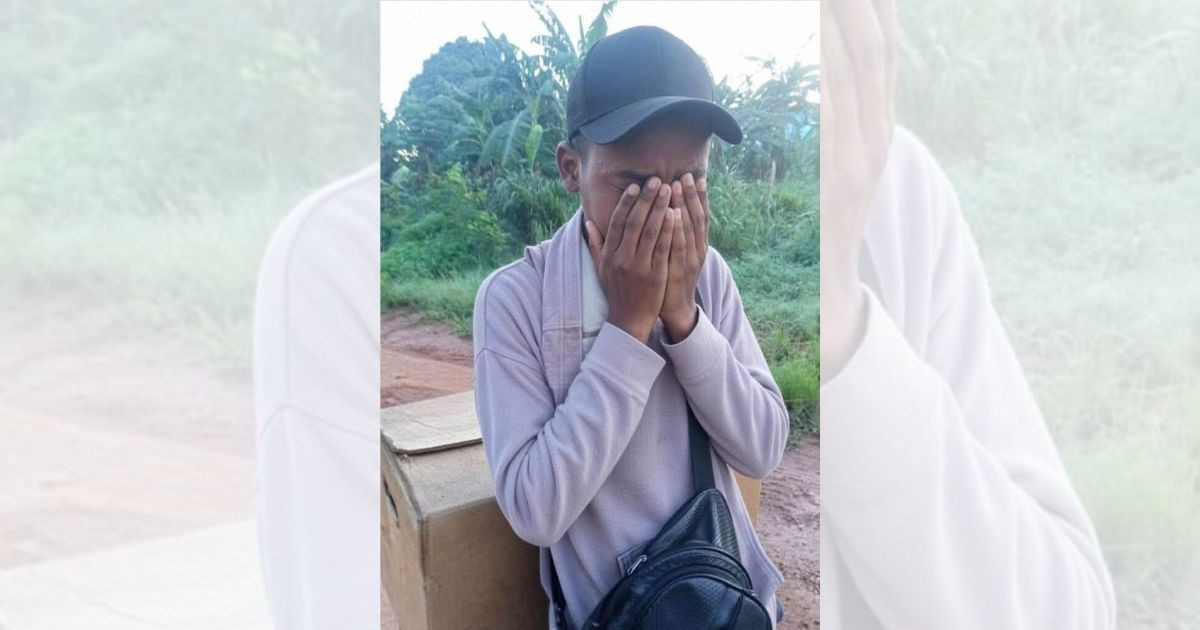
A visually impaired young man who earns his living by selling bread on a bicycle was robbed earlier this week in Manguito, a part of Calimete in Matanzas where he resides. This incident, shared widely on social media, has sparked outrage both in Cuba and among the Cuban community online.
Those familiar with him describe Jonathan as a noble, honest, and hardworking individual. Despite his visual impairments, he diligently goes out each day to earn a living. His mother, Lily, and their family are well-known in the community, as shared by Christian Arbolaez in a Facebook post.
According to Arbolaez, Jonathan’s daily routine is demanding. He loads his bicycle with bread and travels from Manguito to the municipal center of Calimete to sell them, often starting his journey at dawn. "There are even days when he leaves in the early morning from Manguito to Calimete, covering a significant distance to sell his bread and then returns home," stated Arbolaez.
Jonathan was robbed during one of these arduous days. Reports indicate that unknown assailants stole the money he had earned that day. Details regarding the amount stolen or the identity of the perpetrators remain unknown.
The story has touched many who encountered it on social media. "Behind the money taken from him were hours of effort, miles covered on a bicycle, and a young man striving to make an honest living," Arbolaez wrote. Activist Lara Crofs (Yamilka Lafita) also highlighted the societal issues underlying this crime: "A society that reaches the point of stealing from someone who barely has enough to survive should question what kind of poverty we are normalizing."
Comments on these posts universally condemned the theft, particularly emphasizing the victim's young age and his determination despite his limitations. "What value is there in stealing money from a child who sells bread to earn a living? Absolutely none," Crofs added.
Jonathan's case is not isolated. Crime rates in Cuba have steadily increased in recent years. The Cuban Citizen Audit Observatory (OCAC) reported 2,833 criminal incidents in 2025, compared to 1,317 in 2024 and 649 in 2023, marking increases of 115.11% and 336.58%, respectively.
Robberies were the most frequently documented type of crime, with 1,536 cases recorded that year. In 2026, violent robberies have continued across several provinces, including Matanzas.
In April of this year, also in Matanzas, a 13-year-old boy was assaulted with a knife to his neck to steal his bicycle in Cárdenas. Analysts and media outlets attribute the rise in crime to economic hardship, power outages, and a reduction in police personnel on the island.
In such a precarious environment, visually impaired individuals like Jonathan turn to informal work and street vending as a means of survival. Despite occasional attempts at job inclusion, the daily reality for this group in Cuba remains fraught with vulnerability.
"Jonathan wasn't taking anything from anyone. He was fighting for his dignity," concluded Arbolaez in his post, urging that the incident be fully investigated and that those responsible for the robbery be held accountable.
Understanding the Context of Crime and Vulnerability in Cuba
What led to the increase in crime rates in Cuba?
The rise in crime rates in Cuba has been attributed to economic difficulties, frequent power outages, and a reduction in police presence across the island.
How does the community view Jonathan?
Jonathan is viewed by his community as a noble, honest, and hardworking young man who diligently earns his living despite his visual impairments.
What challenges do visually impaired individuals face in Cuba?
Visually impaired people in Cuba often resort to informal work and street vending due to a lack of inclusive job opportunities, leaving them vulnerable to crime.