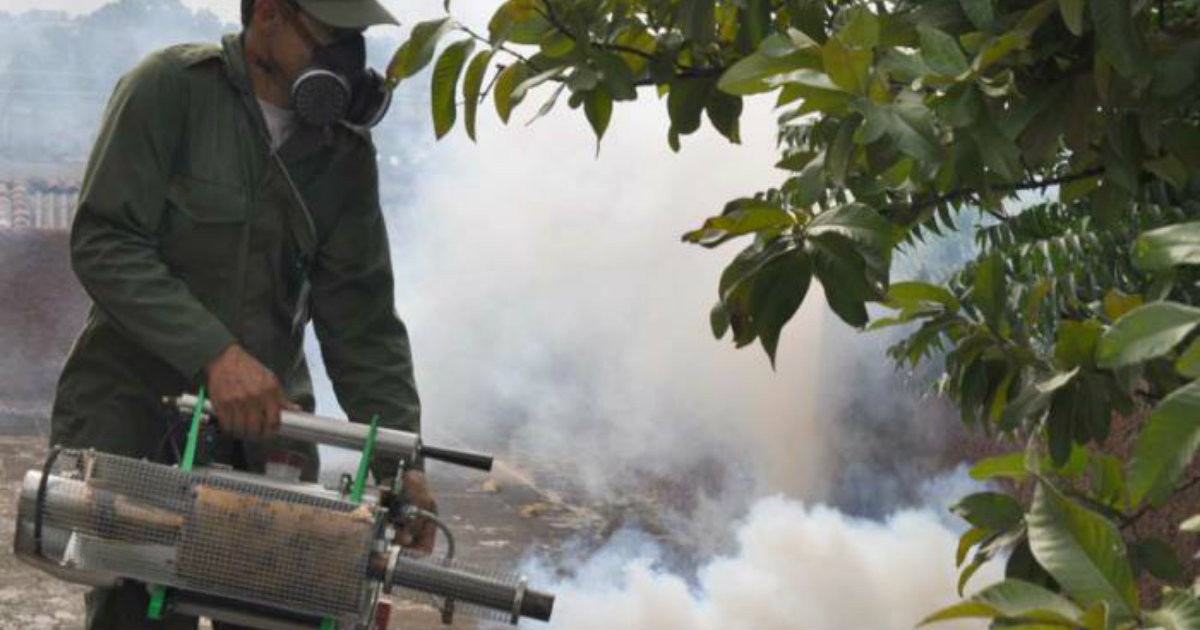
The province of Holguín is intensifying its fight against the Aedes aegypti mosquito, utilizing 50 fumigation units generously donated by the Pan American Health Organization (PAHO). This support comes at a critical time when environmental conditions are ripe for mosquito breeding, heightening the risk of dengue fever.
These devices, described as "new type and highly effective bazookas," will be deployed across all 14 municipalities within the province. They employ a fumigation technique using water for emulsifying the insecticide, in place of the petroleum traditionally used in older machines, as reported by the official newspaper "¡Ahora!" on Thursday.
Environmental Benefits of New Fumigation Systems
Dr. Geanela Cruz Ávila, who directs the Provincial Center for Hygiene, Epidemiology, and Microbiology, highlighted that this modern system, as per the Ministry of Public Health's (Minsap) experience, provides effective vector control while minimizing the environmental pollution associated with older methods.
The use of water with insecticide is not entirely new in Cuba. An entomological research project has been ongoing for the past two years, as part of vector surveillance and control efforts, to evaluate this alternative method.
Localized Vector Issues
The donation arrives at a time when Holguín is reporting mosquito hotspots, although health authorities assert that these issues are confined to specific blocks and well-defined areas within the Holguín municipality and other regions.
Dr. Cruz emphasized the increased risk of arboviral diseases, especially dengue, during this season due to rising temperatures and more frequent rainfall, conditions that accelerate the mosquito's breeding cycle.
Community and Sectoral Cooperation Called For
She urged a strengthened collaborative effort among health workers, vector control personnel, other sectors, and the community. Failures in implementing preventive measures at home, such as leaving water tanks uncovered, were cited as contributing factors to the risk, and she called for intensified actions this month to curb mosquito infestations.
Crucial measures include family-level focal point prevention, particularly to stop mosquitoes from breeding in uncovered water containers.
Broader Epidemiological Crisis
The situation in Holguín is part of a nationwide epidemiological crisis. According to the Global Dengue Observatory at the London School of Hygiene & Tropical Medicine, dengue cases in Cuba have exceeded projections for 2026 by 7.4 times, with 7,133 cases recorded so far this year.
August saw the highest number of cases, with an estimated 3,214, and the seasonal peak typically occurs in October, suggesting a potential worsening of the situation, the source warned.
Challenges in Waste Management
Holguín's challenges are exacerbated by a persistent garbage collection crisis, which increases mosquito breeding sites. Recently, a resident from the Lenin district reported large dumpsites near a kindergarten and an elementary school, left uncollected for over a month.
"The smell is unbearable," the resident stated, warning that the accumulation of waste poses a direct threat to children amid the arboviral disease surge.
The Municipal Services Company cites a shortage of trucks, fuel, spare parts, and personnel to explain the lack of collection, a situation ongoing since the start of the year. Experts point to this as a structural issue hampering the control of Aedes aegypti in the province.
In June, Minsap initiated epidemiological surveillance with the onset of summer, cautioning that Cuba could face a new dengue epidemic if factors facilitating the mosquito's spread are not managed.
Understanding the Dengue Crisis in Holguín
What measures are being taken to combat Aedes aegypti in Holguín?
Holguín is deploying 50 new fumigation devices donated by PAHO, utilizing a method that mixes insecticide with water instead of petroleum, across its 14 municipalities.
Why is the risk of dengue increasing in Holguín?
The risk is rising due to increased temperatures and rainfall, which accelerate the mosquito's breeding cycle, coupled with inadequate waste management contributing to more breeding sites.
How is the waste management crisis affecting mosquito control efforts?
The waste management crisis in Holguín, marked by uncollected garbage creating large breeding sites, is a significant obstacle to controlling the Aedes aegypti mosquito.