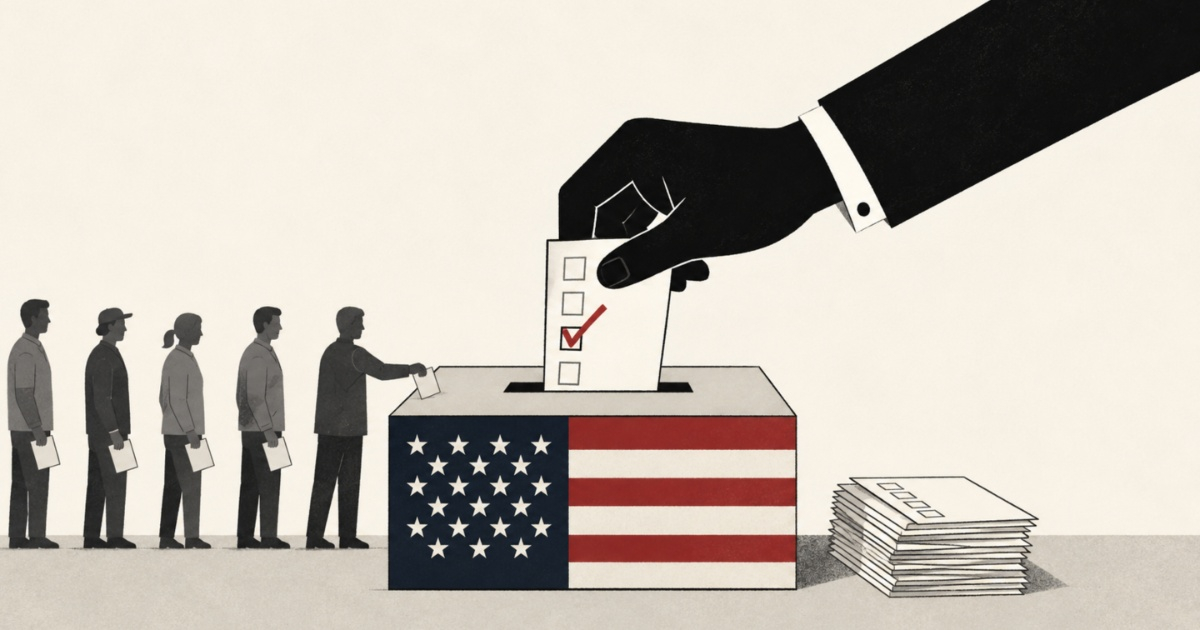
The Department of Homeland Security (DHS) unveiled its 2026 Election Infrastructure Security Plan this Thursday, a comprehensive 13-page strategy developed by the Cybersecurity and Infrastructure Security Agency (CISA) to protect the upcoming midterm elections on November 3 from both digital and physical threats.
Dubbed Securing the Next 250, the plan was commissioned last July by DHS Secretary Markwayne Mullin. It offers state and local election officials a suite of voluntary and free services, including threat information sharing, vulnerability scans, risk assessments, simulation exercises, and technical training.
"Election security is national security," stated Mullin during the document's presentation. "Under President Trump's leadership, CISA has refocused on its core mission of safeguarding critical infrastructure. Fully implementing this plan is vital for the security, liberty, and fairness in electing our country's leaders."
At stake are the 435 seats in the House of Representatives and 35 seats in the Senate, with the elections managed by over 10,000 local jurisdictions across the United States.
The CISA document highlights specific threats: voter registration systems have been targeted by attacks in all fifty states and compromised in at least 20 of them over the last decade. Recommended technical measures include multifactor authentication, network monitoring, least privilege access, and record retention for a minimum of one year.
"Ensuring the integrity of our elections is essential for maintaining trust in American democracy," concludes the DHS statement, recalling that in 2020, CISA and a federal-state-local committee deemed those elections the most secure in the nation's history, with no evidence of deleted, lost, or altered votes.
The physical dimension of the issue is equally alarming. Among 107 election security incidents recorded since January 2022, 96 involved bomb threats, according to data collected by the agency from open sources.
Institutional Challenges Amid Security Efforts
The release of this plan comes amid institutional contradictions. The same administration promoting this strategy cut approximately 1,000 CISA employees—around 30% of its workforce—in 2025 and eliminated funding for the Election Infrastructure Information Sharing and Analysis Center (EI-ISAC) in March of that year.
Additional cuts of $10 million to state and local cybersecurity initiatives were confirmed in February 2026. Congress partially restored these funds in the fiscal year 2026 budget, allocating $39.61 million for election security activities.
External Threats and Disinformation Campaigns
External threats further complicate the landscape. U.S. intelligence recently identified a Russian disinformation campaign using AI-generated deepfake videos to impersonate celebrities and outlets like CNN, BBC, and The New York Times.
The operation, known as "Matryoshka," aims to "sow chaos" and erode public confidence in the electoral process rather than favor any specific party.
The plan includes a free information-sharing platform to enable election officials and fusion centers to coordinate in near real-time with federal partners, with CISA's regional directors serving as the primary support channel.
Frequently Asked Questions on the 2026 Election Security Plan
What is the purpose of the 2026 Election Infrastructure Security Plan?
The plan aims to safeguard the 2026 midterm elections from digital and physical threats by providing election officials with resources and support to enhance their security measures.
Who commissioned the 2026 election security plan?
The plan was commissioned by DHS Secretary Markwayne Mullin in July 2023.
What are some key measures recommended in the plan?
Key measures include multifactor authentication, network monitoring, least privilege access, and keeping records for at least one year.