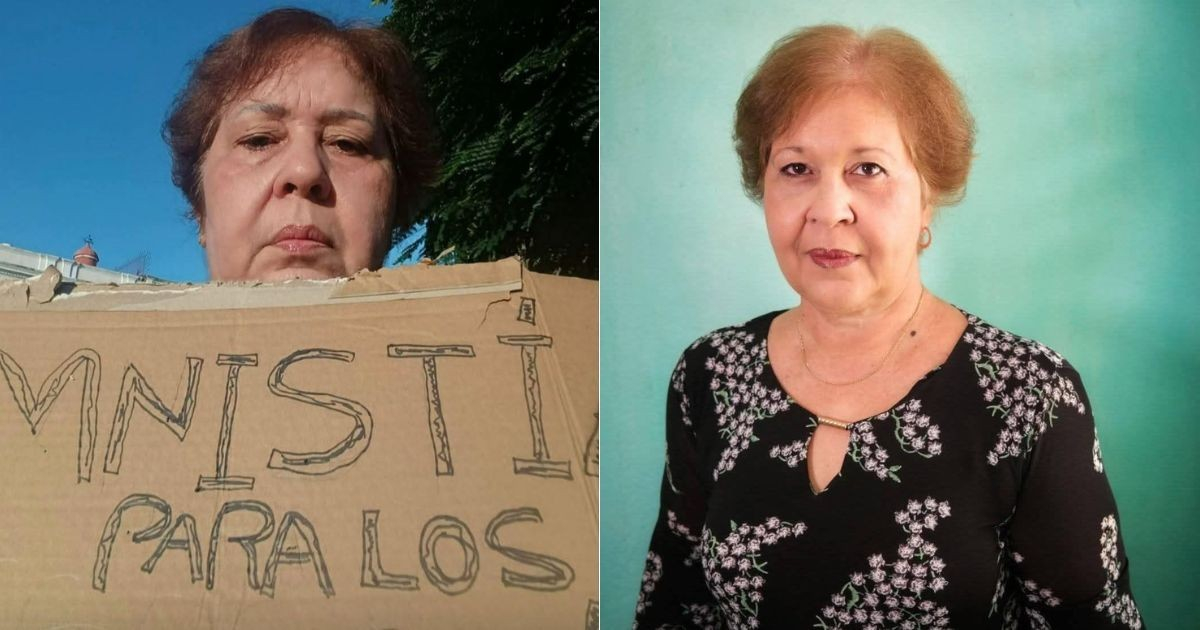
Historian and philosopher Alina Bárbara López Hernández recently took to Facebook to challenge the Cuban regime's stance on the right to protest. Her reflection was sparked by a post from a journalist in Matanzas about the eviction of an 87-year-old woman in Madrid, which led to mass protests in Spain.
The journalist had shared the news on her wall, engaging in a debate with someone who questioned the inability to protest in Cuba due to government repression. López pointed out how the journalist, using various fallacies, attempted to defend the regime's actions by arguing: "In Cuba, demonstrations calling for regime change have been suppressed: name a country where this doesn't happen."
Documented Rebuttal from Experience
López Hernández crafted a well-documented rebuttal, drawing from her experiences as an activist who has faced multiple detentions in 2026. She highlighted that protests in Cuba have occurred for a myriad of reasons: demands for freedom of expression and press, respect for rights, the release of political prisoners, access to food and electricity, and freedom of movement, all of which are supposedly guaranteed by the Constitution.
She recalled seeing signs in Cuban protests with messages such as "Free Denis," "How long will they kill us?" "How long must the people suffer?" "Socialism yes, repression no," and "Begging for rights is cowardly," the latter being a quote from Antonio Maceo. López herself carried this sign on June 14, 2023, on Maceo's birthday, but it was confiscated as "illegal propaganda against the constitutional order."
Legal Repercussions and Continued Activism
López recounted that a judge ordered the destruction of her sign in November 2023, during her trial for "disobedience." In all the described instances, protesters were detained, many were prosecuted, and some received lengthy prison sentences.
The core of her argument highlights a contradiction the official journalist fails to address: even though she hasn't witnessed protests explicitly demanding a "change of regime," the demands that are made are still not tolerated.
"I've never seen a protest explicitly demanding a 'change of regime,' meaning a shift in the constitutional order. But if the people's calls for freedom, rights, an end to political imprisonment, and decent living conditions aren't met under the current regime, don't we have ample reasons to wish for change?" she questioned.
López Hernández concluded her reflection with a statement encapsulating her philosophical and civic stance: "If the current regime deems these aspirations illegal, then it is not a regime worthy of perpetuation."
This post came just days after her fifth detention of the year, as State Security intercepted her during her monthly civic protest in Matanzas' Liberty Park, where she calls for amnesty for political prisoners every 18th of the month.
Since June 18, 2024, López Hernández has been under house arrest as part of the "cause 40" case, which she shares with sociologist Jenny Pantoja Torres, both facing charges of "attack," with the prosecutor seeking four years in prison for her and three for Pantoja.
Key Questions on Protests and Repression in Cuba
What are the main reasons for protests in Cuba according to Alina Bárbara López?
Protests in Cuba, as noted by López, are often driven by demands for freedom of expression and press, respect for human rights, the release of political prisoners, access to essentials like food and electricity, and freedom of movement.
How does Alina Bárbara López describe the regime's response to protests?
López describes the regime's response as repressive, with protesters often detained, prosecuted, and sometimes sentenced to prison for their actions.
What legal actions has López faced for her activism?
López has faced several detentions and is under house arrest as part of a legal case, with charges including "disobedience" and "attack," for which the prosecution is seeking a prison sentence.