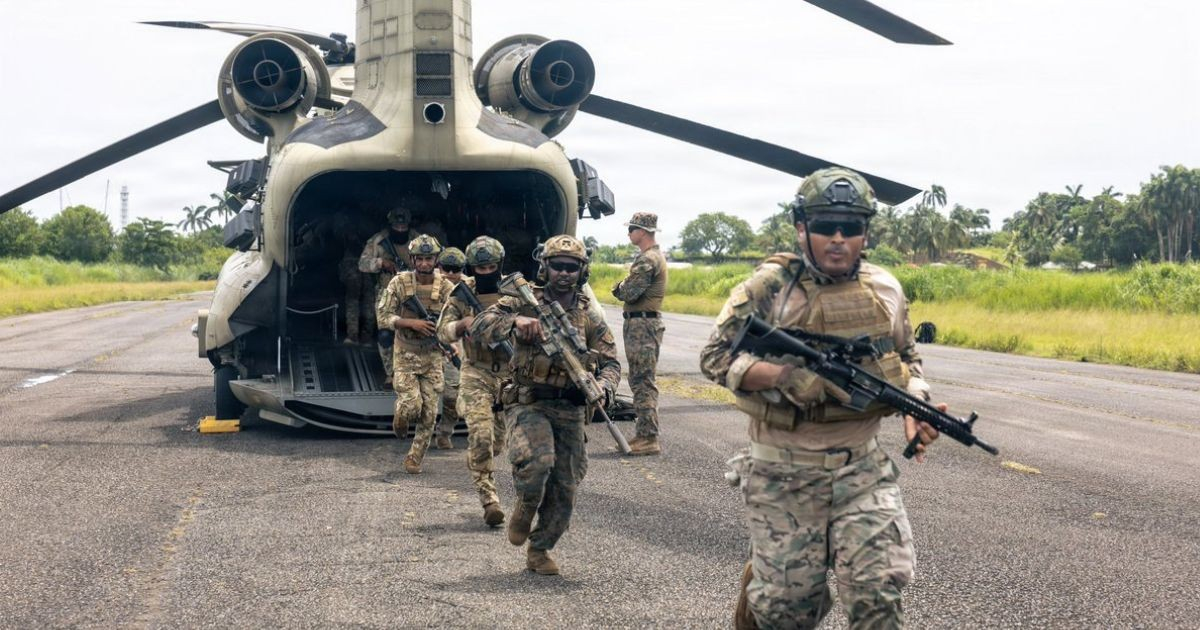
The United States Army Reserve is assessing whether it can provide the Southern Command with units such as military police, medical personnel, engineers, and logistical support within a timeframe of 90 to 120 days. This evaluation is part of ongoing planning efforts that several U.S. officials have linked to Cuba.
This information was disclosed on Friday by CBS News, which obtained access to an internal Army message and spoke with several U.S. officials who requested anonymity as they were not authorized to publicly discuss the matter.
The document viewed by the network does not explicitly mention Cuba. However, officials have confirmed that the request is part of continued military planning associated with the island nation.
According to CBS News, there is no indication in the document that any military units have received deployment orders. Furthermore, it does not specify how many troops might be needed, their potential destinations, or the operations they might support.
Military Units Under Consideration
The message, which was generated last week, requests subordinate commands to report on the possible availability of six types of military formations to be placed under the authority of the United States Southern Command. The document states that these capabilities might be needed within "90-120 days," with September 25 set as the deadline to respond to the Army Reserve headquarters.
Among the units being considered is a combat sustainment support battalion, which specializes in coordinating transportation, maintenance, fuel, and supplies. Additionally, an engineer battalion and an expeditionary command responsible for overseeing large-scale logistical operations are included.
The document also covers a medical brigade, an advanced surgical and resuscitation unit capable of providing emergency surgery and trauma care near deployed forces, and a military police brigade, typically tasked with security, detention, and other law enforcement duties within the military context.
Official Responses and Ongoing Activities
The Army Reserve did not respond to CBS News before the publication of the report. When approached, a spokesperson for the United States Southern Command (SOUTHCOM) declined to comment on potential movements or deployment timelines, citing operational security reasons.
The spokesperson mentioned that SOUTHCOM "continuously coordinates with the Joint Force to evaluate a variety of potential requirements" within its area of responsibility and in support of assigned missions.
CBS News also reported that earlier this year, U.S. forces conducted reconnaissance operations of the seabed and maritime approaches around Cuba, according to several Armed Forces members interviewed by the network.
Separately, components of the U.S. air power were placed on a higher level of readiness and were instructed to preposition personnel in anticipation of a possible deployment. However, these plans were not executed, according to the report.
The network noted that it chose to withhold some planning details, considering that their disclosure could endanger U.S. military personnel.
The information available thus far indicates activities focused on planning and capacity assessment, but there is no confirmation that President Donald Trump or the Pentagon has authorized a military operation in Cuba or that there is a current deployment order.
... Developing story...
Frequently Asked Questions about U.S. Military Planning in Relation to Cuba
What is the U.S. Army Reserve evaluating in relation to Cuba?
The U.S. Army Reserve is assessing the availability of military units such as police, medical personnel, engineers, and logistical support to potentially assist the Southern Command.
Has the U.S. ordered any military deployments to Cuba?
No, there is no indication that military units have received deployment orders to Cuba, nor is there confirmation of an authorized military operation.
What actions has the U.S. taken around Cuba previously?
Earlier this year, U.S. forces conducted reconnaissance operations of the seabed and maritime approaches around Cuba.