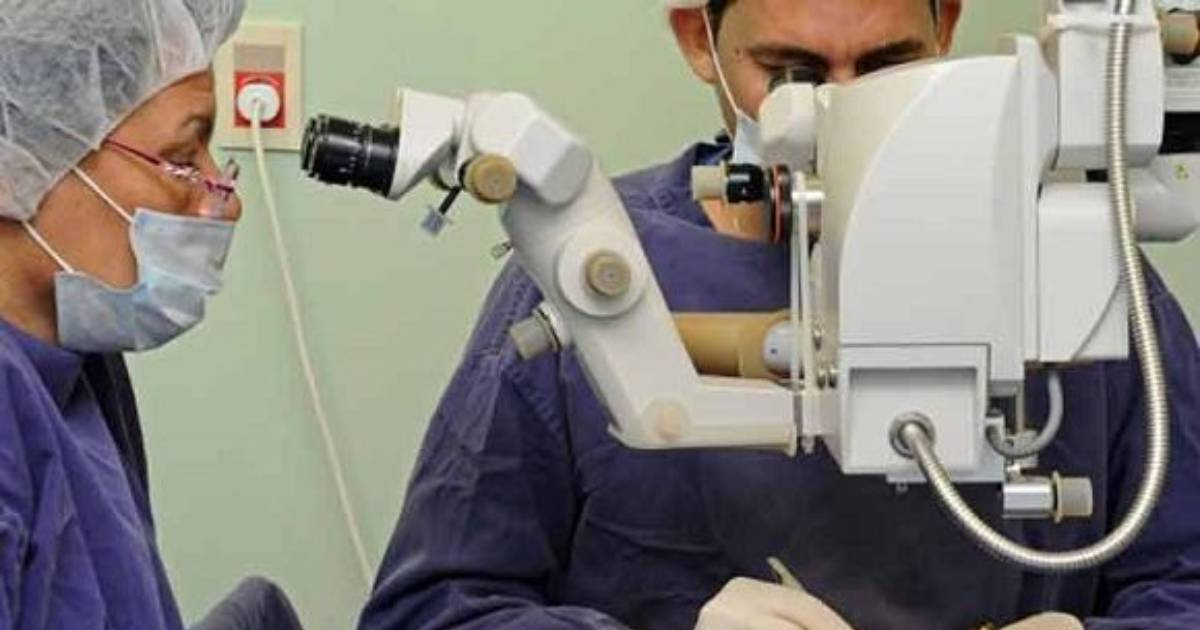
The Uruguayan government is progressing with a new method to ensure Cuban health professionals receive their wages directly. This change aims to sustain the medical cooperation program with Cuba while addressing concerns raised by the United States.
On Thursday, journalist Gabriel Pereyra reported on Informativo Sarandí that Foreign Minister Mario Lubetkin confirmed discussions have taken place with both the United States and Cuban governments. Both parties have agreed to move towards a direct payment scheme for the professionals.
Pereyra noted that while the agreement has not yet been formalized, technical issues still need to be resolved regarding the new payment method. "Payments will be made directly to the doctors instead of the Cuban government," summarized the journalist when discussing the new mechanism.
Lubetkin also mentioned that the proposal had been discussed with Havana and would be accepted under these conditions. However, he cautioned that Uruguay cannot control what the professionals do with the money afterward, including the possibility of being forced to send it to the Cuban government. Such transactions, as explained by Pereyra, would fall outside the negotiations between Montevideo, Washington, and Havana.
Background on the Payment Situation
This information marks progress from September 17, when the weekly publication Búsqueda revealed that the Ministry of Foreign Affairs, the Ministry of Public Health (MSP), ASSE, and the Social Security Bank (BPS) were working on a formula to pay Cuban professionals directly. The change would not end or alter the cooperation agreement between Cuba and Uruguay but would adjust the payment channel.
The issue gained attention after the United States included Uruguay in its 2026 report on forced labor and the trafficking of Cuban medical professionals. According to Búsqueda, the report from the U.S. Department of State, sent to Congress in late August, identified 15 countries that allegedly pay the Cuban government directly for these workers' services.
Reactions and Clarifications
The State Department accounted for 21 Cuban professionals participating in the program in Uruguay during 2026. The U.S. Embassy explained to Búsqueda that Uruguay was listed because, according to their interpretation, "payments go directly to the Cuban embassy, and there is no evidence that the doctors receive compensation for their work serving the Uruguayan people."
Nevertheless, Uruguayan authorities have provided a detailed explanation of the program's financial workings. Jimena Pardo, President of the BPS, recently clarified that the institution allocates around $250,000 annually to the mission but emphasized that this amount does not cover the Cuban professionals' salaries. "The reimbursement Uruguay provides, called a stipend, is a reimbursement of expenses," explained Pardo. According to her, funds are advanced, and the brigade must later account for their use. The money is transferred to a brigade account established by the Ministry of Public Health.
The 2011 agreement between the MSP, ASSE, and BPS outlines an annual allocation of up to $250,000 for stipends, travel expenses, transfers, and other costs. Pardo confirmed that the Uruguayan state does not pay the professionals' salaries. "The Uruguayan state does not pay wages, nor has it done so previously, as the agreement stipulates that remuneration is paid by the Cuban government," she stated to Búsqueda. "Uruguay does not pay Cuba any money for the cooperation, only ensuring the payment of these stipends," she added.
Implications for Uruguay
The inclusion in the U.S. report carries potential consequences. The U.S. Embassy explained to Búsqueda that the recently passed legislation states that if a country appears in these reports for two consecutive years, the Secretary of State may not provide certain international assistance. Uruguay's first appearance in the 2026 edition means it would need to be listed again in 2027 for this provision to take effect.
The United States communicated Uruguay's inclusion in the report on September 4 through a note to the Ministries of Foreign Affairs and Defense. A source from the Ministry of Foreign Affairs explained to Búsqueda that it was a non-paper, a type of unofficial diplomatic communication. This detail clarifies why Lubetkin initially claimed that Uruguay had not received "official communication from the United States on this specific issue," although he acknowledged it was part of bilateral discussions.
The government of Yamandú Orsi has consistently stated that it does not intend to terminate the program. Presidential Secretary Alejandro Sánchez defended the healthcare cooperation, noting that thousands of Uruguayans have benefited from the work of Cuban specialists. "The agreement with Cuban doctors enabled thousands of Uruguayans to regain their sight, and we recognize and highly value that," Sánchez affirmed.
Days later, he reiterated that Uruguay would continue collaborating with Cuban professionals. In statements released on September 21, he noted that the cooperation allowed more than 100,000 patients to regain their vision and defended Uruguay's authority to decide on the agreement's continuation.
The current ophthalmological cooperation dates back to 2007 when Cuba and Uruguay signed an agreement for Cuban brigades to provide assistance in the country. According to official data collected by Búsqueda, by July 2025, the program had recorded 916,787 ophthalmological consultations, 118,029 eye surgeries, and 217,885 screenings.
FAQs on Uruguay's Direct Payment Plan for Cuban Doctors
What is the new payment mechanism Uruguay is implementing for Cuban doctors?
Uruguay plans to implement a system where Cuban health professionals receive their payments directly, rather than through the Cuban government. This aims to address concerns from the United States while maintaining the medical cooperation program with Cuba.
Why did the United States include Uruguay in its report on Cuban medical professionals?
The U.S. included Uruguay in its report due to the perception that payments for Cuban medical services go directly to the Cuban embassy, without evidence that the doctors themselves are compensated for their work in Uruguay.
What are the potential consequences of Uruguay's inclusion in the U.S. report?
If Uruguay appears in the U.S. report for two consecutive years, certain international assistance from the U.S. could be withheld, according to recent legislation.