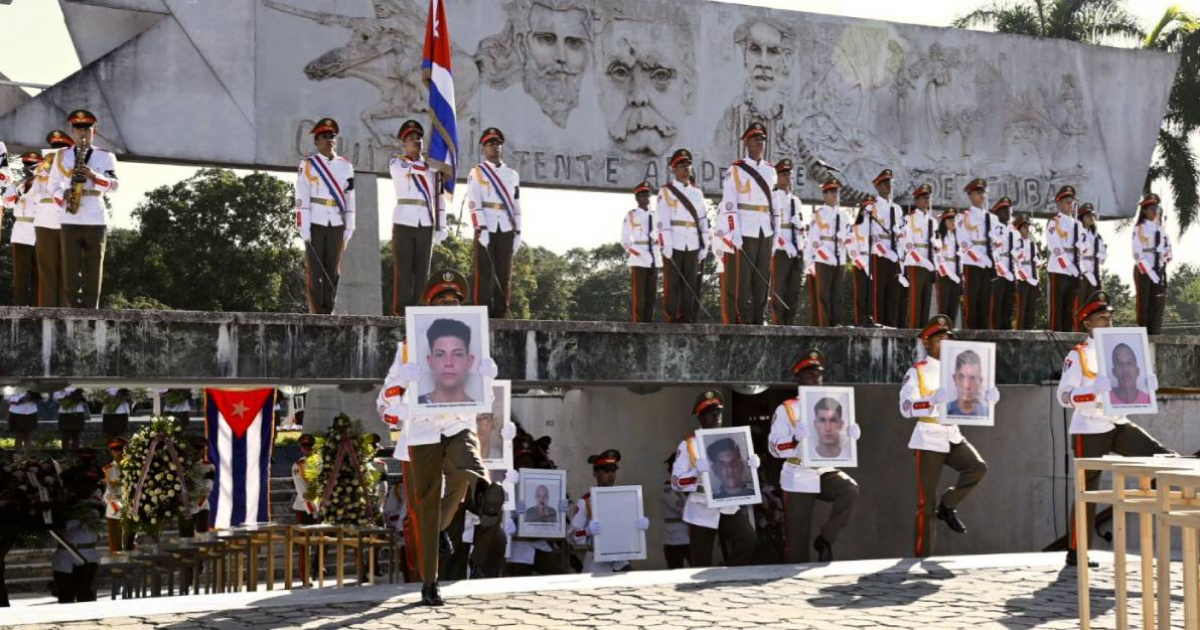
On Thursday, Cuban authorities informed the families of 13 soldiers who perished in the explosion at the Melones Military Unit in Holguín that human remains had been discovered within the tunnel of the facility, according to an investigation by elTOQUE.
This notification came more than two months after the families were initially told about the discovery of remains at the military installation, yet they have not received the bodies of their loved ones.
The tragic incident occurred on January 7, 2025, when an explosion and fire in a war material warehouse trapped 13 men: four career officers and non-commissioned officers, along with nine young men completing their Mandatory Military Service.
Nine days later, the Cuban regime officially declared them deceased, citing high temperatures, gas accumulation, and the risk of collapses as reasons that prevented the recovery of the bodies.
Official Explanation Under Scrutiny
During visits to the families' homes, military officials showed photographs of the tunnel's interior and bone fragments, which they claimed belonged to the victims. They also requested permission to conduct a joint cremation of the remains.
However, several families rejected the official narrative and questioned the evidence provided.
Daliha González Almaguer, sister of Frank Antonio Hidalgo Almaguer —one of the nine deceased recruits— stated that one image displayed only small bone fragments that, according to authorities, could not be identified through DNA analysis nor determined to which part of the body they belonged.
Despite these limitations, officials insisted that the remains belonged to the 13 soldiers.
Family Members Demand Accountability
González Almaguer also raised doubts about the origin of the photographs given to the families. "Why didn't they take the photo at the location where they found them?" she asked, as reported by elTOQUE. She pointed out that the images showed tanks and other objects within the tunnel, but did not pinpoint the exact location of the remains.
Julio César Guerrero, father of José Carlos Guerrero García, another victim, criticized the authorities' explanation. "Yes, they gave us an answer, but as usual, it was poorly acted theater filled with lies and unconvincing photos," he declared.
Guerrero maintained that without clear identification of the remains, he considers his son still missing. "For me, they remain missing," he stated.
Civilian Discovery Raises Questions
The remains were found after a group of civilians unlawfully entered the military facility in July, discovering decomposing bodies while searching for abandoned weapons and materials. The participants were arrested and remain in custody.
This incident has sparked doubts about the official claim that the site was inaccessible and revived the families' questions about why the remains had not been recovered for over a year.
The case adds to other reports of deaths among young people during Mandatory Military Service. The Cuban Citizen Audit Observatory recorded at least 97 deaths or disappearances linked to military service from 2001 to 2026, while Cubalex documented at least 78 recruit deaths since 2019.
More than a year after the Melones explosion, the families of the 13 soldiers continue to seek information and clarity about the fate of their loved ones.
Frequently Asked Questions about the Melones Explosion
What caused the explosion at the Melones Military Unit?
The explosion and subsequent fire occurred in a war material warehouse at the Melones Military Unit.
Why have the families not received the bodies of their loved ones?
The Cuban regime cited high temperatures, gas buildup, and the risk of structural collapse as reasons that prevented the recovery of the bodies.
How did the authorities attempt to verify the identity of the remains?
Authorities presented photographs of bone fragments they claimed belonged to the victims, although they could not be identified through DNA analysis.