Elizabeth González Aznar, a Cuban citizen, publicly challenged Miguel Díaz-Canel, questioning the legitimacy of his claims to speak on behalf of the Cuban people and his assurance that he has their support to continue the socialist project.
Using Facebook as her platform, González responded to the launch of a new radio program, "Shared Criteria," hosted by Díaz-Canel on Radio Rebelde. She critiqued the government's performance, economic disparities, and the official stance on maintaining the socialist path.
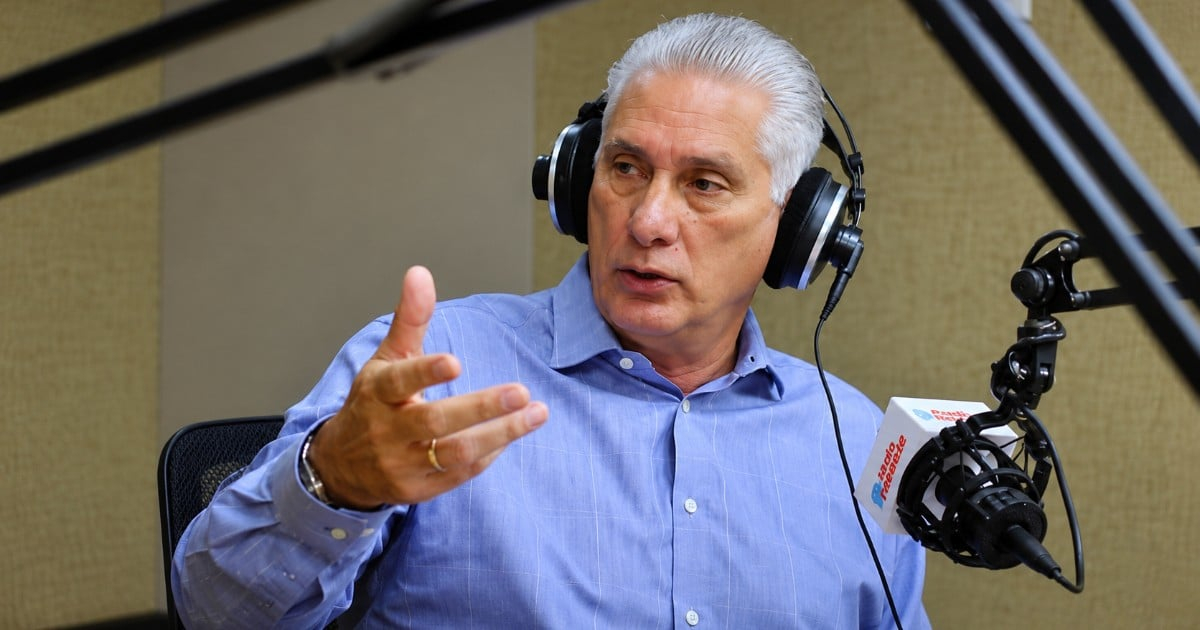
This new radio segment began on Wednesday, with its inaugural episode dedicated to the 176 economic and social changes approved in June.
During the show, Díaz-Canel reiterated that these measures are an "update" to Cuban socialism rather than a shift towards capitalism. González expressed skepticism about whether these new policies would yield different outcomes than those seen in the past.
Public Discontent and Economic Disparities
In her critique, González reflected on Díaz-Canel's eight-year tenure, highlighting numerous reforms, laws, and projects announced without tangible improvement for most workers and retirees.
"Today, the people survive and endure, but they do not truly live," she remarked.
González also addressed the growth of the private sector, pointing out that some entrepreneurs and small business owners enjoy significantly better economic conditions than those reliant on state salaries and pensions.
She held the government accountable for high prices that have eroded the population's purchasing power.
Economic Measures and Socialist Ideals
The 176 measures approved by Cuban authorities span investment, finance, foreign trade, property, energy, and business operations, allowing greater private sector involvement in various economic activities.
Despite these changes, Díaz-Canel insisted that they do not signify a departure from socialism. González countered this claim, arguing that the growing economic divide contradicts the principles the authorities claim define their system.
"It's not just about saying it, it's about living it," she asserted, comparing the conditions of certain private actors with those of state-employed doctors, scientists, teachers, and engineers.
Questioning Political Assumptions
González's most direct challenge questioned the government's assumption that the people's endurance equates to political support.
"You assume that the people's resilience is due to ideology, political conviction, and support for you and your government, but you cannot make that assertion. Have you asked the people?" she wrote.
She argued that a true measure of support for the socialist model should come from a consultation involving the entire population, not just handpicked groups. "Why do you claim the people's backing and that they support your government?" she asked.
González remarked that her endurance amid current conditions is not necessarily ideological. "Many of us endure because we have no other choice," she stated.
This sentiment echoes her previous criticism in August, where she rejected the authorities' attribution of Cubans’ daily endurance to Communist Party leadership, stating, "This people endure because we have no other option."
González concluded her latest publication with a nod to the frequent power outages affecting Cubans: "I hope to have electricity and phone charge for the next program edition."
In recent months, González has consistently directed public criticisms at Cuban authorities. In mid-September, she highlighted that residents of San Agustín, La Lisa, had been without water for over a week, questioning, "Why do we have to live like this?"
The following day, she revisited the issue, highlighting leaks that had wasted water for years while many homes faced service interruptions. "The wasted water flows like a river," she noted at the time.
Earlier in September, she directly addressed Díaz-Canel regarding the deepening social and economic disparities in Cuba, asserting that "never before has this country experienced such social differences."
On August 28, in another open letter, she challenged the leader over food prices, blackouts, and the economic situation, concluding with the question: "How long, Mr. President?"
Key Questions about Cuban Leadership and Public Support
What prompted Elizabeth González Aznar to question Díaz-Canel's claims?
Elizabeth González Aznar challenged Díaz-Canel after he launched a radio program asserting public support for his continued leadership and socialist policies, which she disputes based on economic disparities and lack of tangible improvements for the general populace.
How does González view the economic measures announced by the Cuban government?
González is skeptical about the new economic measures, doubting they will yield different results from past efforts. She believes they contradict the socialist ideals the government claims to uphold, given the growing economic divide.
Why does González believe the government's assumption of public support is unfounded?
González argues that the government's belief in public support is not based on reality, as it has not been verified through comprehensive public consultation, suggesting that resilience is due to a lack of alternatives rather than ideological conviction.