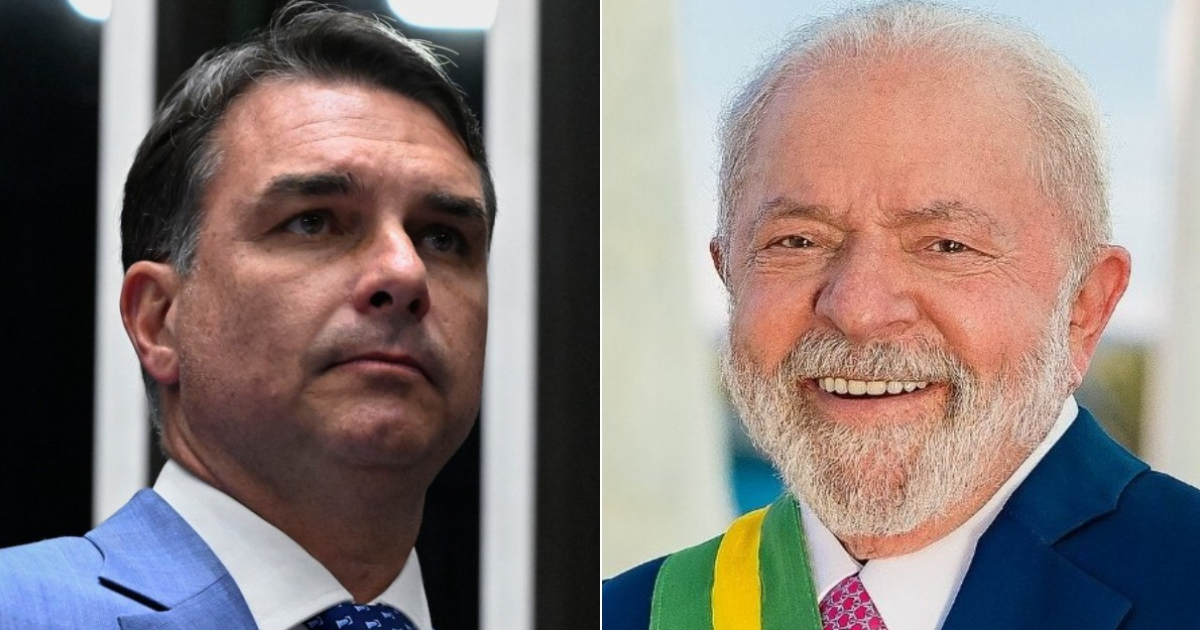
With less than two weeks until the first round of Brazil's presidential election set for October 4, three polling organizations have sent shockwaves through the campaign with their findings: a statistical tie between Luiz Inácio Lula da Silva and Flávio Bolsonaro. The outcome is so close that no survey dares to predict it with certainty.
The research firm Quaest, in its September 21 survey, indicated that the incumbent president and candidate for re-election, Lula, holds 37% of the vote intentions for the first round, compared to 33% for Senator Flávio Bolsonaro from the Liberal Party.
A two-point margin of error makes this difference statistically insignificant.
In a potential second round—scheduled for October 25 if no candidate secures an absolute majority—Quaest puts Flávio Bolsonaro at 42% and Lula at 41%, another technical tie.
Polls Reveal Tight Race
Another poll conducted by BTG/Nexus, which surveyed 2,006 individuals between September 18 and 20, reported similar figures: 40% for Lula and 37% for Flávio in the first round, and 46% to 45% in the second round, according to Bloomberg Línea.
Similarly, a Datafolha poll from September 17 showed Lula numerically ahead, though still within the margin of error.
Shifting Dynamics Concern Candidates
What concerns Lula's camp the most is the trend: according to EFE agency, "Bolsonaro's vote intention has increased by four points while Lula's has remained stable" since early September.
Several other candidates are also in the fray, though they trail considerably: self-help author and psychologist Augusto Cury holds 6% according to Quaest, while former Goiás governor Ronaldo Caiado has 4%.
Moreover, 8% of those polled remain undecided, and 7% say they will either not vote or cast a blank ballot, making this segment a critical factor.
Political Scandals and Electoral Strategies
Flávio's rise in the polls is partly attributed to the political-judicial scandal surrounding the Banco Master case.
Its owner, Daniel Vorcaro, is currently in custody and reportedly linked through messages and documents to judges of the Federal Supreme Court, sparking an institutional crisis that the Liberal Party candidate has sought to leverage to stoke anti-establishment sentiments.
However, this strategy is complicated by Flávio's own connections with Vorcaro: the Federal Police are investigating him for negotiating up to $24 million with the banker to fund "Dark Horse," a documentary about his father, Jair Bolsonaro.
Flávio denies any wrongdoing, but investigators are probing potential corruption and money laundering offenses.
Electoral Tactics and Controversies
Lula, now 80, sought to regain electoral momentum in mid-September by announcing a 15% increase in Bolsa Família benefits, raising the average payment from 675 to 777 reais.
The opposition dismissed this as electoral maneuvering, while the government argued it was necessary to adjust for accumulated inflation.
Flávio Bolsonaro was officially nominated as the PL candidate on July 25 at São Paulo's Pacaembu stadium, while Lula was proclaimed the PT candidate on August 2, alongside moderate Geraldo Alckmin as vice-presidential candidate under the "Together for Brazil" banner.
Jair Bolsonaro, Flávio's father, was sentenced to 27 years for attempted coup and is under house arrest, preventing him from actively participating in the campaign.
Back in July, polls showed Lula with a five-point advantage in a potential second round; that gap has vanished in a matter of weeks, turning the race for the presidency of Latin America's largest nation into an open contest whose outcome will hinge on undecided voters and any further scandals that may unfold by October 4.
FAQs on Brazil's Unpredictable Presidential Election
What is the current voter support for Lula and Flávio Bolsonaro?
Recent polls indicate Lula has approximately 37% of voter support, while Flávio Bolsonaro holds about 33%, with both figures within the margin of error, making them statistically tied.
When is the first round of Brazil's presidential election?
The first round of Brazil's presidential election is scheduled for October 4.
What factors could impact the election outcome?
Undecided voters and political scandals, such as those involving Flávio Bolsonaro and the Banco Master case, could significantly influence the election's result.