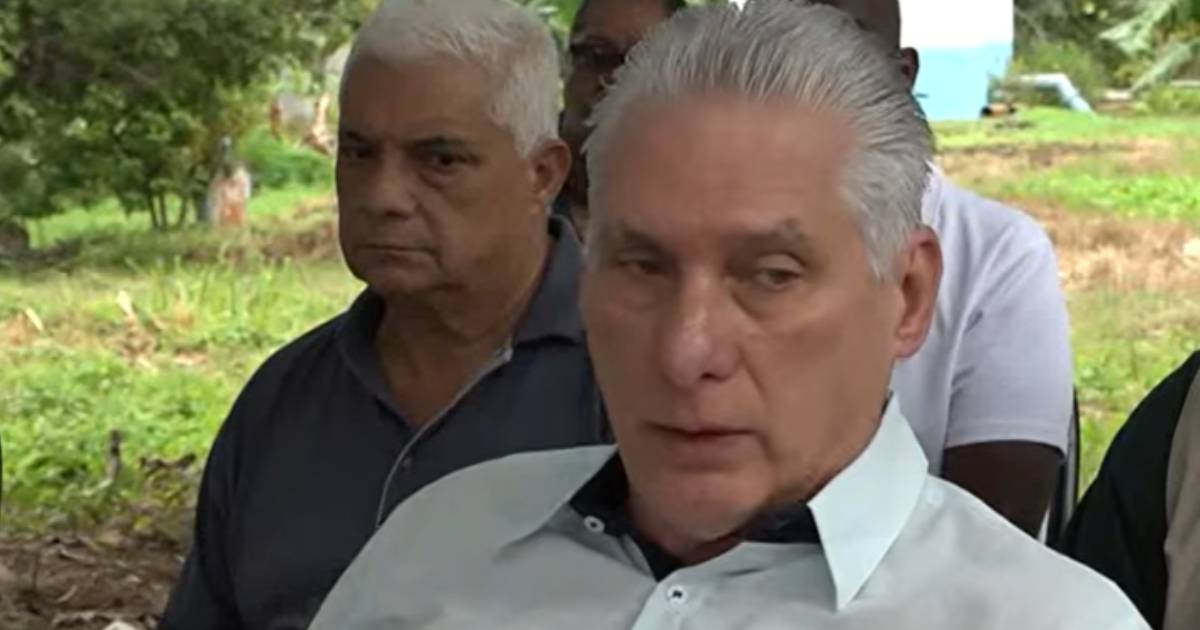
On Tuesday, Miguel Díaz-Canel visited the Cosculluela water supply facility in Boyeros, a site undergoing restoration after over six decades of continuous use amidst Havana's severe water crisis.
This visit comes as the deadline approaches for Díaz-Canel’s promised improvements by the end of September. The city has been plagued by months of power outages, leaks, and pump failures, leaving hundreds of thousands of residents with sporadic or no water supply.
According to a report from Canal Caribe, Cosculluela ranks as the second most critical water source for the western part of the capital. Its 10 wells provide over 33% of the water primarily serving the Playa and Marianao districts.
Having been in operation for more than 60 years without a comprehensive overhaul, the facility’s condition highlights the neglect of a key infrastructure component essential for the city’s water supply.
Efforts to Modernize and Repair
During the tour, officials outlined ongoing repairs, including fixing leaks, replacing internal networks, restoring pathways, and automating the pumping systems.
An electrical line is being installed from a battery of generator groups to shield the wells from the persistent issues plaguing the National Electric System.
Specialists, as quoted by Canal Caribe, expressed optimism that "by the end of September, the electrical improvements should be evident."
Managers also reported the recovery of approximately 11 pumping units, though they acknowledged distribution network issues remain a major hurdle.
The plan also includes installing photovoltaic systems to decrease reliance on the deteriorating national electric grid, which currently powers much of Havana's water pumping.
Impact on Havana's Residents
The intervention at Cosculluela follows months of worsening conditions. In April, around 200,000 people faced water supply issues in Havana. By May, this number had risen to 376,055, and by July, Aguas de La Habana officials admitted that over half a million residents were affected.
The situation has been particularly dire in Boyeros. In January, over 40,000 individuals were impacted when the water sources were nearly depleted.
In July, elderly residents in Santiago de las Vegas resorted to carrying buckets from tankers to their homes, a stark illustration of the crisis’s daily impact.
Mere days before Díaz-Canel’s visit, a Boyeros resident reported potential water contamination amidst rising cases of fever, diarrhea, and rashes, with sewage water seen in public areas.
The complaints are not confined to Boyeros. In July, San Miguel del Padrón residents reported going without water for up to a month, while ongoing breakdowns have deprived vast areas of the capital of service.
Díaz-Canel's Promise and Future Plans
The water crisis is closely linked to power outages, with about 87% of Havana’s water supply system reliant on electricity for pumping.
On September 3, Díaz-Canel admitted the government was unable to ensure the necessary power to maintain stable water pumping.
Two days later, he set the end of September as the first benchmark for his plan to ease the crisis, promising visible results in two or three of the major water systems by then.
The official timeline aims to strengthen other sources in October and integrate renewable energy solutions by the year's end.
However, the government has not disclosed the program’s cost or provided concrete metrics on how many citizens will regain service, how many supply hours will be guaranteed, or the additional water volume expected to reach households.
This Tuesday, Díaz-Canel urged officials to keep the public informed about the progress of these efforts.
As September draws to a close, the Cosculluela rehabilitation stands as a critical test of the timeline Díaz-Canel himself announced, while countless Havanians continue to await tangible improvements in their water supply at home.
Understanding Havana's Water Crisis
What is causing Havana's water crisis?
Havana's water crisis is primarily due to outdated infrastructure, frequent power outages affecting water pumps, and leaks in the distribution network, compounded by a lack of comprehensive repairs over decades.
How is the government addressing the water crisis?
The government is focusing on repairing leaks, replacing networks, automating pumping systems, and installing renewable energy solutions, such as photovoltaic systems, to reduce dependency on the national electric grid.
What areas of Havana are most affected by the water crisis?
Boyeros, Santiago de las Vegas, and San Miguel del Padrón are among the most severely impacted areas, with residents experiencing extended periods without water due to infrastructure issues and power outages.