The independent U.S. media organization, Belly of the Beast, released an investigative report this Wednesday on a botched armed operation from last February. The operation involved ten men departing from the Florida Keys with the mission to overthrow the Cuban government.
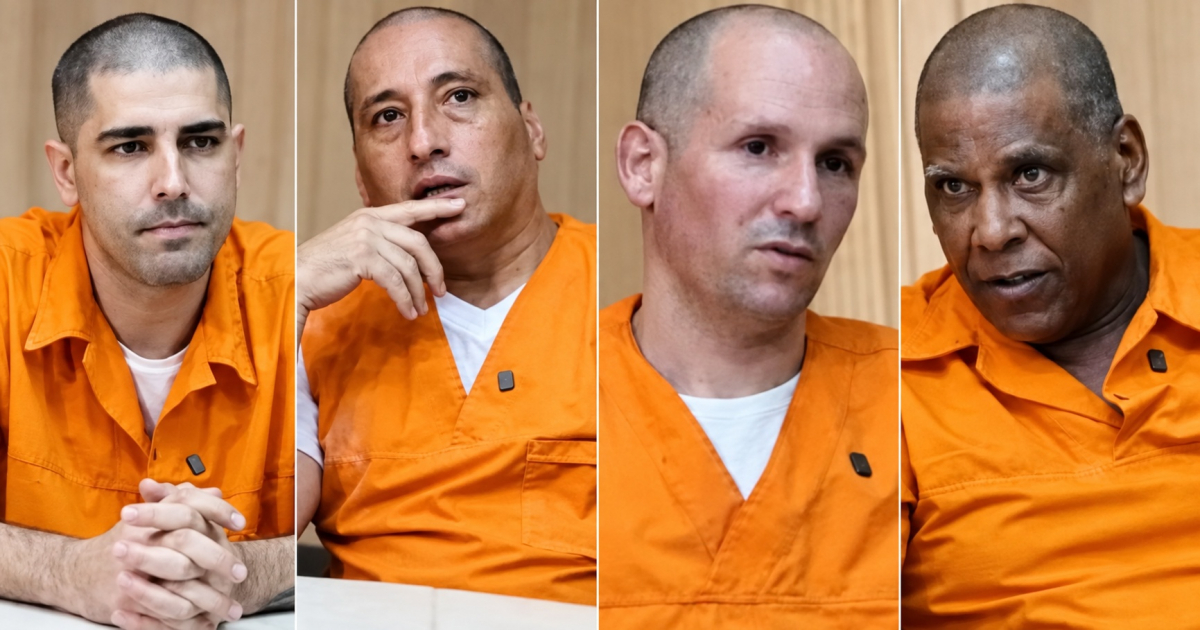
Journalist Reed Lindsay authored the report, which was produced in collaboration with Drop Site News and Miami New Times. It provides an account of the operation based on interviews with four of the five survivors currently detained in Havana.
Voices from Behind Bars
In July, Reed Lindsay conducted interviews with four of the five survivors—Rodríguez Castelló, Acosta Guevara, Leordán Enrique Cruz Gómez, and Conrado Galindo Sariol—in a conference room at the headquarters of the Ministry of Interior's International Relations Department in Havana. Present were the case prosecutor and Colonel Francisco Estrada Portales.
Their attitudes varied greatly: Galindo claimed he was coerced into participating; Acosta expressed remorse; Cruz questioned whether armed struggle was the right path; and Rodríguez was openly defiant.
The fifth survivor, Amijail Sánchez González, did not participate in the interviews.
A Bold Plan to Incite Uprising
According to the participants, the mission had a clear and ambitious goal.
"The plan was simple: spark an armed uprising among the Cuban people, seize control of a province for 72 hours, and request U.S. military intervention," stated José Manuel Rodríguez Castelló, one of the survivors.
Rodríguez Castelló, a 33-year-old truck driver living in Nashville, Tennessee, was recruited by Raúl Quevedo, who managed the TikTok account "La Nueva Cuba." Quevedo, a 40-year-old carpenter based in Bradenton, Florida, sought individuals courageous enough to join an armed uprising in Cuba.
Recruited via TikTok, Trained in Florida
Another survivor, Christian Ernesto Acosta Guevara, a moving truck driver from Austin, Texas, was recruited by Pavel Alling Peña, who created the TikTok account "Movimiento Cardumen" in May 2025.
"I commented that I wished Cuba could thrive and become more liberal. That's when he contacted me, asking if I wanted a free Cuba. I said yes, hoping it would happen someday," Acosta recounted.
The men trained at a small farm near Fort Myers, Florida. The property was reportedly provided by Maritza Lugo Fernández, a Cuban activist based in Miami, whom the regime accuses of being the mastermind behind the operation. She firmly denies these allegations.
The Firefight: Casualties and Captives
On the night of February 24, the ten men set sail aboard "El Tornado," a vessel registered in Florida (FL7726SH), loaded with 25 firearms, roughly 13,000 rounds of ammunition, over 100 magazines, pipe bombs, Molotov cocktails, bulletproof vests, night vision equipment, a drone, and a Starlink terminal.
At dawn the following day, Cuban Border Guard troops intercepted the boat one nautical mile northeast of El Pino, Cayo Falcones, in Corralillo, Villa Clara.
Four men—Ledián Padrón Guevara, Pavel Alling Peña, Michel Ortega Casanova, and Héctor Duani Cruz Correa—were killed in the ensuing firefight. A fifth, Roberto Álvarez Ávila, died days later from his injuries. The commander of the Cuban patrol boat was also shot.
Allegations of Torture and Awaiting Trial
In June, families and opposition groups reported extreme conditions of confinement at the Combinado del Este prison, in cells known as "el 47."
Lugo Fernández stated, "Their lives are constantly at risk. They face death threats, are under constant surveillance, and endure constant psychological pressure."
Regarding Sánchez González, she added, "One of his ears was ruptured, and he now has no hearing on that side. He suffers from infections, severe headaches, and has not received the medical care he needs."
The report itself acknowledges limitations: interviews were conducted in the presence of Ministry of Interior officials, with no follow-up sessions and no independent verification of whether the detainees faced coercion.
In March, Cuba's Attorney General formally charged six individuals with terrorism, with potential sentences ranging from ten years to life imprisonment, or even the death penalty under Cuban Penal Code. The trial date has yet to be set.
Frequently Asked Questions About the Failed Operation
What was the objective of the armed operation in Cuba?
The mission aimed to incite an armed uprising, control a province for 72 hours, and request military intervention from the United States.
Who was involved in recruiting participants for the operation?
Participants were recruited via TikTok by individuals like Raúl Quevedo and Pavel Alling Peña, who used social media to find people willing to join the cause.
What happened during the interception by Cuban forces?
Cuban Border Guard troops intercepted the group's boat, resulting in a firefight that killed four men and injured others, including the Cuban patrol commander.
What are the allegations regarding the treatment of detainees?
Families and opposition groups allege extreme confinement conditions, threats, and lack of medical care, including claims that one detainee suffered a ruptured ear.