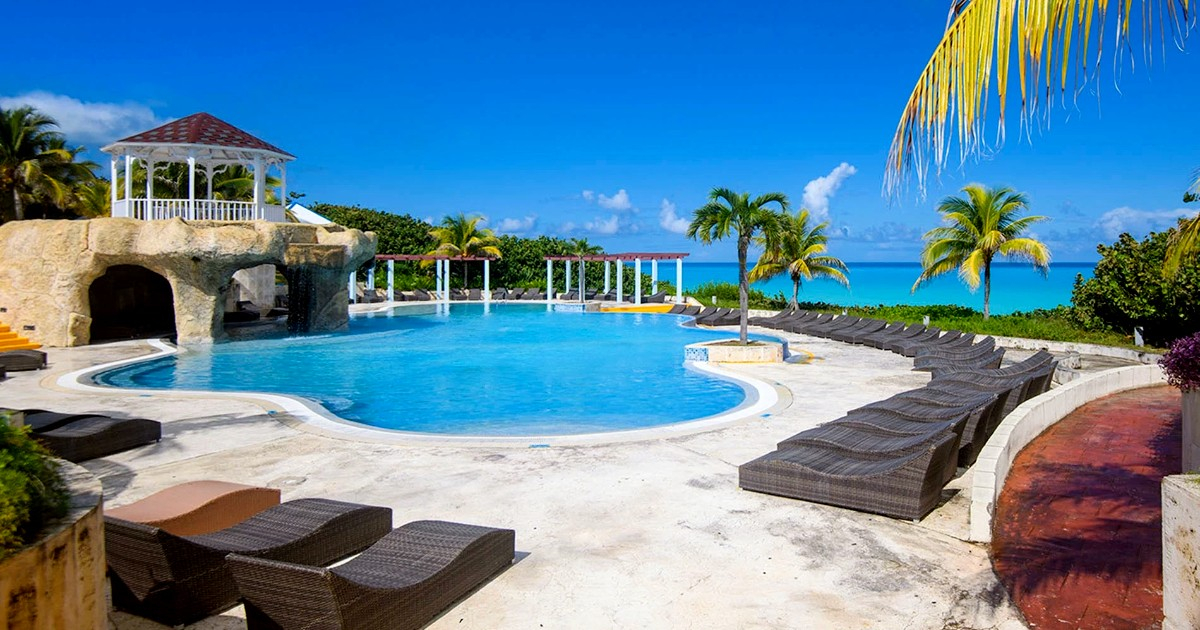
An account shared by the independent outlet El TOQUE sheds light on the internal surveillance system implemented by Military Counterintelligence (CIM) over both workers and tourists in the hotels of Cayo Santa María. This area, dominated by the military conglomerate GAESA, now has over 20 closed facilities.
According to Jenny Mirabal Gómez, a former employee who worked as an entertainer and later as a guide for Gaviota Tours from 2009 to 2016, the CIM operated out of an office located directly next to the entertainers' quarters at the hotel where she was employed.
Despite not wearing military uniforms, these agents were distinguishable by their Suzuki motorcycles and signature striped or checkered shirts. An oft-repeated phrase at Gaviota's internal meetings was, "Remember, even though we don’t wear military uniforms, we are civilian workers of the army."
The surveillance wasn't limited to tourists deemed suspicious; it mainly targeted employees. Any interaction between staff and foreign visitors was closely monitored, with violations potentially leading to dismissal or military prosecution.
Before officially joining as a guide for Gaviota Tours, Jenny underwent a thorough investigation that involved inquiries in her neighborhood and at previous educational institutions to assess her "revolutionary attitude."
Mirabal Gómez almost faced rejection due to her father's imprisonment, only gaining acceptance after a lengthy personal appeal. "I can't imagine how many were denied without a chance to clear their name," she noted.
Investment Decisions and Economic Disparities
The testimony also highlighted GAESA's arbitrary investment decisions. In 2009, the president of Gaviota S.A. visited Cayo Santa María to "discuss" the construction of so-called "touristic villages" outside hotels. He ignored the majority opinion of the workers, summing up the conglomerate's logic with, "We don't want Cuban money; we want the money of international tourists." By 2011, these villages were built but ultimately failed.
The salary disparities further illustrate systemic contradictions: a foreign general manager at Meliá Hotels earned between $5,000 and $6,000 monthly, whereas a Cuban counterpart received just over 1,000 Cuban pesos—around $40. Employees earned between $10 and $30 per month, relying on tips for survival without any safety net for illness or accidents.
Economic Imbalance and Visible Collapse
The imbalance between hotel investment and social welfare was also criticized by the former employee. In 2023, the National Office of Statistics and Information recorded 2,325 million pesos allocated to hotels and restaurants compared to a mere 583 million for health and social assistance, a nearly four-to-one disparity for which the regime has provided no public explanation.
The sector's collapse is now evident: in February 2026, Gaviota shut down 20 hotels in Cayo Santa María, leaving over 7,000 workers unemployed.
Among the shuttered hotels is The One Gallery, a five-star establishment opened in 2023 and linked to Cuban-American businessman Boris Arencibia, sentenced to 57 months in prison for trafficking adulterated drugs and money laundering.
To conceal its military ties from this U.S.-originated project, Gaviota temporarily removed all GAESA-related branding, changing uniforms, bus decals, and dropping the Gaviota name.
Impact of U.S. Sanctions
Washington's sanctions expedited the downfall: the Trump administration enacted Executive Order 14404 imposing secondary sanctions on foreign companies with business ties to GAESA, and the State Department designated the conglomerate and its president Ania Lastres Morera.
Chains like Meliá and Iberostar began withdrawing before the June 5 deadline.
The result is a deserted tourist hub: in the first seven months of 2026, Cuba received only 420,000 foreign visitors, a 63% drop compared to the same period the previous year.
"Billions of dollars in investments are now entirely unused, while the people suffer amidst blackouts and shortages of basic goods," concluded the account shared by El TOQUE.
Understanding the GAESA and CIM Influence in Cuba
What role does the Military Counterintelligence (CIM) play in Cuban hotels?
The CIM conducts surveillance on hotel employees and tourists, monitoring interactions and ensuring loyalty to the regime.
How do salary disparities affect Cuban hotel workers?
Cuban hotel staff face significant wage gaps compared to foreign managers, earning as little as $10-$30 monthly and relying on tips, with no safety nets for health issues or accidents.
Why did Gaviota remove GAESA branding from The One Gallery hotel?
Gaviota removed GAESA branding to hide its military connections from a U.S.-linked project, temporarily changing uniforms and decals.