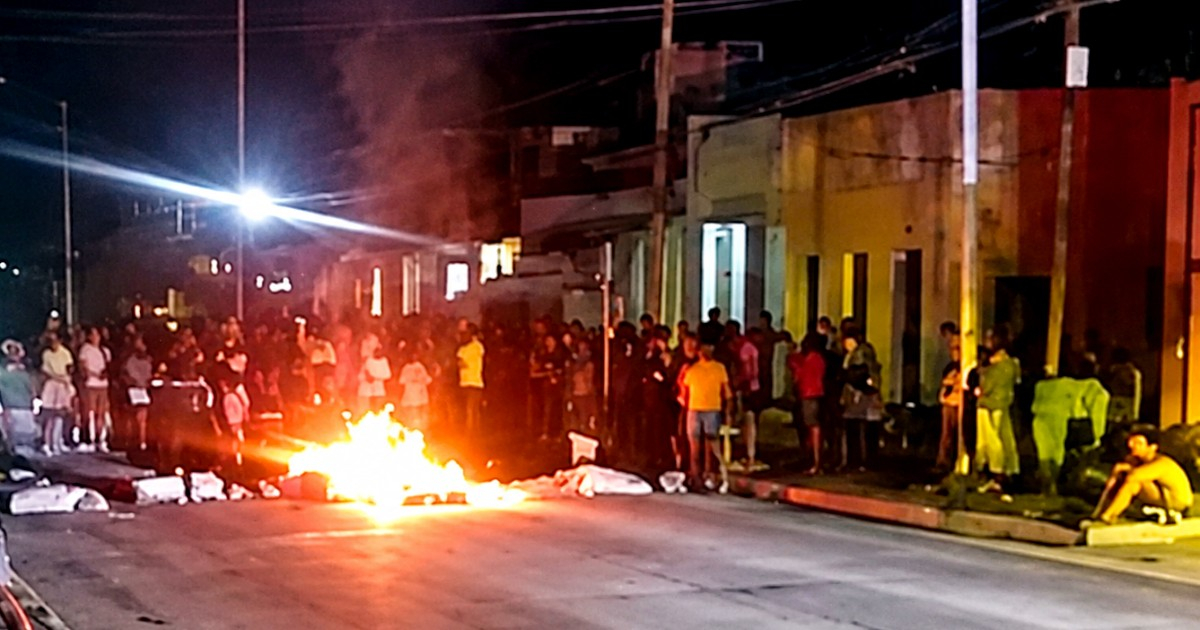
Pressure from the residents of El Condado neighborhood in Santa Clara paid off: Following protests that blocked streets and erected barricades on Monday night, a technical crew from the Electric Company arrived to fix a faulty transformer that had left several blocks without power for almost 36 hours, according to a report by Martí Noticias.
The protest began with about 20 demonstrators on Estrada Palma Street and grew to over fifty participants, culminating days of mounting frustration. The transformer issue had already been reported to the state-run company, which had previously dispatched a crew that failed to solve the problem.
"They caused a commotion, and immediately, they came to fix the transformer," summarized Arnoldo Goicuña, a local resident, describing how the protest expedited the authorities' response.
Former political prisoner Liván Hernández Sosa, who lives in the community, explained the situation that led to the outburst: "A transformer had issues, it had been reported, and the [Electric Company's] truck had come, but the problem wasn't resolved. When they provided power to other areas for the two-hour supply, it didn't reach us because of the equipment's malfunction."
Escalating Tensions and Police Presence
Activist Guillermo del Sol confirmed that the protest quickly spread across the neighborhood: "It started in front of La Latina, but it became widespread. Many people sat on the sidewalks, and objects were set on fire."
There was police presence during the demonstration, but Hernández Sosa noted that he was not aware of any arrests being made.
Persistent Distrust Among Residents
Despite the restoration of service, mistrust among residents remains high. Hernández Sosa warned, "This repair will last a week, at most," highlighting the fragile infrastructure that has been deteriorating for months without structural solutions.
On social media, residents complained that El Condado has been without daytime electricity for five months, and the constant power fluctuations are damaging appliances. "No business can thrive," wrote one resident.
Recurring Pattern Across Cuba
The events in El Condado reflect a recurring pattern throughout Cuba: neighborhood protests as the only effective method to elicit a response from the government, even if it's temporary.
In El Fanguito, Havana, the government restored electricity within hours after residents blocked Avenue 23 following 48 hours without power, water, or gas, although State Security detained two mothers linked to that protest. In Regla, authorities sent a water truck following a similar mobilization.
The neighborhood has a history of such incidents: In June, residents engaged in pot-banging protests due to blackouts lasting up to 20 hours daily, and activist Andy García Lorenzo was detained on August 30 for filming these demonstrations in public.
This episode occurred days after the eighth total blackout of the National Electric System this year, recorded on September 18. According to the Cuban Observatory of Conflicts, July 2026 set a historic record with 1,415 protests, complaints, and critical expressions, making 2026 the year with the highest number of protests since the events of July 11, 2021.
Understanding the Ongoing Power Struggles in Cuba
What triggered the protests in El Condado?
The protests were triggered by a faulty transformer that left several blocks without electricity for almost 36 hours, despite previous reports to the Electric Company.
How did the authorities respond to the protests?
The authorities sent a technical crew to repair the transformer after residents blocked streets and built barricades, demonstrating that protests were necessary to prompt action.
Are there concerns about the durability of the repairs?
Yes, residents like Hernández Sosa expressed skepticism about the longevity of the repairs, citing the deteriorating infrastructure and lack of structural solutions.