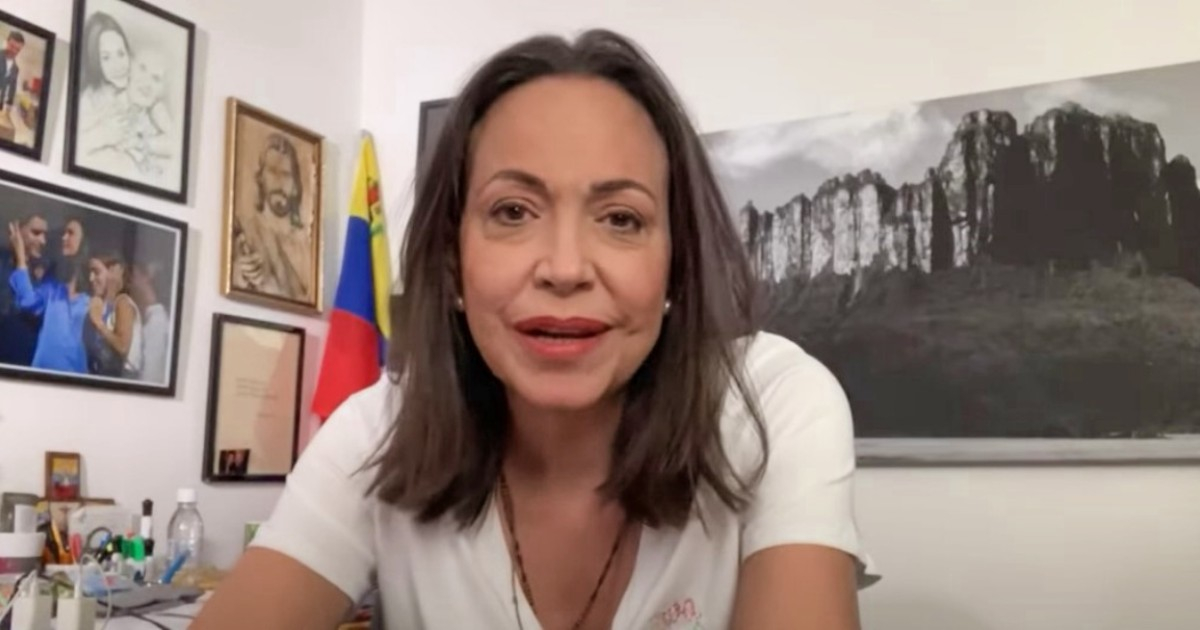
María Corina Machado, who was awarded the Nobel Peace Prize in 2025, and is a prominent opposition leader in Venezuela, faced three unsuccessful attempts to re-enter her homeland from Panama City on September 22, as confirmed by her team to EFE news agency.
These recent failures bring the total number of her thwarted efforts to return to Venezuela to "at least seven," according to her associates.
Journalist David Alandete from ABC chronicled this dramatic series of events, dubbed internally as "Operation Ithaca," documenting all three failed attempts within a single day.
"She has been prevented from flying out of Panama. She remains stranded there," lamented the team of the former congresswoman.
Multiple Attempts in One Day
The initial attempt involved a sea route: a small vessel was to traverse the Panama Canal and sail for several days across the Caribbean to Venezuela. All departure procedures were completed, and passenger documentation was submitted—with Alandete planning to be on board—when the company suddenly reported an engine malfunction just hours before departure.
Machado's team found the malfunction "suspicious" as the company did not offer any alternatives, despite other vessels being available at the same marina. "It seems there might have been some kind of pressure involved," noted Alandete in his coverage for ABC.
The second attempt was a private flight to Aruba, which was denied takeoff due to administrative objections regarding the flight's nature. Aruba ultimately communicated it would not allow the landing.
The third effort targeted Curaçao and Bonaire, resulting in the same outcome.
Journalist Idania Chirinos from NTN24, who was on assignment in Panama City, succinctly encapsulated the situation: "The Nobel Peace Prize laureate is trapped in Panama. María Corina Machado is not in Venezuela because she is being prevented from returning, not because she doesn't want to."
Chronicle of Seven Attempts
The timeline of her seven attempts, as published by ABC, stretches from late June to September 2026. The first effort occurred on June 26: a private flight from Manassas, Virginia, to Curaçao, which returned to Virginia after the pilot received instructions linked to a U.S. communication.
Two days later, Machado purchased a Copa Airlines ticket from Panama to Caracas, but the airline was cautioned by the Venezuelan government about potential repercussions for its operating permits, preventing her from boarding the flight.
There was also an attempt via a land route—whose transit country remains undisclosed to preserve its future viability—and a fourth undisclosed route that likewise did not succeed. The fifth attempt was a maritime plan on September 21, also canceled due to an engine issue. The three tries on September 22 completed the list.
"Returning to Venezuela has proven, thus far, to be more challenging than leaving," ABC wrote. "From June to September, there was no passive waiting. Alternatives by air, land, and sea were successively prepared. Simply stating she can return whenever she wishes does not capture the practical complexities we've documented," the publication added.
The Contrast of September 22
While Machado was experiencing setbacks in Panama, the interim Venezuelan president Delcy Rodríguez—accused of crimes against humanity—was meeting the same day with President Donald Trump in New York on the sidelines of the 81st UN General Assembly.
The contrast was stark: the Nobel Peace Prize winner stranded in Panama while Rodríguez shook hands with Guterres and sat with the U.S. President.
The Chávez regime has clear motives to prevent Machado's return: a survey by Meganálisis attributes her over 80% of votes in a hypothetical electoral showdown against Rodríguez. However, the blockade isn't solely directed by Caracas.
At the end of August, Trump signed a controversial oil agreement with Rodríguez's government, granting NABEP rights over 17 fields with estimated reserves of 65 billion barrels. Some sectors within the White House fear that Machado's return could destabilize this pact.
Washington's Mixed Messages
Subsecretary Cartwright Weiland stated before Congress on July 15: "She is a Venezuelan citizen and has the right to return." However, the White House reportedly asked Machado to visit Washington before heading back, a request she did not comply with.
Anonymous Trump administration officials leaked statements referring to her persistence as "grotesque political opportunism."
Machado remains resolute. "It's time to return. I can't lead a process from abroad while our people are suffering," she told the Wall Street Journal days before her three new failed attempts.
"She has made it clear she intends to enter, and she will find a way," summarized Alandete. "The question remains, what other avenue is left for her?"
Key Questions About María Corina Machado's Situation
Why is María Corina Machado prevented from returning to Venezuela?
Machado is blocked by the Chávez regime due to her political influence and potential electoral threat, as well as complexities involving international diplomatic and economic negotiations.
What were the means of her failed attempts?
She attempted to return via sea, private flights to Aruba, Curaçao, and Bonaire, as well as undisclosed land routes. All were thwarted by various obstacles.
What role does the U.S. play in Machado's situation?
The U.S. has sent mixed signals; officially acknowledging her right to return while unofficially complicating her efforts through diplomatic pressures and agreements with the Venezuelan government.
How has the international community reacted to her situation?
There is growing international attention and concern regarding her inability to return, highlighting human rights and democratic process issues in Venezuela.