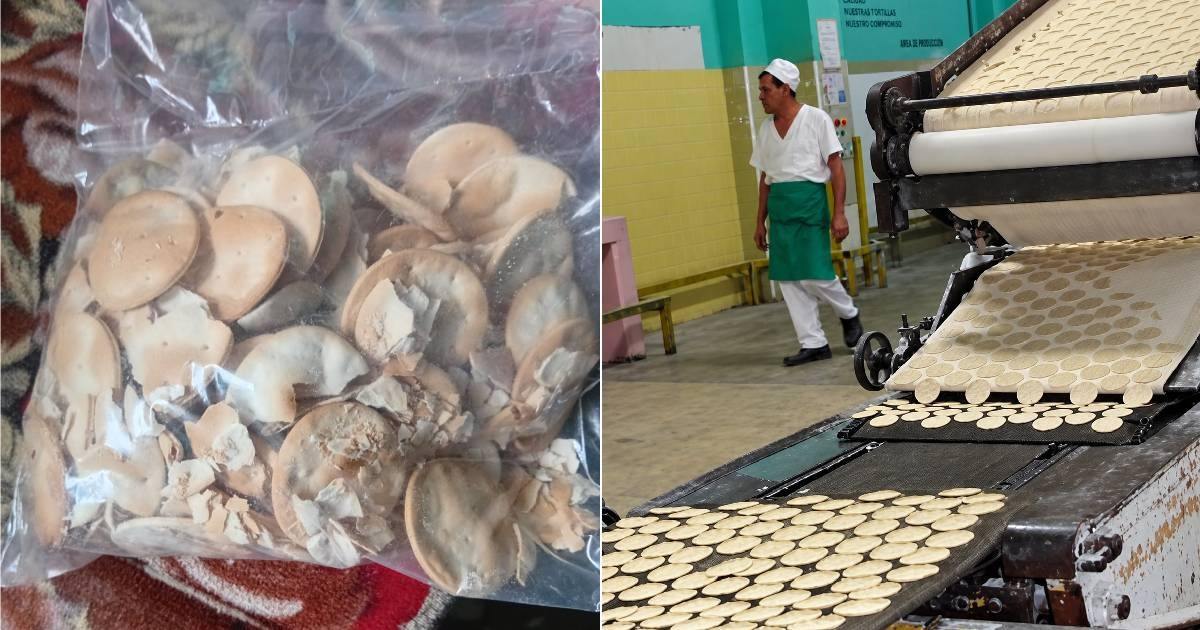
The much-publicized reopening of Matanzas' cookie factory, popularly called "La Chichi"—officially the Combinado Yumurí de Matanzas—garnered extensive state media coverage after being closed for nine months due to an energy crisis. However, the reality that reached the local neighborhoods was far from what was promised, prompting residents to express their discontent on social media.
On Facebook, local resident Juana Sánchez shared a photo of the distributed product: a small, irregular-looking bag of cookies, several of which were broken, being sold for 500 Cuban pesos.
"The reopening of La Chichi cookie factory in Matanzas city was announced with great fanfare, bringing us joy as this high-demand product became available again," Sánchez wrote. She then revealed the truth: "This is what was sold yesterday in the Armando Mestre district, one bag per ration card for 500 CUP."
The factory had ceased operations on December 26, 2025, due to prolonged blackouts and a diesel shortage affecting Cuba. Its revival was made possible by installing a solar photovoltaic system featuring 256 solar panels, 260 kWh batteries, and four 50 kW inverters, a project executed by the Local Development Project Enerza Villa Clara with Copextel Matanzas.
State media outlets—TV Yumurí, Radio 26, Juventud Rebelde, and Girón—hailed the resumption of production as a triumph of local development, with a stated goal of producing two tons of salted cookies daily and saving an estimated 18,000 liters of fuel per month. Officially announced prices were 500 CUP for 500 grams and 1,000 CUP for a kilogram.
In a country where the minimum wage has been 3,210 CUP since July 2026 and the official average salary at the end of 2025 was 6,930 CUP, a bag of cookies priced at 500 pesos represents between 7% and 15% of a worker's monthly income.
Sánchez's response was blunt: "Is this the blockade's fault? Who is responsible for this?" she questioned, calling the situation a "disrespect to the population" and accusing those in charge of "taking advantage of people's hunger and need."
Comments on her post highlighted systemic issues: "State-run factories lack quality because raw materials like oil and yeast are stolen. Quality exists when there's competition," one user noted. Another added, "They must be stealing the fat, which is crucial for all bakery and pastry products."
This incident is part of a series of shortages that have plagued Matanzas since 2025, including repeated suspensions of rationed bread due to a lack of wheat flour, delayed rice distributions, and widespread shortages of basic goods. In March 2025, a local official publicly admitted that Matanzas had bread supplies for only one day.
The question posed by Sánchez encapsulates the feelings of many residents: who is accountable when official announcements and neighborhood realities are worlds apart?
Matanzas Cookie Factory: Public Reactions and Economic Impact
What led to the reopening of the cookie factory in Matanzas?
The reopening was facilitated by the installation of a solar photovoltaic system, enabling the factory to resume operations after a nine-month hiatus caused by energy shortages.
Why are residents dissatisfied with the cookies provided?
Residents expressed dissatisfaction because the cookies sold were of poor quality, with irregular shapes and broken pieces, contrary to the expectations set by the government's announcement.
How does the price of cookies affect the average Cuban worker?
Given the current wages in Cuba, a bag of cookies priced at 500 CUP constitutes a significant portion of a worker's monthly income, ranging from 7% to 15%, making them a costly item for many.