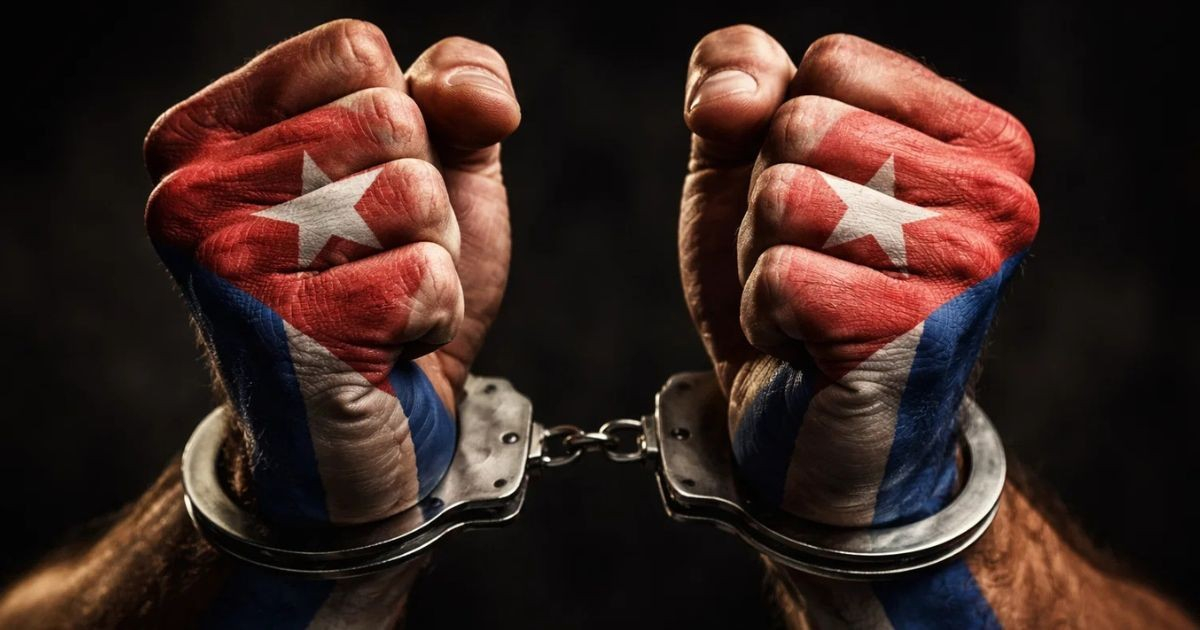
A comprehensive report has highlighted a range of tactics used to suppress young people in Cuba, including police summons disguised as "interviews," internet disruptions, the suspension of phone lines, unauthorized account access, legal proceedings, and retaliation against family members. These practices are identified as part of 12 potential rights violations particularly impacting the youth in Cuba.
The document, titled Youth, Power, and Social Networks in Cuba, was released on Monday by the organization Ciudadanía y Libertad during the 81st session of the United Nations General Assembly.
The Framework and Findings of the Report
This study is based on consultations conducted in April and June 2026 with young activists, students, journalists, and content creators both within Cuba and in exile. According to the organization, these testimonies were supplemented with subsequent interviews and cross-referenced with Cuban official statistics, independent human rights observatories, and statements from United Nations mechanisms.
The report argues that the identified patterns adversely affect young individuals, potentially infringing on their rights to freedom of association and peaceful assembly. Challenges in establishing independent organizations and various forms of pressure related to online and social media activities are among the issues mentioned.
Examples of Reported Repressive Practices
Testimonies describe connectivity disruptions, phone line cancellations, unauthorized access to messaging services, and identity theft. Police summonses reportedly involved questioning participants about their activities, contacts, and family or academic environments.
Some patterns surfaced publicly in 2026 through complaints by young individuals on the island. For instance, in July, two members of the Fuera de la Caja Cuba collective recounted being interrogated by State Security after being invited to what was initially presented as an "interview." Agents reportedly inquired about their social media activities and political views.
Legal and Detention Concerns
Ciudadanía y Libertad's report also delves into legal proceedings and detention conditions, documenting cases of individuals who were minors at the time of their detention. It also highlights repercussions for family members and challenges in accessing employment or education. The General Prosecutor's Office acknowledged processing 790 individuals following the July 11, 2021 protests, including 115 youths aged 16 to 20, of which 55 were between 16 and 18.
The Broader Context of Emigration and Demographic Challenges
Ciudadanía y Libertad links civil and political rights issues to the significant exodus of younger generations. The report notes that Cuba lost 313,414 inhabitants in 2025, with a negative migration balance of 245,264. These figures align with data from the National Office of Statistics and Information (ONEI), indicating that more than half of those who emigrated in 2024 were under 35 years old.
By the end of August 2026, human rights observatories reported 1,339 individuals imprisoned for political reasons in Cuba, including 38 minors and 155 women. The report's release coincides with the approaching end of Cuba's term on the United Nations Human Rights Council for 2024-2026. Despite signing the International Covenant on Civil and Political Rights in 2008, Cuba has yet to ratify it.
The report will be presented on September 23 at the Bildner Center for Western Hemisphere Studies at The Graduate Center, CUNY, New York. The panel will feature Gina Romero, UN Special Rapporteur on the rights to peaceful assembly and association; artist Luis Manuel Otero Alcántara; and Carolina Barrero, president of Ciudadanía y Libertad.
The organization urges UN member states, international bodies, host countries of Cuban emigrants, and technology platforms to bolster the protection of activists, journalists, and those exercising their rights of association, assembly, and expression. Additionally, it calls for greater attention to the interplay between repression, youth emigration, and demographic decline.
Key Questions on Youth Repression in Cuba
What are some of the repressive tactics used against young people in Cuba?
The report identifies police summons disguised as "interviews," internet disruptions, phone line cancellations, unauthorized account access, legal actions, and family retaliation as some of the repressive tactics used against Cuban youth.
How does the report associate youth emigration with repression in Cuba?
The report links the repression of civil and political rights to the significant emigration of younger generations, highlighting that over half of the emigrants in 2024 were under 35 years old.