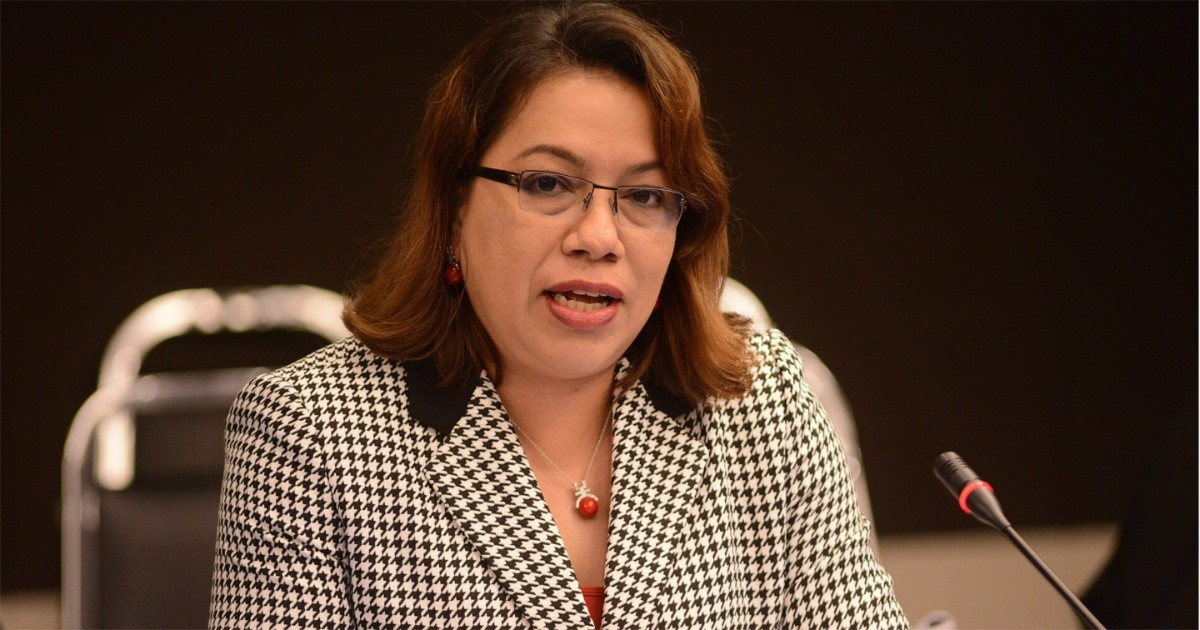
Carolyn Rodrigues-Birkett, Guyana's permanent representative to the United Nations and a known admirer of the Castro brothers, is a leading candidate to succeed António Guterres of Portugal as the UN Secretary-General. Guterres' term is set to conclude on December 31 of this year.
In the third round of informal Security Council polls held on Thursday, Rodrigues-Birkett secured eight supportive votes, placing her in a close second behind Costa Rican candidate Rebeca Grynspan, who led with nine votes.
Controversial Ties with Cuba
A significant concern in Rodrigues-Birkett’s candidacy is her longstanding connection with Cuba's communist regime. This was evident in a speech she delivered in January 2013 to Guyana's National Assembly while serving as the country's foreign minister.
During that address, she introduced a motion to celebrate 40 years of diplomatic relations between Georgetown and Havana, which passed unanimously. She also called for an end to the U.S. embargo against Cuba.
Her remarks in the Guyanese Parliament were unequivocal: “Discussing Cuba, its achievements, resilience, human development focus, and its immeasurable support to brother nations cannot be done without paying tribute to the visionary, determined, and revolutionary leader behind it all, Commander Fidel Castro Ruiz.”
She also praised Fidel's brother, stating, “We must also pay tribute to his brother, President Raúl Castro Ruz, for his leadership of the Cuban people and his continued support to Guyana. We wish them both long lives and good health.”
Historic Potential for the UN
At 52, Rodrigues-Birkett began her career as a primary school teacher before entering public service, first as Minister of Amerindian Affairs from 2001 to 2008, then as foreign minister until 2015, becoming the first indigenous woman and the youngest individual to hold that position in Guyana.
If elected, she would be the first woman and the first indigenous person to lead the United Nations since its inception in 1945.
Her candidacy is officially backed by the Caribbean Community (CARICOM) and she is competing against others, including Rafael Grossi of Argentina, head of the International Atomic Energy Agency.
Views on Gaza Conflict
Another aspect of her profile under scrutiny is her stance on the conflict in Gaza. During her time on the Security Council in 2024-2025, she described Israeli military actions as “mass atrocities” and urged the Council to act “in the context of its responsibility to protect innocent civilians from genocide.”
The United States, a close ally of Israel with veto power in the Council, has not publicly disclosed its stance on the Guyanese candidate, leaving a crucial element of the selection process unresolved.
Recently, former Chilean President Michelle Bachelet withdrew her candidacy after receiving only one vote in favor and eleven against in the third round of consultations.
The election of the next Secretary-General requires at least nine favorable votes in the Security Council, without any veto from the five permanent members—United States, China, Russia, France, and the United Kingdom—and subsequent endorsement by the General Assembly.
Key Questions About the UN Leadership Race
Why is Carolyn Rodrigues-Birkett's connection with Cuba controversial?
Rodrigues-Birkett's close ties with Cuba, particularly her admiration for the Castro brothers, are seen as controversial due to Cuba's communist regime. Her past speeches and motions in support of Cuba have raised concerns among those critical of authoritarian governments.
What makes Rodrigues-Birkett's candidacy historic?
If elected, Carolyn Rodrigues-Birkett would be the first woman and the first person of indigenous descent to lead the United Nations, marking a significant milestone in the organization's history.
What does the election process for UN Secretary-General entail?
The election requires at least nine supportive votes in the Security Council without any veto from its five permanent members—United States, China, Russia, France, and the United Kingdom—followed by ratification from the General Assembly.