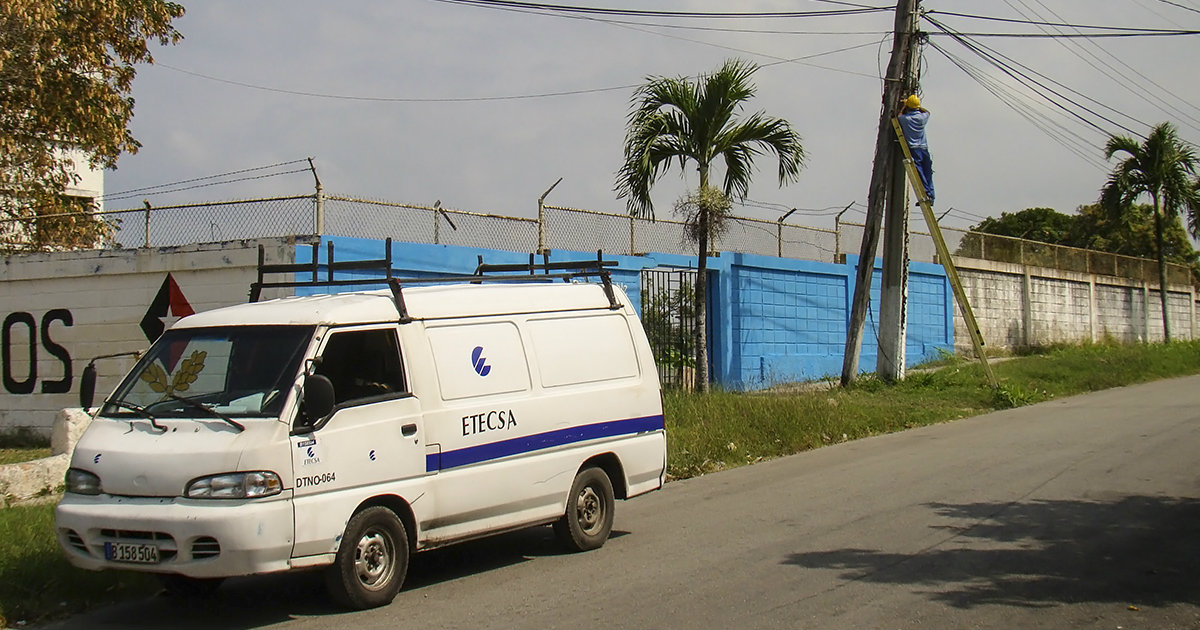
In Santiago de Cuba, persistent power outages are leaving numerous residents without mobile coverage, as approximately 140 to 150 of Etecsa’s sites are rendered inoperative each day due to a lack of electricity or fuel needed to power generators.
This severe issue has been acknowledged by Ricardo Serrano Díaz, the regional director of the Cuban Telecommunications Company (Etecsa), in a report published by Granma outlining the declining state of telecommunications in the region.
Serrano highlighted that "85% of the mobile network relies on electricity, and we lack the fuel needed to compensate for this shortfall; at present, 200 mobile sites (transmitter towers) are down because of energy shortages or insufficient fuel to support the generators. Daily, 140 to 150 are going offline for this reason," demonstrating the scale of the crisis.
Impact Beyond Mobile Services
The disruptions extend beyond mobile services. The most significant issues with the fixed network are in Santiago de Cuba, San Luis, Contramaestre, Palma Soriano, and Songo-La Maya. Despite efforts, Etecsa is averaging only 120 solutions per day.
The energy crisis has exposed electricity as a critical vulnerability in the telecommunications infrastructure. Previously, Etecsa warned of increasing interruptions due to power outages and generator failures. During blackouts, approximately 47.5% of mobile base stations and 56.5% of telecommunications cabinets can become inoperative.
Widespread Energy Deficiencies
Out of about 2,520 radio bases nationwide, only half have some form of energy backup, and around 450 face mechanical issues or lack fuel for their generators. These energy challenges are compounded by thefts and vandalism.
In Santiago de Cuba, over 40 incidents against telecommunications networks and facilities have been reported, with 64% occurring in the José Martí urban center.
Exploring Solar Solutions Amid Challenges
In response to power shortages, Etecsa is increasing the use of solar energy. Currently, 17 mobile sites in Santiago de Cuba are supported by solar panels, with plans to protect 35 sites by the year’s end. However, this is merely a temporary fix for a much deeper issue.
The fragility of this solution was evident over the weekend when two solar panels were stolen from a telephone cabinet in the Santa Bárbara district, near a police station, leaving about 900 users without phone and data services.
There have also been reports of stolen panels, electrical connections, tower components, breakers, and base station equipment. Serrano admitted that Etecsa sometimes lacks the resources to replace stolen items.
Unsurprisingly, this issue is not confined to Santiago de Cuba. In Las Tunas, thefts of solar panels and cables have impacted water facilities, telecommunications, and power generation, exacerbating the vulnerability of essential services already strained by power outages.
Frequently Asked Questions on Etecsa's Service Disruptions
What is causing Etecsa's service disruptions in Santiago de Cuba?
The disruptions are primarily caused by persistent power outages and a lack of fuel to run generators, which result in approximately 140 to 150 mobile sites going offline daily.
How is Etecsa addressing the energy shortages affecting its services?
Etecsa is attempting to mitigate the situation by increasing the use of solar energy, planning to have 35 mobile sites supported by solar panels by the end of the year.
What additional challenges are affecting the telecommunications infrastructure?
In addition to energy shortages, thefts and vandalism are exacerbating the situation, with incidents of stolen panels, cables, and equipment further undermining the infrastructure.