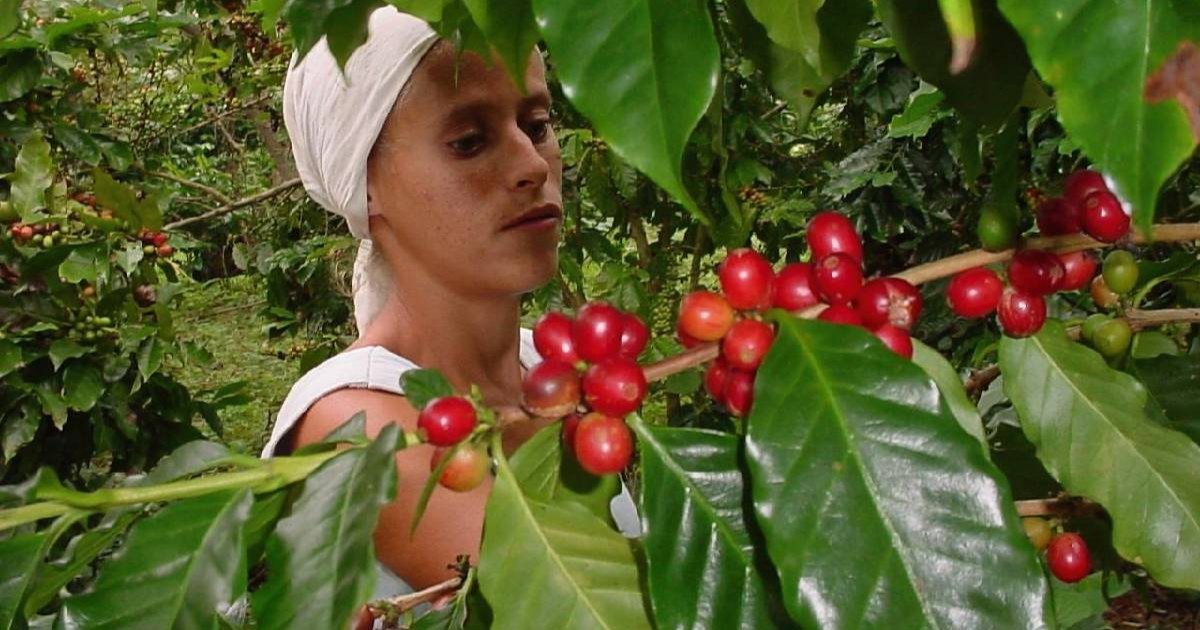
Guantánamo province has launched its 2026-2027 coffee harvest across eight municipalities, facing the challenge of improving upon a previous harvest deemed "dismal" by Cuba's own state media. This was reported by the Cuban News Agency on Friday, September 18, citing the provincial newspaper Venceremos.
The government-run publication candidly acknowledges, "Guantánamo faces the challenge of achieving an efficient harvest, as the previous one was notably low, initially impacted by heavy rains and subsequently by Hurricane Melissa, which knocked down many beans and damaged plantations."
Hurricane Melissa made landfall in eastern Cuba on the morning of October 29, 2025, as a Category 3 storm, with sustained maximum winds of approximately 121 mph. The storm inflicted severe agricultural and infrastructural damage in Santiago de Cuba, Granma, Holguín, and Guantánamo. As assessments continued, estimates of affected agricultural land increased, with a regional report from the Pan American Health Organization in November estimating losses at about 390,000 acres of crops.
As of Thursday, September 17, the province reported an accumulated maturation of 25,535 latas, a figure described by the state agency as not high but cautioned that it "should not inspire complacency, especially in the major producing municipalities, where a spike in bean production can create urgency and difficulties." Of the total, 20,395 mature latas were from the municipality of Maisí, the largest producer in the province.
Regarding collection, the province had gathered 34,374 latas by that date, with Maisí leading with over 20,800 units. Yateras and El Salvador followed, each with more than 3,000 latas. The provincial estimate for the entire 2026-2027 harvest is 294,568 latas, with Maisí, El Salvador, and Yateras being the municipalities most committed to delivery, according to the source.
Out of the estimated total, more than 145,600 latas, representing 52% of the projected collection, are expected to be pulped. The state agency warns that the anticipated increase in maturation—boosted by recent rainfall and high temperatures—"must be closely monitored by those involved in the harvest to ensure timely collection and avoid the cherry from falling and being lost."
The Broader Crisis in Cuba's Coffee Industry
The situation confronting Guantánamo is not unique: it is part of an extensive structural crisis affecting Cuba's coffee sector. During the first half of 2025, the industry reported a production of only 2,887 metric tons of coffee, equivalent to 23.7% of the planned target, compared to an officially estimated national consumption need of around 24,000 metric tons annually. In Santiago de Cuba, the country's main coffee-growing area, the 2024-2025 harvest had reached just 65% of the planned target by the end of February.
The crisis has reached such an extent that, in August 2026, the Manuel Ascunce roaster in Villa Clara had to process corn, sorghum, and rice due to insufficient coffee to keep operations running.
The collapse in production is attributed to several factors that the regime only partially acknowledges: the mass exodus of rural workers from mountainous areas, power outages, delayed payments to producers, and a chronic shortage of supplies.
In the early 1960s, Cuba produced over 60,000 metric tons of coffee annually. Six decades later, official Cuban figures placed the 2021 harvest at just 11,500 metric tons, amidst a long-term trend of declining production, yields, and cultivation areas.
The estimate of 294,568 latas for the 2026-2027 harvest in Guantánamo represents the official attempt to regain lost ground; however, the recent history of the sector—and the state media's own warnings about the risks of losing beans due to untimely collection—suggests that this optimism may rest on shaky foundations.
Challenges and Prospects for Coffee Production in Guantánamo
What are the main challenges facing Guantánamo's coffee harvest?
Guantánamo's coffee harvest faces challenges such as recovering from a poor previous season, addressing the damage caused by Hurricane Melissa, and managing the expected increase in maturation due to recent weather conditions.
How has the coffee industry in Cuba been affected in recent years?
Cuba's coffee industry has faced a significant decline, with production dropping from over 60,000 metric tons in the 1960s to just 11,500 metric tons in 2021, due to factors like worker exodus, power outages, and a shortage of supplies.