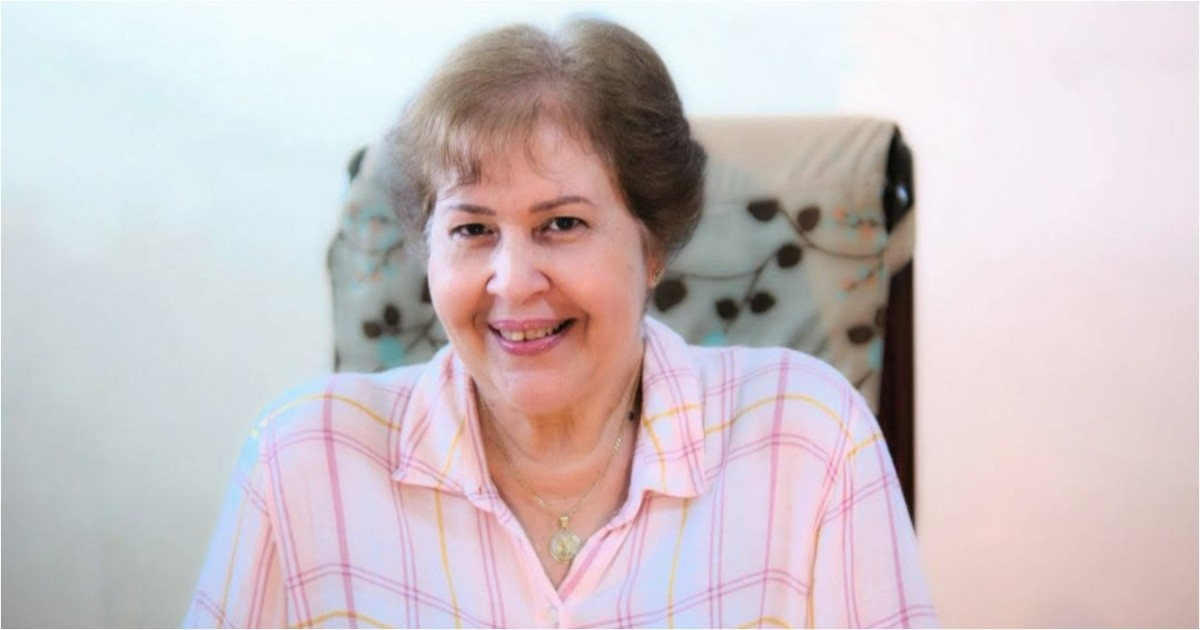
Matanzas-based intellectual and activist Alina Bárbara López Hernández shared on Facebook the details of her fifth detention this year. On Friday, State Security agents stopped her as she was leaving her neighborhood in Matanzas, preventing her from reaching Liberty Park for her monthly civic protest.
She was held for nearly five hours in the same police station meeting room where she had been detained the previous month.
López Hernández remarked, “When a political regime can’t uphold its own laws, and when it poses as a 'different democracy' on the international stage but stops even pretending, it indicates it's nearing its end.”
To pass the time during her detainment, she brought along a book, "Morir de exilio lejos de Cuba" by Uva de Aragón. The book prompted her to reflect on external exile and what she calls internal "insilio": “We who live here experience our own kind of internal exile. Though we reside in Cuba, we are silenced and barred from shaping our country's future.”
Institutional Cynicism and Threats
The most telling part of her account was a warning from a young State Security officer, dressed in green instead of blue: “This trial will happen at some point, maybe this year or next, but until then, you will be detained every time you try to protest.”
López Hernández viewed this as an admission of institutional cynicism. “The delay aims to avoid the political fallout of imprisoning us while keeping us in a shameful state of confinement,” she wrote, adding that the regime no longer disguises its arbitrariness: “They don’t even try anymore, and that’s risky—for them more than for us.”
Legal and International Context
Since June 18, 2024, the philosopher has been under house arrest due to the so-called "case 40," a process she shares with sociologist Jenny Pantoja Torres on charges of "attack."
The prosecution is seeking four years of imprisonment for López Hernández and three for Pantoja. Their trial, initially set for January 30, 2026, has been postponed indefinitely.
Throughout 2026, the pattern has repeated every 18th: twelve hours detained in February with activist Leonardo Romero Negrín; nearly ten hours in April at the Playa police unit; about ten hours in June; and in July, she was taken to an undisclosed location by State Security.
Broader Implications
López Hernández also linked her situation to the international arena. A day before her detention, the European Parliament passed a resolution—374 in favor, 198 against, and 19 abstentions—demanding the release of Cuban political prisoners and warning of suspending the Political Dialogue and Cooperation Agreement with Cuba if no progress is made toward multiparty democracy.
She highlighted that Europe, which historically favored Havana when tensions with Washington escalated, has shifted its stance: it no longer chooses between Trump's policies and Cuban repression.
According to Prisoners Defenders, Cuba had recorded 1,339 political prisoners as of August 2026, the highest number since the July 11 protests of 2021, with 463 suffering from severe conditions and 155 being women.
Upon returning home after her detention, López Hernández learned that the National Electric System had collapsed again—the eighth total blackout of the year, leaving about nine million Cubans without power.
Understanding the Situation in Cuba
Why was Alina Bárbara López Hernández detained?
Alina Bárbara López Hernández was detained due to her attempts to engage in civic protests, which the Cuban government aims to suppress. Her activism challenges the regime’s authority, leading to her repeated arrests.
What international actions have been taken regarding Cuban political prisoners?
The European Parliament has passed a resolution demanding the release of Cuban political prisoners and threatening to suspend the Political Dialogue and Cooperation Agreement with Cuba if no democratic progress is made.
What is the current state of political repression in Cuba?
As of August 2026, Cuba has 1,339 political prisoners, the highest number since 2021, indicating ongoing and severe political repression.