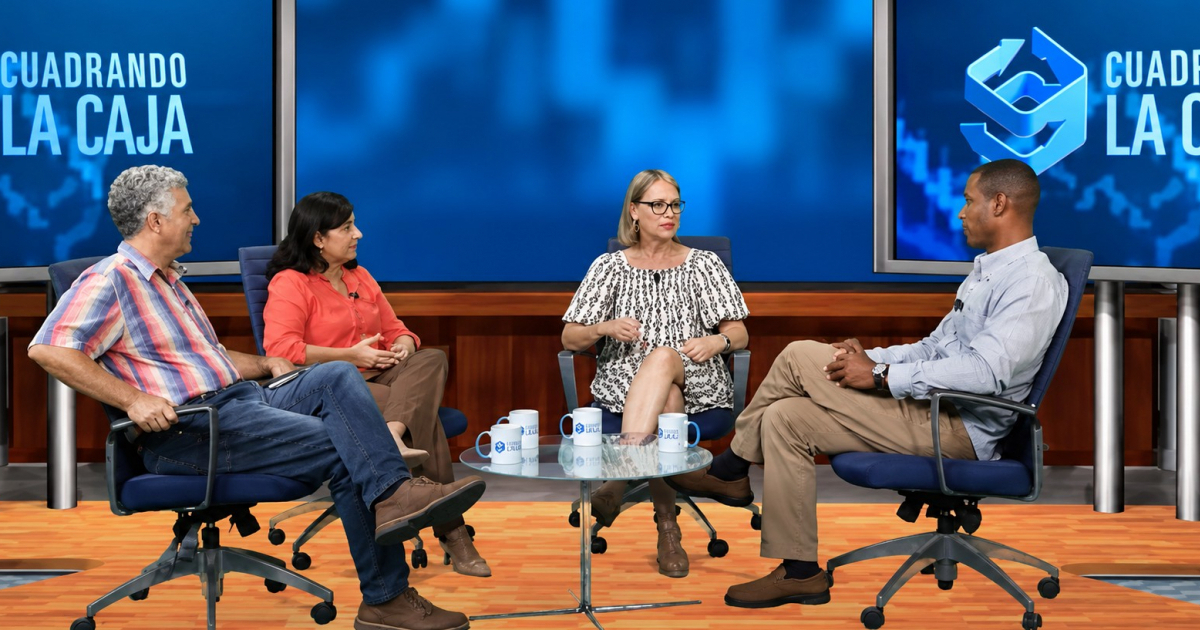
In a recent episode of the state-sponsored program Cuadrando la Caja, the focus was on defending the changes in Cuba's state-run business system under the new Decree-Law 120. This law, introduced in July as part of a sweeping set of 176 economic measures, aimed to overhaul the country's struggling economy. However, the Cuban public's response on social media was overwhelmingly skeptical, marked by disbelief, irony, and outright accusations of corruption.
The program, produced by the state media outlet Cubadebate and hosted by Marxlenin Pérez, brought together pro-regime officials and economists to shed light on the new classification of state companies and their increased autonomy in setting prices, wages, and selling assets. Despite these discussions, public reaction painted a different picture.
Public Reaction: A Wave of Skepticism
The reform includes removing subsidies, converting companies into commercial entities, and gradually allowing private investment, both local and foreign. Despite these changes, the regime maintains that the core economic model remains intact. Officials emphasized that transitioning from a state company to a commercial entity is not mandatory but rather a strategic choice that will unfold "gradually." Yet, they couldn't control how the public would react.
The episode's release on Facebook became a barometer for the public's deep-seated mistrust following decades of unmet promises. The initial comment set the tone for the entire discussion: "Are there any left?" questioned one user, doubting the very premise of the debate.
Another commenter predicted the fate of these companies: "They will be divided among our leaders, their families, and the directors, just like what happened first in the USSR and then in Nicaragua. This is just the beginning of a repeating story."
Debating the Future of State Enterprises
From Cienfuegos, one user described a reality the program chose to ignore: "I don't know if there are any state companies left; everything is in the hands of the private sector now, even garbage collection. What remains in this country that serves the people? Is this country still socialist, communist, or capitalist? Because when a country's private sector takes over, it's a capitalist country. Every year brings new laws to boost an economy that no longer exists in Cuba."
The show's credibility was also under fire: "'Cuadrando la Caja' is either naive or playing dumb... the socialist state enterprise, inefficient as always," another user remarked.
Public skepticism toward the regime's reforms was encapsulated by one user's analogy: "It's like the story that the stores in dollars would supply the stores in national currency. Do you think anyone still believes these tales?"
Military and Political Interests Under Scrutiny
Several comments pointed to the shadow of military and political elite interests. "Making the Castro businesses flourish. In which country are embezzlements in the Cuban military leadership reported so often, and yet nothing is done?" asked another commenter.
Some directly criticized the nature of the process: "Neoliberalism made in PCC," summarized one. "They will have new owners: the usual appointees," added another.
One user was even more direct: "The state company has little time left. This is called capitalism. What's missing is the implementation of foreign companies and factories. The state has already shrugged everything off."
The bluntest conclusion pointed to the root of the problem: "Stop going around in circles. Until communism leaves power, they will continue to be miserable."
Uncertain Future Amid Economic Crisis
Amidst the 176 economic and social transformations proposed by the regime to tackle the crisis, the first batch of measures aims to radically alter the operation of state enterprises, long considered the backbone of Cuba's socialist model. For the first time, the government has openly acknowledged that many state companies will have to compete under similar conditions to the private sector, with some potentially disappearing if not economically viable.
Companies will have the autonomy to set their wages and prices, create subsidiaries independently, approve their annual economic plans, determine the use of their profits, plan long-term strategies, and authorize major investments without relying on central authorities.
President Díaz-Canel himself has publicly advocated for granting more autonomy to state companies, urging managers to prepare for the new powers promised by the government as part of the economic reforms.
The deterioration of Cuba's state-run economy has accelerated, with 399 companies reporting losses by the end of May, 120 more than in the same period the previous year. A report from the National Office of Statistics and Information (ONEI) highlighted a widespread decline in key indicators of the state business system: falling sales, reduced production, and decreased profits, efficiency, and employment.
This debate unfolds while Cuba faces the projected worst economic downturn in Latin America by 2026, according to the International Monetary Fund, amid widespread shortages of food, fuel, and electricity.
Understanding Cuba's Economic Reforms
What is Decree-Law 120 in Cuba?
Decree-Law 120 is a legislative measure introduced in July as part of a comprehensive set of 176 economic reforms in Cuba. It aims to restructure the state-run business sector, offering more autonomy in pricing, wages, and asset sales while gradually opening to private investment.
How are Cubans reacting to the proposed economic changes?
Many Cubans are responding with skepticism and disbelief, expressing concerns over potential corruption and the lack of genuine change in the economic model. Social media reactions reflect deep mistrust in the government's promises.
What challenges do Cuban state companies face under the new reforms?
State companies in Cuba are challenged to become economically viable without subsidies, competing with the private sector, and potentially facing closure if unable to sustain profitability and efficiency.