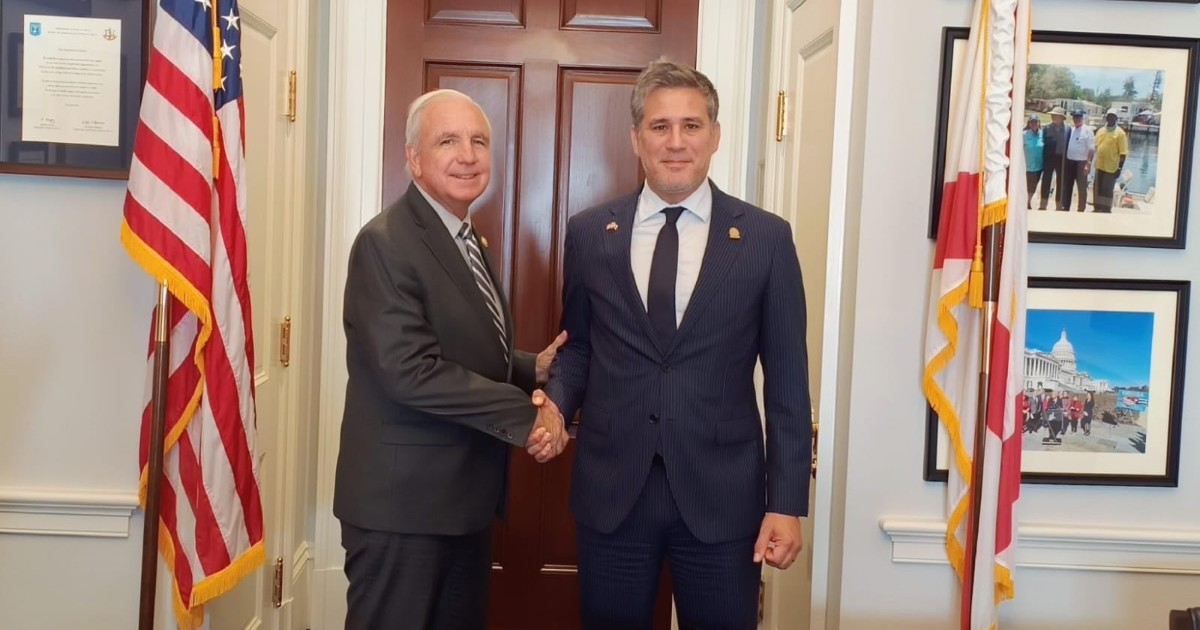
Costa Rica's Foreign Minister, Manuel Tovar Rivera, reiterated his country's complete severance of diplomatic ties with Cuba's dictatorship while accepting the "Pedro Luis Boitel International Freedom Award 2026" at an event hosted by the Cuban Resistance Assembly (ARC) at Miami-Dade College.
"Costa Rica refuses to stand by a vile tyranny that has denied freedom and prosperity to the Cuban people for over six decades, leaving them in despicable poverty. We are unwavering and clear in our diplomatic break with the Castrist regime," Tovar Rivera declared on his verified X account, concluding with a resounding "Long live a free Cuba!"
The foreign minister had already hinted at San José’s stance the previous day during an interview with the Miami Herald, proclaiming, "We have cut diplomatic ties with the Cuban regime until freedom returns."
In the same message, Tovar Rivera acknowledged Orlando Gutiérrez for his leadership of the Cuban Resistance Assembly, a key exile group that has engaged with regional governments taking a critical stance against Havana.
Historical Context of the Diplomatic Break
This diplomatic rupture traces back to the administration of former President Rodrigo Chaves. In March 2026, Costa Rica shut down its embassy in Havana and demanded the withdrawal of Cuban diplomatic staff from San José. However, then-Foreign Minister Arnoldo André Tinoco clarified that these actions did not equate to a complete diplomatic break.
Current President Laura Fernández has maintained this policy, with Tovar Rivera now making the decisive move.
Cuban Government's Reaction
The Cuban regime, through MINREX, issued a statement asserting that the break had "never been formally notified" by Costa Rican authorities and described the announcement as "surprising."
The Cuban Foreign Ministry accused San José of "subordination" to U.S. policy, noting that the decision was communicated to a South Florida outlet rather than through formal diplomatic channels.
Tovar Rivera firmly dismissed the accusation: "This is a sovereign decision we have made, and we do not take orders from any government."
Regional Diplomatic Trends
Costa Rica's stance aligns with a regional trend of increasing diplomatic isolation of Cuba throughout 2026. Ecuador expelled the entire Cuban diplomatic mission from Quito in March, and the Dominican Republic issued an ultimatum to nine Cuban diplomats in August.
In each instance, Havana's regime responded with the same "subordination" accusation directed at Washington.
The Pedro Luis Boitel Award and Future Plans
The Boitel Award, established in 2001 by the Cuban Democratic Directorate, honors the memory of poet and student leader Pedro Luis Boitel, who died in 1972 after a 53-day hunger strike in Castillo del Príncipe prison, symbolizing the Cuban political prisoner.
Tovar Rivera announced that the return to democracy in Cuba and Nicaragua would be a central topic at an upcoming meeting of the Americas Shield, scheduled for the week of September 21-28 in New York, coinciding with the United Nations General Assembly.
Key Questions on Costa Rica's Diplomatic Stance
Why did Costa Rica decide to break diplomatic ties with Cuba?
Costa Rica's decision to sever diplomatic ties with Cuba is based on the regime's long-standing denial of freedom and prosperity to the Cuban people, along with its oppressive practices.
How did the Cuban government respond to Costa Rica's decision?
The Cuban government, through MINREX, claimed the diplomatic break was "never formally notified" and accused Costa Rica of "subordination" to U.S. policy.