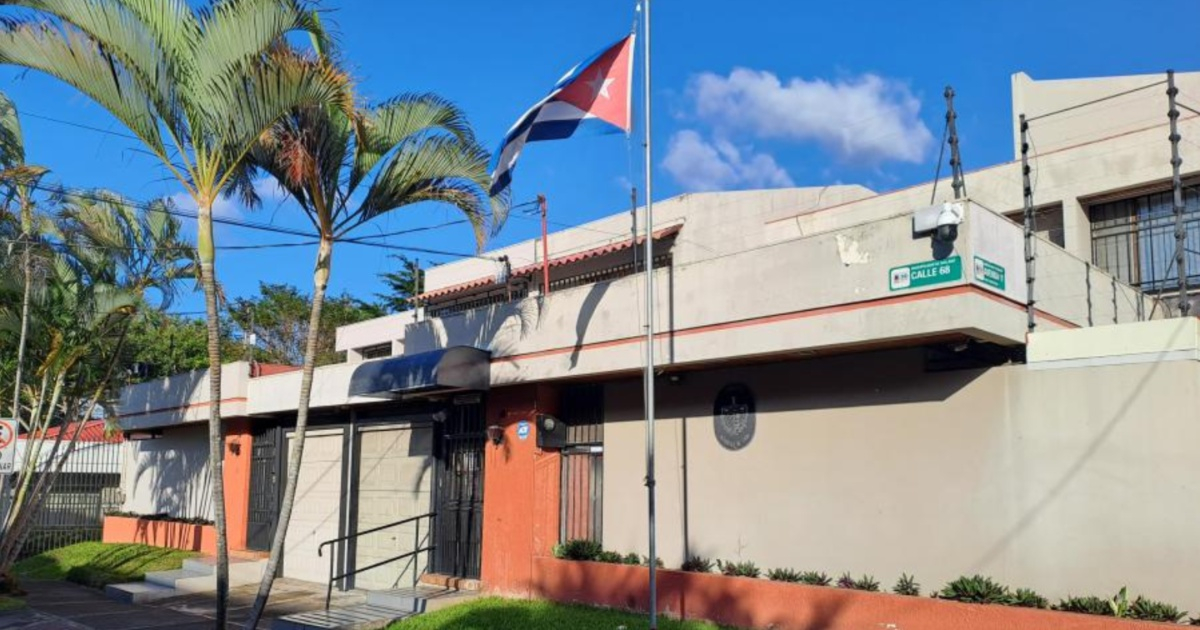
The Cuban Foreign Ministry has firmly rejected recent statements by Costa Rican Foreign Minister Manuel Tovar Rivera. In an interview with the Miami Herald, Tovar Rivera claimed there had been a "rupture of diplomatic relations" with Cuba. However, the Cuban Foreign Ministry, known as MINREX, stated in an official release that this alleged break has "never been formally notified" by Costa Rican authorities to the Cuban government.
Bruno Rodríguez Parrilla, the head of the ministry, described the announcement as "unexpected." He also reminded that the sequence of events leading to this situation began in March 2026 when Costa Rica shut down its embassy in Cuba, citing the ongoing deterioration of human rights on the island.
According to the statement, on March 17, 2026, the Costa Rican Foreign Ministry had informed Cuba through a Diplomatic Note of its unilateral decision to close its embassy in Havana. Moreover, they requested the withdrawal of Cuban diplomatic staff from San José, leaving only consular and administrative personnel.
At that time, the former foreign minister, Arnoldo André Tinoco, explicitly communicated to Havana that these actions did "not imply a break in diplomatic relations."
The Costa Rican Foreign Ministry's Institutional Communication 076-2026, published on March 18, 2026, also made no mention of a formal rupture, according to the MINREX text.
The Cuban regime criticized the channel chosen by Tovar Rivera for the announcement. Instead of using diplomatic routes, the minister opted to communicate the information to a media outlet in South Florida.
"The fact that the current Costa Rican Foreign Minister chose to share with a South Florida media outlet information about a supposed break of which the Cuban government is completely unaware suggests another act of Costa Rican government subordination to U.S. policy against Cuba," stated the release.
Tovar Rivera, on his part, was unequivocal in dismissing any ambiguity: "We have severed diplomatic relations with the Cuban regime until freedom returns," he declared.
He also denied accusations of acting under Washington's influence: "It is a sovereign decision we made; we do not take instructions from any government."
Tovar Rivera's comments came a day after his meeting with Secretary of State Marco Rubio in Washington, where they discussed economic cooperation, counter-narcoterrorism efforts, and the situations in Cuba and Nicaragua.
Costa Rica's diplomatic break is part of a regional trend of increased diplomatic isolation towards Cuba throughout 2026. Ecuador expelled the entire Cuban diplomatic mission from Quito on March 4, and the Dominican Republic issued an ultimatum to nine Cuban diplomats in August 2026.
In each instance, the Cuban regime has accused the involved countries of acting under "subordination" to U.S. policy. This is the same argument used by Díaz-Canel last March when he labeled the closure of the Costa Rican embassy as an "unfriendly act" attributed to "obvious pressures" from Washington.
Tovar Rivera hinted that the return to democracy in Cuba and Nicaragua would be a topic at the upcoming Shield of the Americas meeting in New York, during the U.N. General Assembly. This could signal a new wave of multilateral diplomatic pressure on Havana.
Frequently Asked Questions about Cuba-Costa Rica Diplomatic Relations
What led to the diplomatic break between Costa Rica and Cuba?
The diplomatic break was initiated when Costa Rica closed its embassy in Cuba in March 2026, citing the deterioration of human rights in Cuba. This action, along with subsequent diplomatic activities, led to the current situation.
How did Cuba respond to Costa Rica's actions?
Cuba's Foreign Ministry has criticized the lack of formal notification about the diplomatic break and accused Costa Rica of being influenced by U.S. policies.
What are the implications of Costa Rica's actions for regional relations?
Costa Rica's actions are part of a broader regional trend of diplomatic isolation for Cuba, which includes similar actions by Ecuador and the Dominican Republic.