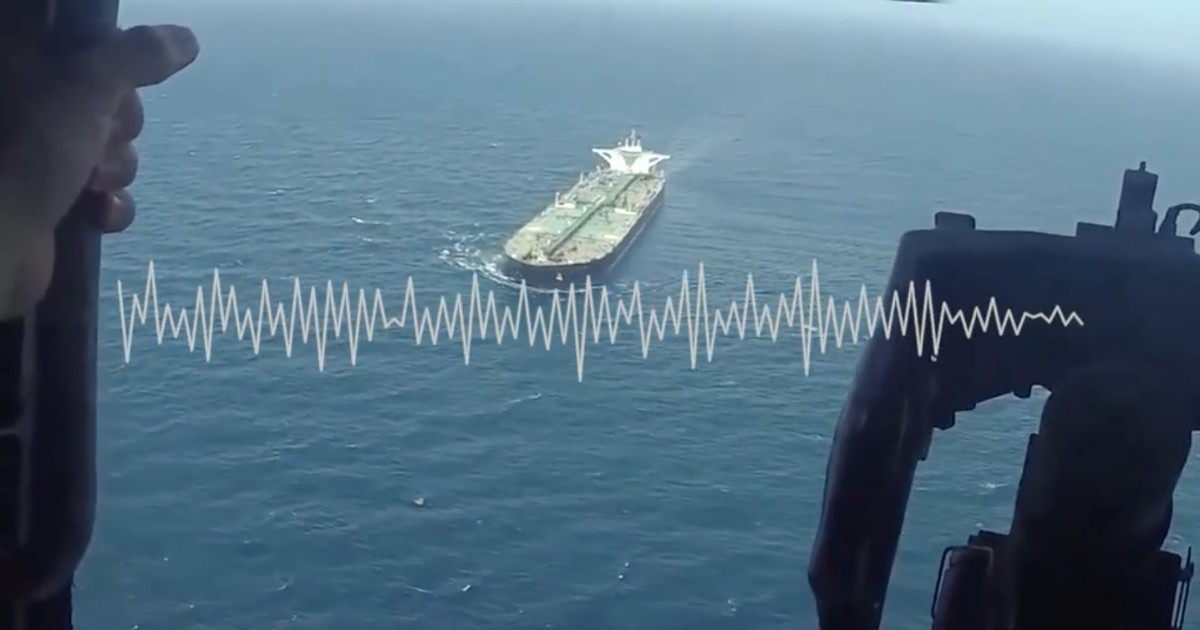
An artificial intelligence chatbot generated a completely inaccurate intelligence report that nearly triggered a U.S. military operation against a Chinese ship in the Middle East, according to an exclusive CNN investigation citing four sources familiar with the incident.
This event transpired during the spring amid ongoing tensions between the United States and Iran. The report, created by an analyst at the Pacific Special Operations Command (SOCOM Pacific), headquartered in Hawaii, falsely claimed a Chinese vessel was traversing the region carrying components for a nuclear weapons program.
The document circulated through the command chain, prompting an immediate response: two sources stated that armed military personnel were preparing to board the ship.
Military aircraft were already airborne when, at the last minute, officials who closely reexamined the report identified the mistake.
AI's Role and the Risks Involved
The analyst had initially turned to a chatbot for information on the ship's manifest. The tool combined open-source intelligence with classified signals intelligence, mistakenly arriving at an incorrect conclusion.
Subsequently, the analyst utilized AI again to compile the findings into a standard intelligence report—the type relied upon by military officials—and disseminated it without further verification.
One source described the document as "entirely false" and warned it "nearly sparked a war." CNN could not ascertain the vessel's actual cargo or determine whether the chatbot used was a commercial or government product.
A former senior official noted that "internal tools mostly mimic commercial products with minimal changes."
Potential for Escalation and Strategic Rivalry
Any military action against a Chinese vessel could have escalated into an armed conflict between the two powers, at a time when strategic rivalry between Washington and Beijing is reaching unprecedented levels. The increasing Chinese espionage in the region had already raised alarms among U.S. officials.
This episode occurs amidst the rapid adoption of AI within military applications. In January, Defense Secretary Pete Hegseth introduced the Pentagon's "AI Acceleration Strategy," aimed at integrating these tools across all facets of operations, from intelligence analysis and target selection to logistics and budgeting.
Debate Over AI and Military Oversight
"We'll unleash experimentation, dismantle bureaucratic barriers, and showcase the execution approach needed to lead in military AI," Hegseth declared upon announcing the strategy.
A source familiar with current military policies cautioned, "AI's use in target selection is definitely increasing, and there's no real guidance on how human oversight will prevent civilian casualties or friendly fire."
Another summed up the risk succinctly: "AI gets you to a bad idea faster."
However, the effort is decentralized: different units employ various tools under disparate orders and security standards, lacking unified protocols for verifying generated information.
Autonomous weapons with AI control deployed by the U.S. have already stirred debate over the limits of human oversight in combat operations.
Sources warn that "hallucinations"—factual errors generated by AI—have not been isolated incidents within the intelligence community since these tools began proliferating. Younger analysts, several sources indicated, tend to rely on them uncritically.
Key Concerns About AI in Military Contexts
What caused the erroneous military report?
The report was generated by an AI chatbot that combined open-source and classified intelligence, leading to a false conclusion about a Chinese vessel allegedly carrying nuclear components.
How was a potential conflict averted?
Officials who closely reviewed the report at the last moment identified the error, preventing an unwarranted military action.
What are the broader implications of AI use in the military?
AI's increasing role raises concerns about the accuracy of intelligence, the potential for escalated conflicts, and the need for effective human oversight to prevent errors and unintended consequences.