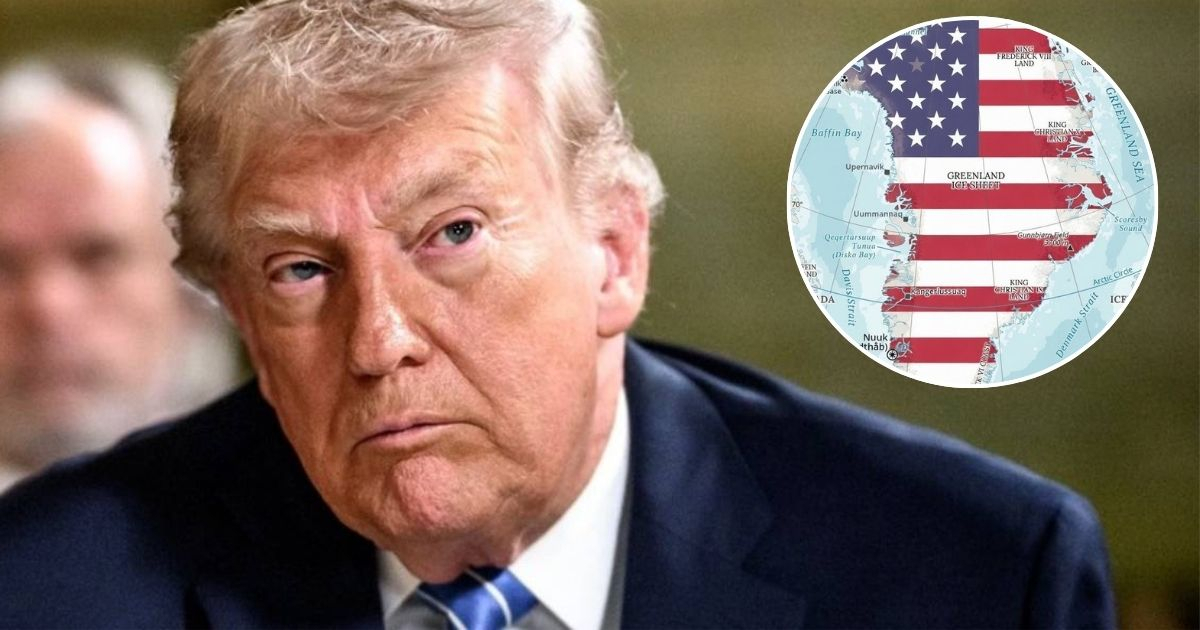
On Friday, Donald Trump declared that the United States has secured an unprecedented agreement with the Kingdom of Denmark and Greenland, granting Washington indefinite control over both the security and "all other needs" of the Arctic island. This deal, described by Trump as everlasting and cost-free for the U.S., marks what he sees as a significant achievement.
The announcement was made via Trump's social media platform, Truth Social, where he called the deal “a dream come true for the United States of America, one of great importance, historic impact, and uniqueness.”
Trump emphasized that the agreement ensures no adversary of the U.S. can establish a military base, maintain armed presence, or engage in sensitive investments in Greenland "without our explicit written consent," a direct message targeting China and Russia.
Additionally, Trump revealed plans for the U.S. to promptly initiate the development of "a substantial military presence in appropriate areas of Greenland," dubbing it an "Agreement of Infinite Life" with no end date.
“For over a century, presidents have recognized Greenland's strategic value, yet none managed to act decisively. I am proud to be the president who has resolved this situation permanently and definitively,” Trump stated.
Soon after the proclamation, Greenland's government confirmed the deal in a statement on X, adopting a notably more moderate tone.
The statement indicated that "Greenland, Denmark, and the United States anticipate signing an agreement next week to strengthen security in the Arctic and North Atlantic regions" during the United Nations General Assembly in New York. It also mentioned that "once signed, it will undergo the necessary parliamentary procedures to come into effect."
International Reactions and Diplomatic Tensions
Greenland's Prime Minister, Jens-Frederik Nielsen, endorsed the agreement, expressing that it "acknowledges the island's interests and its role in international cooperation," adding, “It will benefit all parties involved.”
Meanwhile, Denmark's Prime Minister, Mette Frederiksen, took a more cautious stance compared to Trump.
“I am pleased with the prospect of a beneficial agreement for Greenland, the Kingdom of Denmark, and the United States,” she stated, emphasizing that the agreement must "respect the sovereignty and territorial integrity of the Kingdom, as well as the Greenlandic people's right to self-determination."
This announcement follows nearly a year of intense diplomatic pressure. In January 2026, Trump threatened a 25% tariff on eight European countries to pressure for a Greenland agreement, sparking a transatlantic crisis and prompting protests by thousands of Greenlanders against Washington's ambitions.
During this time, Denmark increased its military presence on the island with aircraft, ships, and soldiers. Both Copenhagen and Nuuk consistently maintained that sovereignty was non-negotiable. In January, Trump announced a preliminary agreement with NATO concerning Greenland and the Arctic at Davos, though details were not disclosed publicly.
The U.S. already maintains a permanent presence on the island through the Pituffik Space Base, and the 1951 bilateral defense agreement with Denmark allowed for troop expansion and facility development with prior notification.
The formal signing of the new agreement is scheduled for next week during the United Nations General Assembly in New York, after which it must pass the necessary parliamentary procedures to become effective.
Frequently Asked Questions About the Greenland Deal
What does the agreement between the U.S., Denmark, and Greenland entail?
The agreement grants the United States permanent control over security and other essential needs in Greenland, preventing adversaries from establishing a military presence or making sensitive investments without U.S. consent.
Why is Greenland strategically important to the United States?
Greenland holds a crucial strategic position in the Arctic, offering significant geopolitical advantages in terms of military presence and resource exploration, making it a long-standing interest for U.S. leadership.
How did Denmark and Greenland respond to Trump's announcement?
While Greenland confirmed the agreement with a moderate tone, Denmark's response was cautious, emphasizing the need to respect the sovereignty and self-determination of the Greenlandic people.