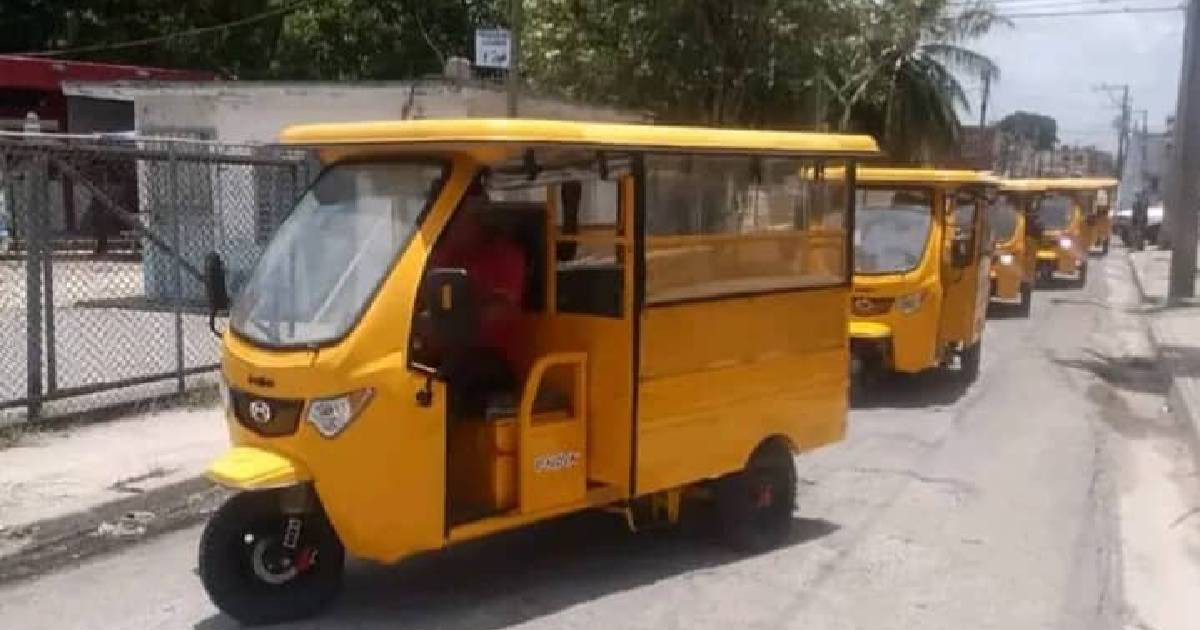
In the city of Las Tunas, the 20 electric tricycles used for passenger transport have been inactive for two weeks, and there's no estimated timeframe for their return to service, as confirmed by Alexander Osorio Peña, the Operations Director of the Agency of Taxis Cuba in the area.
The root of the issue lies in the halt of the charging station for these vehicles due to the absence of a crucial component, known as a grounding system suppressor. This part has been impossible to acquire anywhere in the nation.
Osorio revealed that they managed to purchase one unit, but the installation was unsuccessful, as reported by the provincial radio station's online platform, Tiempo 21.
"We bought one, but when Copextel specialists tried to install it, they found it wasn't compatible," the official elaborated.
The search has expanded across the entire country without success. "Both our team and Copextel have looked everywhere in Cuba but couldn't locate the device, forcing us to engage a private company to import it and restore operations," he added.
Currently, importing through a private entity is the only feasible option, though there's no set timeline.
Alternative Charging Station Falls Short
A second charging station, which was recently opened, is unable to resolve the crisis. It was initially built for urban transport tricycles and later redirected for the transport of dialysis patients, a service which saw Las Tunas add 10 Dongfeng electric taxis in July.
The energy capacity limitations of this facility prevent it from accommodating the charging needs of the stalled 20 tricycles, although the director mentioned efforts are underway to expand it to eventually service these vehicles.
Transportation Woes Highlight Infrastructure Fragility
The inability to find a suppressor, a low-cost yet hard-to-access component, throughout Cuba underscores the logistical weaknesses underpinning the only true urban transport remaining for much of the Las Tunas populace.
This stoppage strikes hard in a city where public transportation is already stretched thin. In recent years, electric tricycles have emerged as the main mobility option for the residents of Las Tunas.
In March, the municipality officially integrated them into passenger transport with fares set at 50 pesos within the municipality and 10 pesos per kilometer to the outskirts, along with eight official pick-up points.
Impact on Other Regions
Since February, Las Tunas has nearly halted all interprovincial bus services, maintaining only a night express to Havana.
The trend of relying on tricycles as a substitute for failing transportation systems is evident in other provinces. In Matanzas, fares doubled overnight to 300 pesos per trip, prompting government intervention to lower prices after public complaints.
In Sancti Spíritus, authorities announced that from August onwards, they would crack down on unlicensed tricycle operations, reflecting a system that initially tolerated informal growth and is now trying to regulate it without addressing infrastructure shortcomings.
Frequently Asked Questions about Electric Tricycles in Las Tunas
Why are the electric tricycles in Las Tunas not operational?
The electric tricycles are out of service due to the lack of a suppressor, a critical component for their charging station, which is unavailable in Cuba.
What steps are being taken to resolve the tricycle issue?
The only current solution is to import the necessary suppressor through a private entity, although no timeline has been set for its arrival and installation.
How has the transport stoppage affected Las Tunas?
The suspension of the tricycles has severely impacted public transport in Las Tunas, where they have become a primary means of mobility due to limited alternatives.